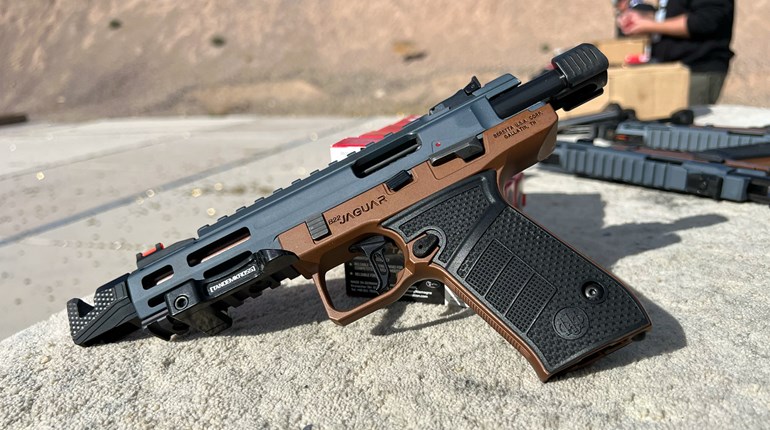
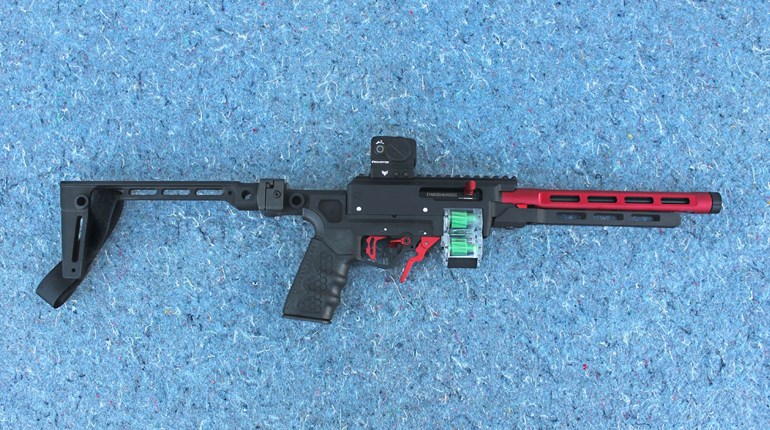
Once again, another nation is providing the United States with a stark warning as to what happens to the people’s right to keep and bear arms when it is insufficiently protected in the law. On April 30 of this year, the Canadian government says it will begin prosecuting Canadians who continue to possess any of the 1,500 models of firearm that, until May of 2020, it had been perfectly legal for them to own. The guns in question have been described by the Canadian prime minister, Justin Trudeau, as “military-grade assault weapons,” but they are, of course, no such thing. Rather, they are the most commonly produced rifles, pistols, shotguns and carbines in the world, including the AR-10, the AR-15 and the Mini-14.
In the United States, such firearms would be protected under both the Second Amendment and the D.C. v. Heller (2008) decision’s “common-use” standard. In Canada, by contrast, no such protections stand. Instead, the government was simply able to say it “concluded that these firearms are not reasonable for hunting or sporting purposes,” and then to demand they be prohibited post haste.
How? That depends. Between the announcement back in 2020 and April 30 of this year, owners were granted an amnesty, during which they were barred from using their guns “for hunting or sport shooting, either at a range or elsewhere,” as well as from buying, selling, loaning or transporting their guns in any way, until the government decided what to do next. And what did it decide to do? As this was going to print, that still was not clear. The government had promised that “the Canadian Firearms Program will communicate with all license holders” once the “details on grandfathering and compensation” have been decided.
The result has been a legal twilight zone, within which confused Canadian gun owners are kept unsure about what is going to happen next. As of December 2021, only 160 guns had been turned into the police for destruction, leaving an estimated 100,000 now-prohibited guns in legal limbo—unusable, but possessable ... maybe. When I write “limbo,” I mean it, for the difference between the various options on the table is truly stark. It is possible that the Canadian government will insist that every single gun on its list be “bought back” (a euphemism for “confiscated with some financial recompense”) or destroyed without compensation. It is possible that the government will see fit to permit some guns, but not others, to remain in their owner’s hands (but never be transferred or used). And it is possible that the government will dither further and extend the deadline as a result.
Reading through the history of the order, it seems clear that the Canadian government has acted first and thought later. It is one thing to announce emphatically that you intend to ban the most-commonly owned rifles in the country. But it is quite another to actually do it. Per official estimates, Canada’s government is prepared to spend up to a billion dollars in pursuit of the guns it says “exceed … any safe civilian use.” And so, to quote Winston Churchill, “they go on in strange paradox, decided only to be undecided, resolved to be irresolute, adamant for drift, solid for fluidity, all powerful for impotency.”
In the meantime, Canada’s law-abiding gun owners are being deprived of their rights with no sign of relief on the horizon and no idea if they are about to be turned into criminals.
“Why does America have the Second Amendment?” foreigners often ask me. This, right here, is why.
(Update: On March 28, Canada extended the Amnesty Order from April 30, 2022 to October 30, 2023.)