We know by now not to be surprised when the automatic reaction of politicians at home and abroad to atrocities in which killers wreak as much destruction as possible upon crowds of unarmed citizens is to more strictly regulate guns. Living in a fantasy world in which the number of “guns on the streets” can be plausibly reduced to zero, these dreamers share a misplaced faith in the proposition that illegal firearm acquisition can be effectively combated by legislative means. Gun owners in America know better: We have seen that criminals and terrorists have proven quite proficient at arming themselves no matter what the legal environment pertaining to guns. The most effective defense consists of effective law enforcement supported by an armed and prepared citizenry.
Consider the acts of domestic terrorism in the U.S. that most closely mirror the recent devastating attacks in Paris or the earlier strike against the Charlie Hebdo headquarters. The attacks on Fort Hood and on recruiting offices in Chattanooga, Tenn., involved significant death tolls; even though the targets were military, they were engaged in spaces in which these highly trained troops were required to be disarmed. In Garland, Texas, on the other hand, a traffic policeman was able to quickly dispatch two heavily armed ISIS supporters. The significant variable was the existence of “gun-free” zones. So why, in our ambition to combat terrorism, would we not focus on eliminating areas in which lawful gun owners are prohibited to carry?
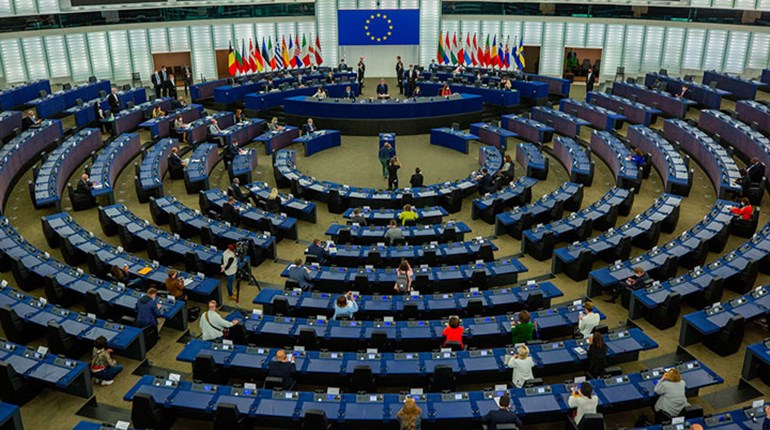
Unfortunately, European lawmakers are currently hard at work piling on just about every gun regulation they’ve ever heard of. The European Commission recently adopted this package of new measures that they intend to enact over the entirety of the European Union:- Stricter rules to ban certain semi-automatic firearms, which will not, under any circumstance, be allowed to be held by private persons, even if they have been permanently deactivated;
- Tighter rules on the online acquisition of firearms, to avoid the acquisition of firearms, key parts or ammunition through the Internet;
- EU common rules on the marking of firearms to improve the traceability of weapons;
- Better exchange of information between Member States; for example, on any refusal of authorisation to own a firearm decided by another national authority, and obligation to interconnect national registers of weapons;
- Common criteria concerning alarm weapons (e.g., distress flares and starter pistols) in order to prevent their transformation into fully functioning firearms;
- Stricter conditions for the circulation of deactivated firearms;
- Stricter conditions for collectors to limit the risk of sale to criminals.
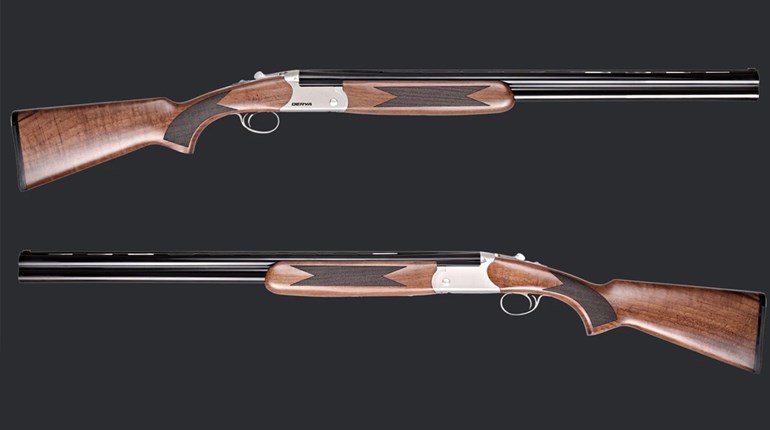
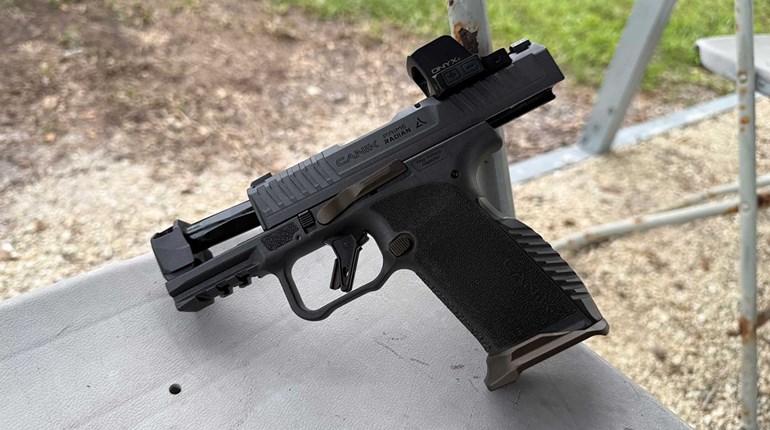
Fretting about online sales and mandating expensive and impractical tracing measures are both familiar features of the American anti-gunner’s agenda. So is the intention to “ban certain semi-automatic firearms,” although the EC isn’t yet specifying what it has in mind. Will this be another instance of “Australian-style” gun confiscation? What will be the criteria for prohibition? It seems likely that Europe will follow in the footsteps of America’s wrong-headed ban on “assault weapons”—a category defined almost entirely by aesthetics and including many firearms that are popular with hunters and competitive shooters. Because so many semi-automatic rifles bear a cosmetic resemblance to their automatic military counterparts, they are marked for prohibition—but no matter how scary they might look, the fact remains that they only shoot one bullet at a time.
The provisions regarding decommissioned military firearms and so-called “alarm weapons” are more baffling. Deriving from military surplus, decommissioned guns are sold in Europe as collectors’ items; they serve no real purpose except to look pretty. There is no evidence at this point that the Paris attackers used firearms that had been decommissioned and subsequently modified, but the fact that such a thing is theoretically possible is enough cause for EC legislators to want them banned.
Restoring a decommissioned rifle to its original functionality—or, for that matter, modifying a starter pistol or flare gun to shoot lethal rounds—is a job for a skilled gunsmith. Why would terrorist networks and organized crime organizations depend on such an inefficient means of supply when they can much more easily smuggle working firearms into the EU and freely transport them across national borders? The Schengen Zone allows for passport-free, largely unregulated commerce between member nations. “After the Yugoslav war, lots of guns remained in the hands of private citizens,” explains Nils Duquet, a researcher at the Flemish Peace Institute. “The guns get smuggled in very small quantities into the Schengen Zone, and once it’s passed the exterior border it’s very easy for these guns to circulate from one criminal gang in one country to another in another country.”
Sounds easier than rebuilding a pile of prop guns from the ground up, doesn’t it? Yet at the same time that the EC is flexing its muscles on gun control, it is making clear that the Schengen agreement is off-limits. To imagine that the EU, located in close proximity to several current or recent conflict zones and chock-full of unregulated national borders, can effectively deter sophisticated arms traffickers is a utopian dream. Like it or not, terrorists in Europe are going to get guns, no matter how many new laws the EC throws at them. So why not allow law-abiding citizens committed to the European vision of peace and prosperity to arm themselves in self-defense?
Panama recently did it. Brazil appears poised to do it, too. What will it take before Europe’s leaders take a good, hard look at their situation and think, “Hey, maybe all this gun control isn’t the answer after all?”