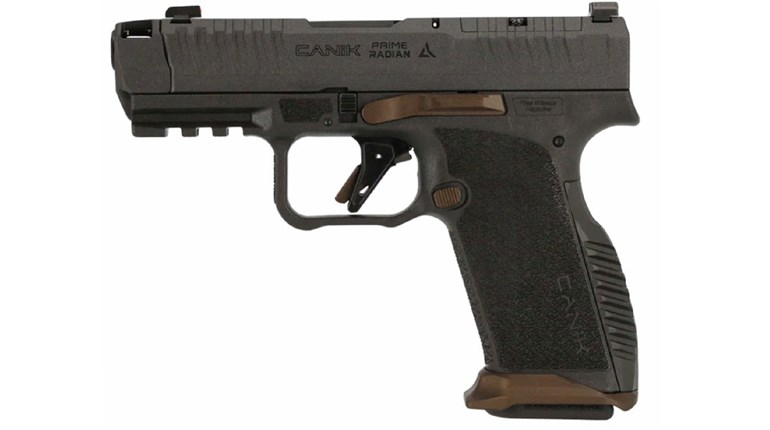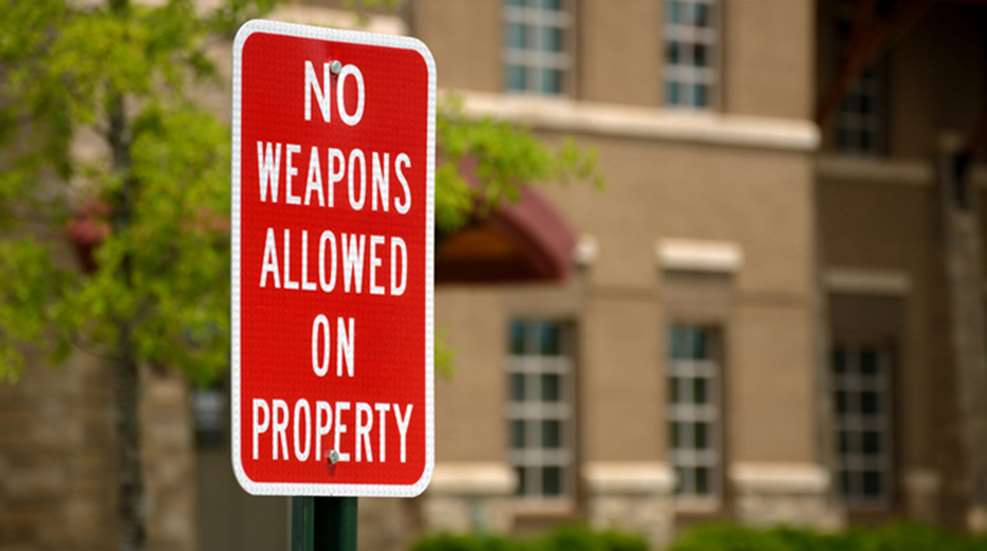
On January 20, 2026, the U.S. Supreme Court will hear Wolford v. Lopez, a suit challenging Hawaii’s broad expansion of “sensitive-place” restrictions to all private property that isn’t expressly open to citizens’ Second Amendment-protected rights—as it stands, this effectively makes most private property in the state a de facto gun-free zone.
The state of Hawaii, and many anti-Second Amendment organizations, have now submitted amicus briefs to the high court to argue their claims.
In the case, the Supreme Court will answer: “Whether the U.S. Court of Appeals for the Ninth Circuit erred in holding that Hawaii may presumptively prohibit the carry of handguns by licensed concealed-carry permit holders on private property open to the public unless the property owner affirmatively gives express permission to the handgun carrier.”
To put it another way, can a state or local government turn an individual right on its head by ruling that the right is presumptively prohibited on private property?
To makes its claim that, in this post-Bruen legal environment, they can do this, Hawaii begins with: “In the wake of New York State Rifle & Pistol Association, Inc. v. Bruen (2022), Hawaii revised its firearms laws to accord with this Court’s guidance on the scope of the Second Amendment. In those revisions, Hawaii also sought to protect its citizens’ right to exclude. That fundamental right, which was inherited from our English ancestors, means that ‘no man can set his foot upon his neighbour’s close without his leave’ … . The revisions were designed to vindicate both the right to bear arms and property owners’ undisputed right to choose whether to permit armed entry onto their property.”
This is a false claim, as property owners already have the right to exclude. They can (and some do) hang signs or otherwise inform customers they can’t carry concealed on the premises. The actual question is whether this right can be presumptively forbidden by government decree.
The Second Amendment, like the rest of the amendments in the U.S. Bill of Rights, are restrictions on government. They protect the peoples’ rights from government infringement. They are not “positive rights” the government is mandated to define and wield.
Later in its brief, Hawaii attempts to frame this disagreement this way: “Petitioners nonetheless assert that Hawaii’s law violates the Second Amendment as applied to property that is open to the public because there is an implied license to enter such property. But while consent can be established through an implied license, state law and local custom have always defined the scope of that license. Accordingly, Hawaii is free to enact a law clarifying that the public’s implied license to enter private property does not include an invitation to bring a gun, particularly because that accords with the well-established custom in Hawaii.”
Again, the state is attempting to treat this restriction on government as if it is a positive right the government is empowered to define and enforce. Hawaii says that “state law and local custom have always defined the scope of that license,” as if they can control on which private property this right extends to.
Also, by claiming “local custom” can be used to overrule an individual right, they are again claiming that an “Aloha spirit” somehow gives them the authority to severely restrict an individually protected right.
The history and tradition of the use of this right in America is very clearly the opposite of what Hawaii is now claiming.
To substantiate this, the NRA’s amicus brief explains that “[d]uring the colonial and founding eras, ‘The tavern was usually the only public place in town—except the meeting house on the days of worship—where the people were accustomed to congregate.’ Taverns were the heart of community life, serving not only as places for eating, drinking, socializing, gaming, and entertainment, but also as essential landmarks and lodging for travelers, and as vital centers of communication—hosting social meetings, business meetings, public gatherings, philosophical debates, legislative assemblies, and even handling the local mail … . Some colonies even required each town to have one. Later, in the early republic, taverns ‘continued to play their role as centers of community life for all classes of people,’ and ‘sprang up organically within new communities’ as the country’s frontier expanded. Taverns could be regulated. For instance, thegovernment often required licenses to operate a tavern, prohibited excessive drinking, imposed curfews, and set prices for the goods and services offered. In 1712 Massachusetts, even singing and dancing were prohibited. But governments never restricted firearms carriage in taverns. Rather, it was commonplace for patrons to carry their firearms into taverns. A typical tavern contained ‘hooks to hang firearms’ on ‘each side of the huge chimney.’”