After New York state officials attacked the National Rifle Association’s First Amendment-protected rights of speech and association, the NRA took the state to court. This case culminated in the U.S. Supreme Court’s 9-0 decision in NRA v. Vullo (2024), which ruled in favor of the NRA’s First Amendment rights.
Vullo has since often been cited in other First Amendment legal battles. Still, this win in the high court did not end the legal struggle in this particular case, as it sent the case back to a lower court.
Then, last July, the U.S. Court of Appeals for the Second Circuit determined that Maria Vullo, who was head of New York’s Department of Financial Services, is entitled to “qualified immunity” in this case because, even assuming her conduct violated the First Amendment, the specific right of association at issue here was not “clearly established” when she acted.
This is simply not true, explains a recently filed petition from the NRA with the U.S. Supreme Court in NRA v. Vullo.
“The Second Circuit insisted that the Supreme Court had broken new legal ground in holding that the First Amendment barred Vullo from coercing third parties into punishing or suppressing the NRA’s speech,” says the NRA’s petition. “While this Court explained that Bantam Books had long ago established that such coercion was constitutionally impermissible, the Second Circuit disagreed. Instead, the Second Circuit said Bantam Books stood only for the narrower proposition that government officials cannot coerce third-party conduits of speech to suppress that speech. That is, on the Second Circuit’s view, Vullo could not have known that she was not allowed to wield her regulatory power to punish or suppress the NRA’s speech, as long as she targeted the NRA’s insurance—as opposed to its internet service—providers. Thus, the Second Circuit concluded, ‘we can surmise only that a reasonable officer in Vullo’s position likely would have thought that her conduct ... was permissible.’”
While NRA’s petition clearly disagrees with the Second Circuit’s position on this particular case, the stakes here are far larger than the NRA’s First Amendment rights.
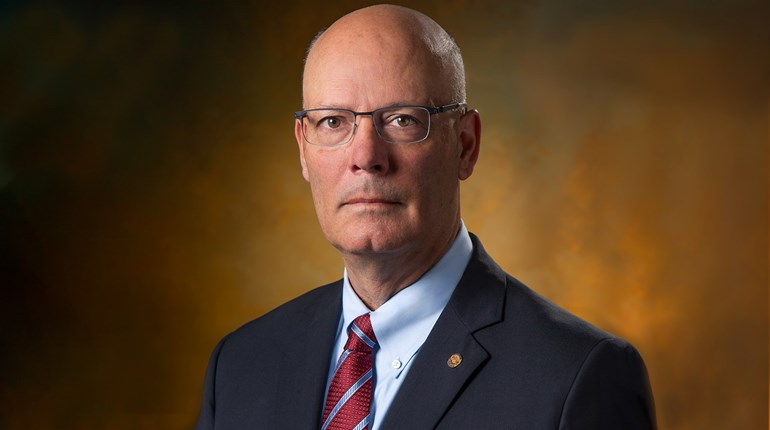
“At stake is a question that reaches far beyond any one organization: Should government officials be allowed to use their power to punish people for their political beliefs and then claim immunity from accountability?” said Doug Hamlin, executive vice president and CEO of the NRA in an opinion piece at National Review.
Vullo abused her regulatory authority by pressuring banks and insurance companies to cut ties with the NRA “because she opposed our stance on the Second Amendment. According to our complaint, Vullo made it clear to regulated financial institutions that doing business with the NRA could bring those institutions additional scrutiny—or worse,” said Hamlin.
This is a clear First Amendment violation, so much so that the U.S. Supreme Court’s Vullo decision was written by Justice Sonia Sotomayor, who was nominated to serve on the high court by former President Barack Obama (D). In the decision, Sotomayor wrote for the Court that the government “cannot attempt to coerce private parties in order to punish or suppress views that the government disfavors.”
Now the “NRA is seeking to hold Vullo accountable for crossing the line between legitimate government oversight and unlawful suppression of First Amendment rights,’” said Hamlin.
“Our petition asks the justices to make clear that there are consequences when officials overstep their authority and infringe on free speech. Without accountability, power will be abused. Today, it’s the NRA that is being targeted. Tomorrow, it could be another organization or individual. Our principle remains the same: government must never be allowed to punish people for their beliefs,” said Hamlin.
We’ll keep you posted on how this case proceeds.