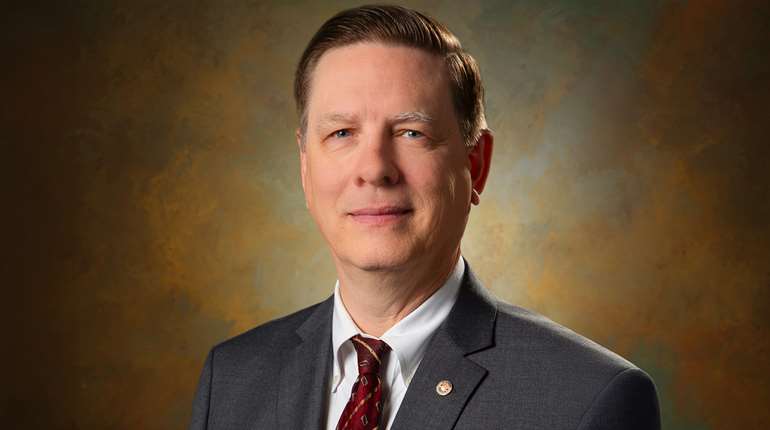
Photo courtesy of Wikimedia Commons, Daveakmc.
“Oh, what a tangled web we weave, when first we practice to deceive!” –Sir Walter Scott, 1808
Media narratives are like a prosecutor’s version of events; part of the story being told is true, but facts have been purposely omitted and insinuations have been made to make us believe a half-truth.
Anyone who cherishes their freedom is well aware of the mainstream media’s anti-Second Amendment narratives. What is interesting right now, however, is their narratives are becoming such tangled webs they’re getting trapped in them.
What happened when President Donald J. Trump visited Chicago is a good example of how anti-gun narratives are entangling politicians and members of the media who don’t like your Second Amendment rights.
President Trump was in Chicago to speak at an International Association of Chiefs of Police conference, but Chicago Police Superintendent Eddie Johnson opted not to attend. Superintendent Johnson said he skipped President Trump’s speech to protest the Trump administration’s immigration policies. Now, Chicago is a “sanctuary city” and President Trump has criticized Chicago’s policy of refusing to work with federal immigration authorities, but this was still an obvious dodge. The central problem with Chicago that President Trump has repeatedly highlighted, and a horrifying issue Chicago’s finest are tasked with solving, is the city’s gang-related bloodbath.
By refusing to attend the speech, Johnson showed he is not willing to even try to bridge the political divide on an issue that shouldn’t even be political. He is instead only interested in behaving as an activist, which should prompt any reasonable person to ask: When did police superintendent’s become activists?
The background to this is the fact that Chicago’s elected officials have long blamed American freedom—specifically, the many Americans who choose to legally own and perhaps carry firearms—for the illegal guns and the crimes committed in Chicago’s gang-infested neighborhoods. Chicago’s elected officials are so invested in this false narrative that honest solutions either evade them or are unpalatable to them.
Some of Chicago’s elected officials have also blamed law enforcement for the city’s violence and have burdened its officers with policies that make policing more difficult.
This is why, when Superintendent Johnson refused to attend President Trump’s speech, Chicago’s Fraternal Order of Police (FOP Lodge 7), which represents rank-and-file Chicago police officers, actually cast a vote of “no confidence” in Johnson.
This is also why the Chicago’s police union president, Kevin Graham, greeted President Trump after he landed in the city.
Some might argue that Superintendent Johnson was simply avoiding being shown up in his own city; after all, during his speech, President Trump did say, “It’s embarrassing to us as a nation. All over the world they’re talking about Chicago. Afghanistan is a safe place by comparison.”
But wouldn’t it have been stronger, and the gentlemanly thing to do, for the police superintendent to show up?
By not showing, Chicago’s police superintendent showed he is so tangled in his party’s anti-gun narratives that he just couldn’t do the right thing.
Trump, meanwhile, signed an executive order creating a presidential commission to look into how law-enforcement can better work with communities on substance abuse, mental illness and more. Trump also announced a new federal crackdown on violent crime. Too bad Superintendent Johnson has made it clear he isn’t big enough to even try work with the Trump administration to solve Chicago’s crime problems. (Frank Miniter’s latest book is The Ultimate Man’s Survival Guide to the Workplace.)