Can a right specifically protected by the U.S. Bill of Rights be barred from any U.S. citizen unless they can prove to the government’s satisfaction they are such a special case that they really, really need their right?
That was the basis of an argument that won over two judges, but not a third, at the U.S. Court of Appeals for the District of Columbia in July.
D.C.’s “good cause” requirement was so onerous that only about 120 residents were able to prove they have a special and compelling need to protect themselves with a handgun in D.C. Still, it was obvious that D.C.’s government would ask the court for a full-panel review in an attempt to overrule the pro-freedom decision.
However, the U.S. Court of Appeals for the District of Columbia declined to rehear the case with its full panel of judges. This left D.C. leaders asking whether they should they appeal to the U.S. Supreme Court.
Leaders there are afraid that a pro-freedom ruling might knock down similar laws in New York, California and other states.Now D.C. Attorney General Karl Racine has announced the District won’t appeal. Why? Leaders there are afraid that a pro-freedom ruling might knock down similar laws in New York, California and other states.
Of course, the Supreme Court might not have even taken the case. Last June, for example, the court passed on Peruta v. California. When this happened Justices Neil M. Gorsuch and Clarence Thomas wrote an eight-page dissent so filled with passion that it doesn’t seem a leap to picture the late Antonin Scalia whispering as a muse in their ears. They said the court’s refusal to hear the appeal “reflects a distressing trend: the treatment of the 2nd Amendment as a disfavored right.”
In a statement, D.C.’s Racine showed that he knows what a pro-freedom ruling might do.
“I continue to believe the District’s ‘good reason’ requirement is a common-sense, and constitutional, gun regulation,” he said. “However, we must reckon with the fact that an adverse decision by the Supreme Court could have wide-ranging negative effects not just on District residents, but on the country as a whole.”
Unleashing freedom would have “negative effects”? Clearly officials like Racine have no respect for freedom or the facts, as the areas with the most gun freedom tend to be the safest in the United States.
It is always difficult to predict how a group of judges will rule, but this shouldn’t be a difficult question for the high court to answer.
When the Supreme Court passed on Peruta, Justice Thomas wrote: “Even if other Members of the Court do not agree that the Second Amendment likely protects a right to public carry, the time has come for the Court to answer this important question definitively.”
Thomas then pointed out that in “the county where petitioners reside, the sheriff has interpreted ‘good cause’ to require an applicant to show that he has a particularized need, substantiated by documentary evidence, to carry a firearm for self-defense. The sheriff’s policy specifies that ‘concern for one’s personal safety’ does not ‘alone’ satisfy this requirement.”
These justices were simply asking, is there is a right to bear arms, or isn’t there?
Could a police officer search your home without a warrant if you don’t have some state documentation showing you particularly need your Fourth Amendment rights?Edward Peruta and the other plaintiffs in the case weren’t able to obtain concealed-carry permits because they couldn’t prove to the local sheriff’s satisfaction that they needed to protect themselves. Actually, San Diego County Sheriff William Gore had denied nearly everyone from utilizing their constitutional freedom. The few who attained permits had to beg, plead and show imminent danger to their lives through restraining orders and other legal documentation before Gore was compelled to bequeath a woman being stalked or some other unfortunate person their right to bear arms.
Imagine if a local sheriff or other official was permitted to treat other constitutionally protected rights this way. Could a police officer search your home without a warrant if you don’t have some state documentation showing you particularly need your Fourth Amendment rights? Could a district attorney require you to testify against yourself unless you somehow proved to his or her satisfaction that you really, really need your Fifth Amendment rights? Could an official revoke the First Amendment’s freedom of religion until someone proved to the official’s personal satisfaction that they really need their faith?
Now it looks like this D.C. decision will stand. However, D.C. politicians have shown in the past that they are good at using the power of the bureaucracy to impede freedom. Even the 2008 Heller decision, which tossed out D.C.’s handgun ban, has long been thwarted by D.C., through its now-defunct “good cause” requirement and other restrictions.
We’ll let you know how this fight for freedom in our nation’s capital proceeds.
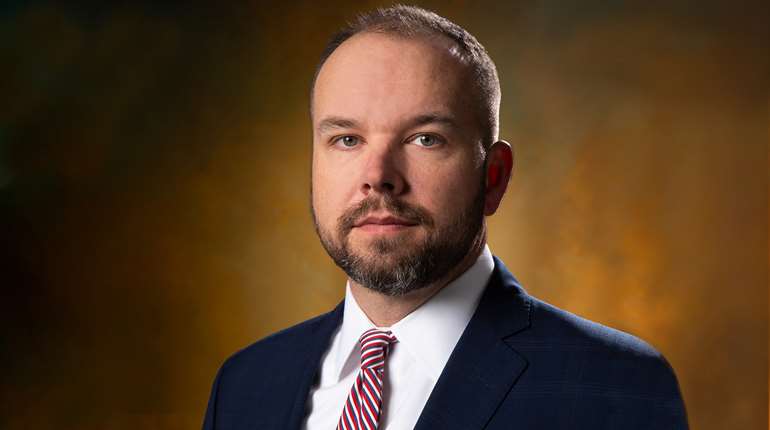
Frank Miniter is the author of Kill Big Brother, a novel that shows how to keep government from infringing on our liberties. Miniter is also the author of the The New York Times' bestseller The Ultimate Man’s Survival Guide—Recovering the Lost Art of Manhood, This Will Make a Man of You and The Future of the Gun. He is a contributor to Forbes and writes for many publications. His website is FrankMiniter.com.