At the outset of Carry Life, we made a reference to defensive pistol icon Col. Jeff Cooper’s awareness levels, or as he called it, the “Cooper Color Code.” The code itself is simple in concept, and of long standing. It—or something very like it—is essential to the conduct of any coherent self-defense.
It should be no surprise, then, that we’d offer it as a cornerstone of the Carry Life. Since it can very literally save life and limb, and quite often without resorting to any sort of engagement—armed, or otherwise—it’s worth making clear what the Colonel had in mind. It’s more than mere “situational awareness,” too, as we think you’ll come to see.
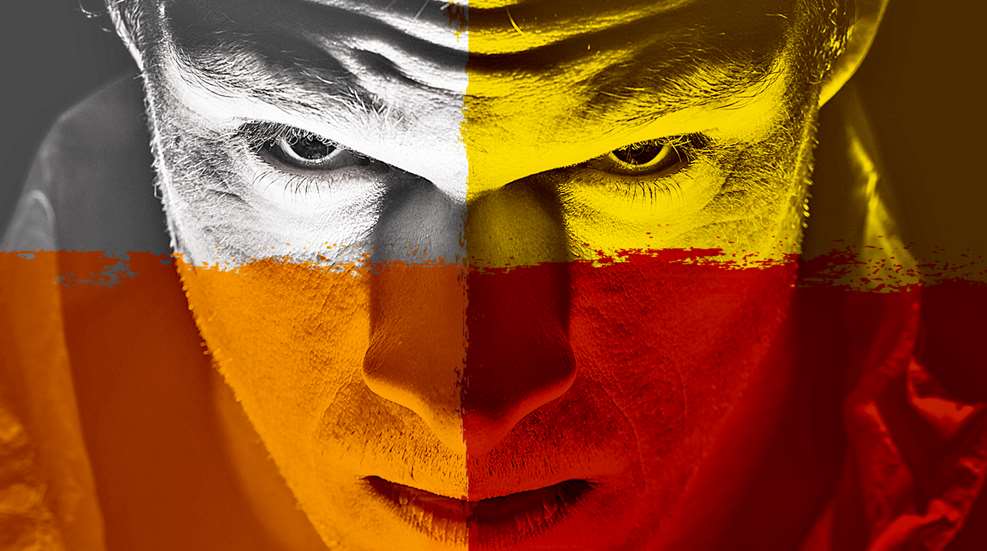
The five colors and their corresponding states of awareness are:
-
White: Unaware. By definition, this also means “unprepared.” If a threat appears, the response, in modern argot, is limited to “OMG!” Only the incompetence of the aggressor is likely to prevent serious harm.
-
Yellow: Relaxed, but alert to 360 degrees of surroundings.
-
Orange: A specific alert; something “is not quite right” to the extent that it draws your focused attention, and you decide on a course of action based on a trigger event (if X continues to follow you or to close distance; if Y and Z converge on you, etc.). The wider scan of surroundings is not abandoned, nor confrontation courted.
-
Red: The trigger from Orange occurs, and a fight is imminent or actually engaged. Focus is necessarily very tight on the threat engine.
-
Black: Though a common addition, especially in MIL/LE versions of the Color Codes, this level invokes the tunnel-vision, adrenaline-infused, super-heated state of the actual fight. In his inimitable way, Cooper dismissed the fifth condition as “basura” (rubbish): “In Condition Red [you are] ready … and there is no need to go beyond that …”
Cooper expounded these mostly in terms of the gunfight, of course, and this meant that conditions can be paraphrased to something like: White, no thought to self-defense; Yellow, “I may have to defend myself today;” Orange, “I may have to defend myself from that person very soon;” and Red, “When such-and-such happens, I’ll have to defend myself from that person, right now.”
This is where the confusion tends to set in. The color codes capture the mindset changes necessary to detect and repel dangers—up to and including the application of lethal force—but they purposefully avoid saying “do this,” or “don’t do that.” There are simply too many possible variations.There will be no time, certainly, for moral niceties. A present motive, a past grievance, a genuine societal injustice may well exist, but there will be no interval for evaluation, much less redress.
Subsequent clarifications by the Colonel made it absolutely clear that his framework-only approach was the fruit of long consideration. His intention was to enable you to “take action which is very unusual in your experience … A reasonably well-adjusted human being finds it very difficult to take lethal action against another human being. It is so difficult that it may prevent him from saving his own life.”
“Difficult,” we’d argue, is the key word, and it translates into the commodity in shortest supply when you find yourself in danger—time.
There will be no time, certainly, for moral niceties. A present motive, a past grievance, a genuine societal injustice may well exist, but there will be no interval for evaluation, much less redress.
There will be no time to call for help, though it’s common to think that cellphones are effective in this regard. A complete connection alone takes roughly 20 seconds. 911 “triage” takes longer yet, and is merely notification: If aid is dispatched, it will take seven, eight, even 10 or more minutes.
And when peril is unmistakable and upon you, there will only be time for action.
This is the genius in Cooper’s distillation of awareness into scrutable states. As you advance on the scale beyond unfocused White, decisions made in Yellow simplify choices in Orange. And those made in Orange simplify—to fight (or flight) essentials—those required in Red. Cooper’s action(s), in other words.

Once you understand that the Color Codes are a razor—designed to trim time-consuming inessentials from your decision-making when it really counts—then you can train so that the necessary actions become reflexive. Some useful interpolations and extrapolations can then be made (here, from a perspective women may find particularly cogent; here from a LE perspective).
We’ve tried to live this way for many years. It takes effort—especially at first—and there are times when we still find ourselves in “White.” It happens. There’s an upside, however, that we can find no reference to in the Colonel’s writing, but which seems unlikely he’d have missed—a silver lining if you will. Once taking stock of your surroundings in real time becomes a habit, you will notice good things too. Escape paths, passing faces and 360-degree sweeps resolve into a worthwhile nook-and-cranny shop or restaurant, an old friend, or unexpected vista. All that, and substantial personal security, too: Well done indeed, Colonel Cooper.
Now Carry on.