We’re always glad when Jeff Gonzales can make time in his schedule to talk with us. It’s no wonder why: He’s a decorated and respected former U.S. Navy SEAL, as well as founder and president of Trident Concepts LLC, a reality-based company specializing in personal protection tactics and training for armed and unarmed conflicts. He’s been lots of unpleasant places on our behalf, and shares those lessons with rare generosity.
As if that weren’t enough, he’s recently added to his considerable plate by joining The Range at Austin (Texas) as their director of training. Due to open this fall, the 52,000-square-foot facility will offer 37 lanes of indoor shooting (including five 100-yard bays)—dare we say “comfort”?—and extensive instructional paradigms designed by Jeff. It’s enough to make a fella want to move to Texas.
Exercise Your Freedom: Great to be talking with you again, Jeff.
Jeff Gonzales: Glad to be here.
EYF: Since the last time we talked, the 50 states have issued more than a million new concealed-carry permits. Have you been seeing a lot of this growth reflected in Trident training?
JG: Yes, we have. The last published number I saw and trusted was over 14 million. That implies that a lot of people either are, or should be, looking for training. The popularity of our courses is evidence that people are taking seriously the responsibility that having a permit implies: To become educated, get good training, and not to let the skills they acquire get blunted by disuse. In other words, practice often.
EYF: Our lens is a little different, but we’ve seen the same trend. One aspect we’re interested in is the sorts of firearms people are selecting for carry purposes, and why. There are certainly a lot more choices than ever before. Any thoughts on that?
JG: We actually spend a lot of time on this in our training, and there are multiple ways to slice that “pie.” There are several parameters we encourage people to take into account. No surprise here, but we think the important ones are best considered before a purchase. Get one or two of these choices wrong—or at least make them disadvantageously—and your subsequent instruction and training may turn out to be less effective than you’d hope. No surprise here, but we think the important ones are best considered before a purchase.
EYF: Mind running a few of those down for us?
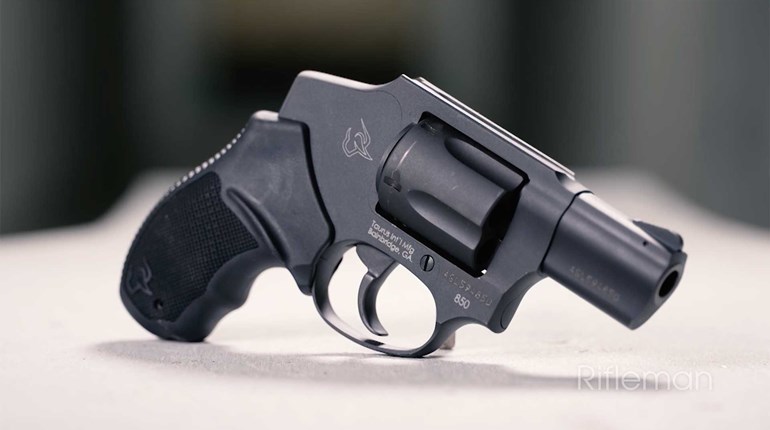
JG: I did a blog post on this in detail not long ago, but the broad strokes are easy: We’re seeing a lot of smaller pistols, even what we’d call “minis,” in our training. Don’t misunderstand here, we like these (the Glock 43 and M&P Shield, for instance) in certain circumstances. Sometimes, they may be the only practical choice because of wardrobe limitations. But they just aren’t the best platforms to start on because they make marksmanship harder to develop; sometimes considerably harder.
Their smaller form factors tend to accentuate recoil impulse for one, and relatively shorter sight radii are more demanding for good shot placement/sight picture at distance, even up to the point where students get stuck, simply not advancing beyond the basics. Their weight and size make them appealing, but … well, the other compromises aren’t usually worth it.
The giveaway in training is pretty consistent, too. Students start out well, but fatigue takes a disproportionate toll. Our training has generally high round count to develop and reinforce durable skills, and the all-but-inevitable fatigue of smaller firearms leads to poor mechanics and subsequently poor marksmanship.
EYF: That makes sense, somewhat unfortunately. What else?
JG: Two other interrelated factors are high on our list—stopping power and round count. The “minis,” of course, are weakest here. .22LR, .25 ACP and .32 ACP are all making something of a comeback due to their very small size and “easy” carry weight, but they demand an awful lot in terms of marksmanship to be any sort of fight-stoppers. Even with good marksmanship, performance can be erratic. Their small round counts add to their problematic use as a primary concealed-carry pistol.
The larger (but still small) guns—the G43 and Shield—have a much more capable round (9 mm), but again, small round count. This can only be remedied to a certain extent by reload: Their dimensions slow reloading, and marksmanship remains a challenge.
Either type is simply better suited to a back-up or second gun role.
EYF: Sounds like you’re edging up fairly definitively to a larger pistol as the recommended starting point?
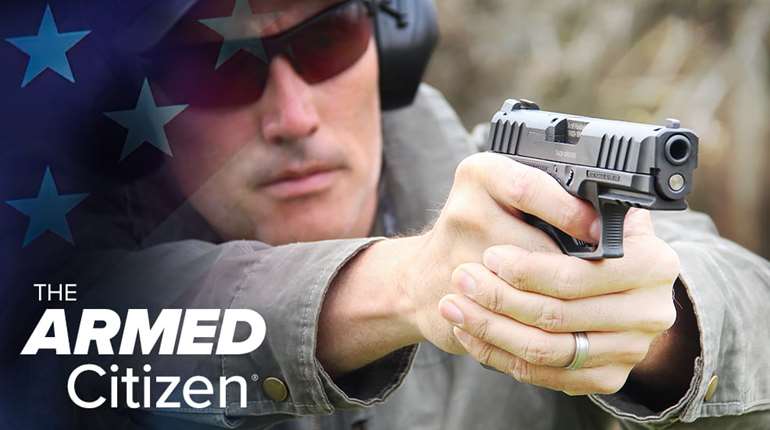
JG: That’s a reasonable way to put it. Although nobody likes to think about the necessity of actually shooting, we live in a world where armed self-defense may become a necessity- a “battlefield,” whether you like it or not. In that environment, marksmanship is still king. It’s the main reason we’re such fans of defensive pistols in the Glock 19 size and round capacity range: They do lots of things extremely well at less than full-size, duty scale. Two other interrelated factors are high on our list—stopping power and round count.
In the last analysis, there may be no option but to apply military-style thinking to the problem as you face it, to define your “mission” as it relates to concealed carry. If that mission is occasional carry and home defense, you can work around the larger size, and take advantage of the better marksmanship it helps develop. On the other hand, regular range gear certainly won’t be applicable if your day-to-day “uniform” is a suit; even a G19 can’t work in many of those situations.
A smaller pistol may come back into play, but if you’re forced to use it, you’ll have the crucially better marksmanship skills developed on the more forgiving and enabling platform of that larger handgun. This works out best if you started out on that better platform.
EYF: Thanks, Jeff. It sounds like we need to revisit the actual carry aspects of the “mission” as you’ve defined it, too. Can we get on your calendar again soon for that?
JG: You bet.