Imagine you want to open a gun store in California’s Alameda County, the county that includes Berkley and Oakland in the San Francisco Bay area. If so, you must be a courageous and enterprising sort. Your eyes are open, so you hire an attorney to navigate the regulations. But then your attorney, who is charging you by the hour, says a county ordinance prohibits you from having a gun store within 500 feet of a residentially zoned area. You go on GoogleEarth and find that the county’s bureaucrats must have hired a good surveyor at taxpayer expense, as you can’t open your store anywhere reasonable.
This isn’t a hypothetical anti-gun business example, but a real regulation passed in 1998. When president-elect Donald Trump talks about the harm to business unreasonable regulations impose, he is talking about many real and often ideological regulations like this one. Similar regulations, which incidentally place more of a burden on the poor, have also banned or made it nearly impossible to open gun stores in Chicago and Washington, D.C. When at their best, judges do represent this ideal by interpreting the law, and always being careful not to write law from the bench.
It’s expensive to deal with such regulations and even more expensive to challenge them. But several plaintiffs have been challenging the one in California’s Alameda County for years. They have been up against the deep, taxpayer-funded pockets of one of California’s most populated counties. Last spring the plaintiffs won a decision, but the U.S. Court of Appeals for the Ninth Circuit just granted en banc review in the case (Teixeira v. Alameda County), so the plaintiffs will have to keep paying lawyers as they hope a majority of justices on the Ninth Circuit will read the Second Amendment in the U.S. Bill of Rights honestly and interpret this freedom according to the U.S. Supreme Court precedents of Heller and McDonald.
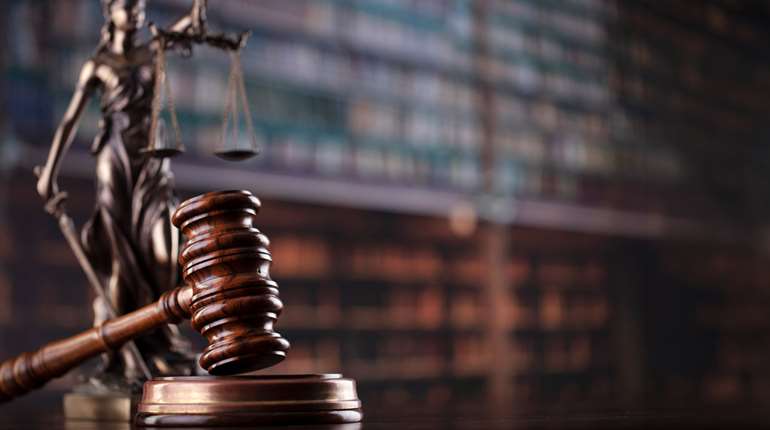
As they continue with this fight for their freedom to sell legal and constitutionally protected products, no doubt they just wish our men and women in black robes would be neutral arbiters of justice—that they’d be nothing more than physical embodiments of Lady Justice who wears her blindfold securely and holds those scales of justice evenly in her left hand while holding a sword against the ground in her right. She is the Roman god of justice and a statue of her stands in front of the U.S. Supreme Court—and in front of courts in many parts of the world.
When at their best, judges do represent this ideal by interpreting the law, and always being careful not to write law from the bench.
But, as these plaintiffs in California know too well, we are continually forced away from these ideals and into the political realities of today. The Left side of politics cares little for judicial restraint. The judges they nominate too often put their thumbs on the scales of justice.
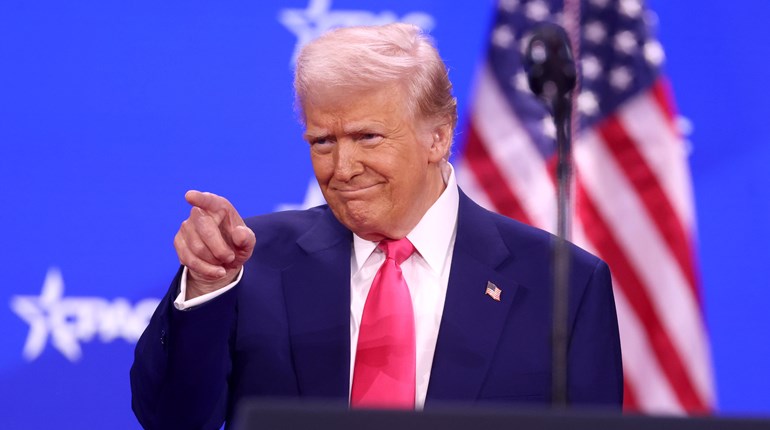
This is perhaps the biggest reason why the last election was so important. The Washington Post recently added up the vacancies in the federal court system and determined that there are currently more than 100 openings to be filled on federal courts, including an empty seat on the U.S. Supreme Court and perhaps more to come. President-elect Donald Trump will have an opportunity to protect freedom by nominating good judges all across the court system.
This will have many regional and local ramifications. In that California gun-store restriction, for example, last May a majority of justices ruled that the Second Amendment protects the right to open a gun store to sell legal products legally, but a judge dissented; he called the suit “a mundane zoning dispute dressed up as a Second Amendment challenge.”
The Second Amendment is “mundane”? Even the politicians who passed this law didn’t frame this regulation as mundane. They claim it is necessary to curb gun violence. Of course, this method has been proven wrong again and again. Inhibiting law-abiding citizens from purchasing guns in no way inhibits criminals from obtaining guns on the black market—all such laws do is make it harder and more expensive for those who follow the laws to purchase firearms for sport or self-defense.
In the bigger picture, justices throughout the federal court system have been calling each other out since the Supreme Court’s Heller decision in 2008. President-elect Trump now has the opportunity to protect our freedom by nominating a justice to the U.S. Supreme Court who will interpret the law, not write it from the bench.
In one example, in February 2014 the Ninth Circuit Court of Appeals confirmed that the Second Amendment protects an individual right to carry firearms for self-defense in public. The decision came in Peruta v. San Diego County. At the time, the majority opinion in Peruta said, “We are called upon to decide whether a responsible, law-abiding citizen has a right under the Second Amendment to carry a firearm in public for self-defense.” Though the court initially ruled that the Second Amendment protects the right to carry a gun, the court reheard the case en banc and ruled that “there is no Second Amendment right for members of the general public to carry concealed firearms in public.”
The original Ninth Circuit ruling in Peruta had noted the many disagreements taking place in the courts over the Second Amendment: “Our reading of the Second Amendment is akin to the Seventh Circuit’s interpretation … and at odds with the approach of the Second, Third, and Fourth Circuits…. We are unpersuaded by the decisions of the Second, Third, and Fourth Circuits for several reasons. First, contrary to the approach in Heller, all three courts declined to undertake a complete historical analysis of the scope and nature of the Second Amendment right outside the home …. As a result, they misapprehend both the nature of the Second Amendment right and the implications of state laws that prevent the vast majority of responsible, law-abiding citizens from carrying in public for lawful self-defense purposes.”
Such is the fight for freedom now taking place in many courts. Some of these cases will likely, at some point, make their way to the U.S. Supreme Court.
President-elect Trump now has the opportunity to protect our freedom by nominating a justice to the U.S. Supreme Court who will interpret the law, not write it from the bench. Even so, this is hardly the end of the fight for freedom at the judicial level, but simply a battle won in the direction of freedom.