We’ve “outed” ourselves as suckers for clever, and we’ve got an absolute gem for the present. We’d argue that it is so subtle that it’s hard to explain, but—as we hope you’ll agree–easy to demonstrate. It has only one inconvenience we’ve been able to find to date, and that begging the question: “Well, duh; why didn’t we think of that?”
TacomHQ TARAC
You don’t shoot rifles long without facing up to an inconvenient reality: Gravity sucks. Literally. Even the best optics in the world have limited ways to account for the fact that while line-of-sight makes anything look hittable, the big “G” will be along shortly to rip the bottom—again, quite literally—out of the whole notion of straight shooting. <<Cue muttered cursing>>
We’ve all been there. One workaround has been around a long time, though with uneven success: Click adjustability. Go up (or down) so many clicks to account for ballistic drop or vertical angle, and right (or left) to account for X wind or movement in Y direction. Then some wise guy suggests you “shoot a square,” and the limits of the precision of click adjustments become more evident, even glaring, in a hurry. Sigh.
In the last 20 years or so, widespread “ballistic” reticles with acronyms like BDC (ballistic drop compensation) have eased the aggravation for the gravity part of the equation, and etched glass reticles (as opposed to wire) have done the same for other “dopes.” Most of these variations force you to aim using non-central parts of the reticles though, a task against which the concentricity-loving eyes and brain occasionally revolt. Still, there’s math and practice to getting it right, and for many of us this even gets to be a goodly chunk of the fun. We grant this last is evidence of a slight peculiarity.
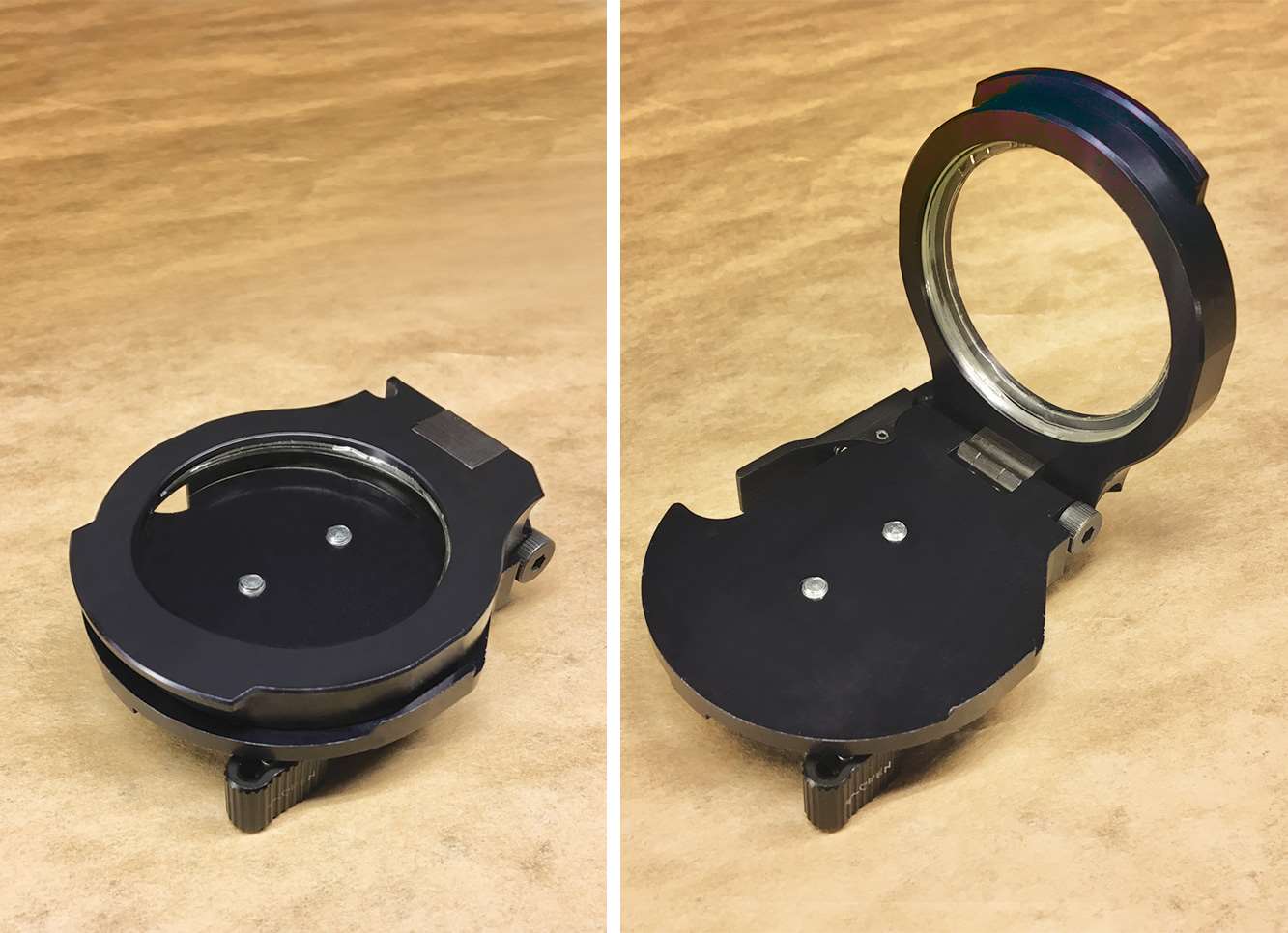
Other times, however, it’d sure be nice to just hit. No counts, no clicks, no dopes: Point, and press. Scratching this particular itch is where TacomHQ’s TARAC offers a clever, adjustment-free, on/off sort of solution, though with a slight problem: It is so elementary that description is actually more difficult.
After careful assessment of that difficulty, we do what any self-respecting reviewer would do: We chicken out and take pictures.
Our first inset illustrates what a TARAC does. The lower hit is our “zeroed” strike at 100 yards, without the TARAC deployed in front of our optic. The upper hit is the same ammunition, shot at the same point of aim with the TARAC flipped up. The impact is changed as the result of the TARAC’s prismatic elevation of our unadjusted reticle.
Here’s the point: With no adjustments that have to be remembered and/or undone for a subsequent shot, our rifle—in this case a mighty nice DoubleStar ARC in .300 Blackout—now has two precise zeroes for 125-grain SIG Sauer Supersonic Elite Match. The first is at 100 yards—the lower hit, and just as we dialed it in. The second—using a little “backwards” math—is 350 yards. Naturally, this needs confirmation with actual hits, but the ability to go back and forth just by flipping the single TARAC lens up and down is fairly intoxicating.
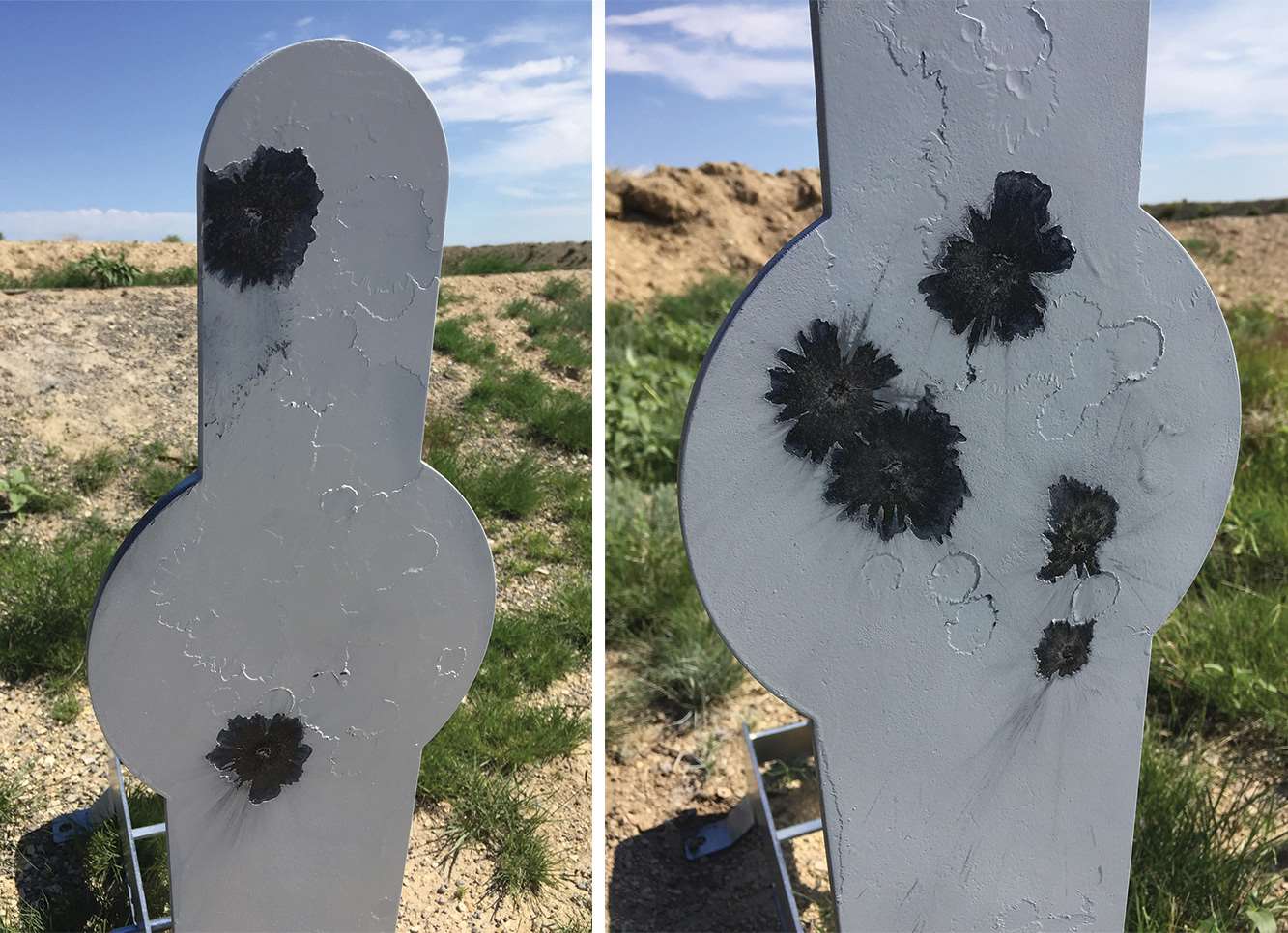
Our second photo shows another application that may be even more appealing, especially with a cartridge like .300 BLK. As it happens, velocities of the SIG supersonic (superb, by the way) and Federal/American Eagle 220-grain subsonic overlay in a six-inch circumference at 100 yards with the TARAC at work: Regular “bingos” with the 125s and TARAC folded down; more regular bingos with 220s and the TARAC flipped up. All with no click counts to recall (though a zeroing turret eases this, we concede), or counts to make on the reticle. We know those groups won’t impress, but plead a gusty 20-30 mph wind and a bearing change of ~120 compass points in the hour or so we had to shoot this. No picnic.
When we first saw the TARAC, we thought, “That’ll snap off in about two seconds, so no matter how nifty, who cares?” Boy, were we wrong here: The rail mount itself is LaRue (enough said), and we’ve been every sort of harsh short of actual malice, and the TARAC has barely a mark on it, to say nothing of still-perfect function.
Another point: Don’t think you have to depend on the fortunate coincidences we benefitted from for either the overlapping or comparatively “even” alternate zero distances. TacomHQ has a variety of prisms they can put in a TARAC that will optimize it for your cartridge and bullets, and give as much as 60 MOA of offset for the second zero. And if the 6.1-ounce, 2.25-inch size seems like more than you need, take a look at the smaller “Alpha,” barely 5 ounces and 1.25 inches in diameter.
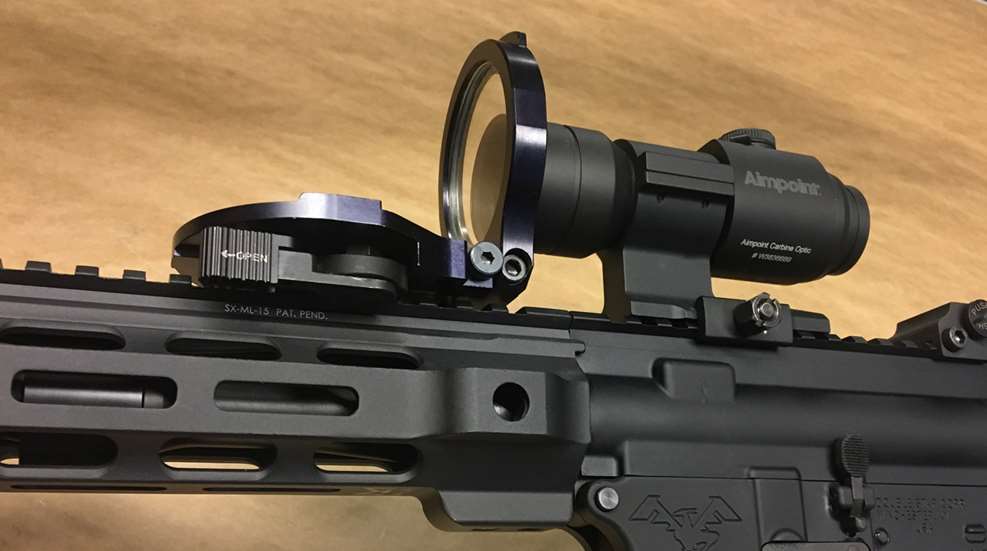
Our main image has the final “goody” in the TARAC story: We did our Blackout testing with a mighty nice EOTech Vudu FFP 1-6x, but that’s not pictured for good reason. Unlike other systems that try to enhance reticle utility to meet varied distance requirements and introduce this-won’t-work-with-that issues, the TARAC is completely agnostic in this regard. It works with traditional tube optics of either first or second focal plane, holographic and reflex reticles, yet doesn’t mess with any aspect of the appearance of those aiming cues. It does not increase obscuration, nor require compensating calculations; hence it was also a dream on our pictured Aimpoint Carbine Optic.
Visit TacomHQ at http://www.tacomhq.com/home.html. MSRP on TARACs range from $309 (Alpha) to $465 (Bravo, as tested).
Frank Winn has been studying arms and their relationship to tyranny, meaningful liberty and personal security all his adult life. He has been a firearms safety/shooting instructor for more than 20 years, and earned state, regional and national titles in several competitive disciplines.