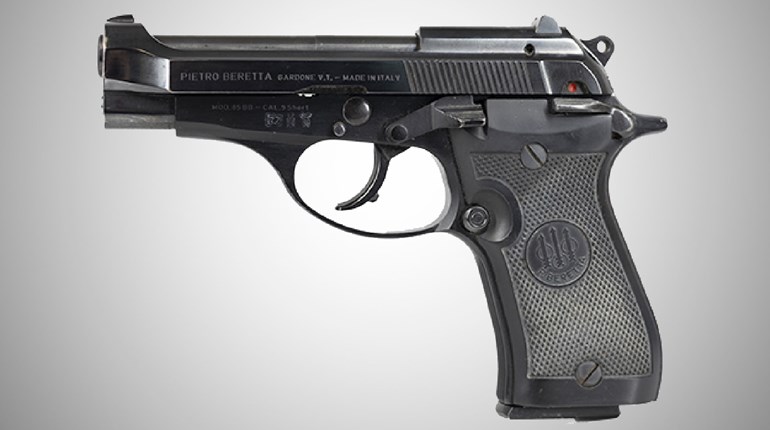
Mastering our shooting skills comes in two distinct phases. The first is gaining the fundamentals that allow us to hit our target consistently and accurately. Once that becomes second nature, we need to turn to application training. This is especially true for defensive handgun work. In short, we need to learn how to fight with our handgun. This means training in low light, around obstructions and even with one hand at times. It is this last skill that can be most challenging. The reasons for doing this range from training to shoot with a potential injury or even if you are holding someone to protect them. Often called “weak-side” shooting, this skill set focuses on the ability to fire and manipulate your gun when your dominant hand or arm is unavailable. This is a crucial skill because a failure to transition to your support-side hand if injured can have lethal consequences.
While there are numerous specific components of support side shooting, we will take a look at some of the most important skills.
1. Drawing your handgun
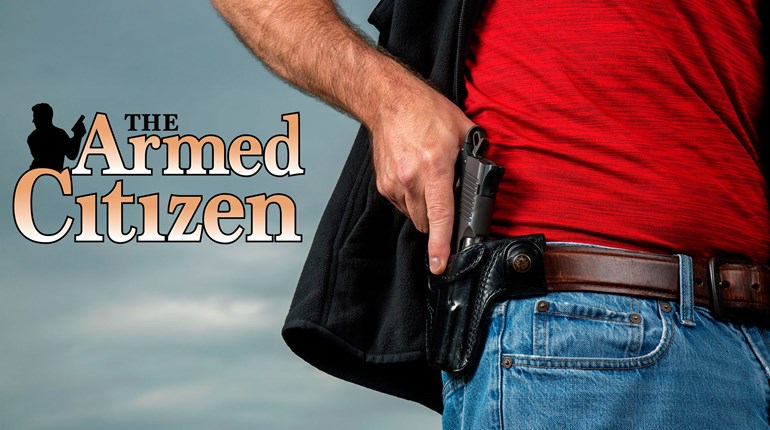
You may have your strong-side hand unavailable even before the gun is drawn. If this is the case, you will need to use your support side hand to get your gun out and into action. The position and location of your holster will drive a great deal of this but the principles are the same. With that being said though, it is always sound advice to test your holster position and make sure it fits all of your needs. Reach with your support side hand and index the gun. At this point it will be “upside down.” Now draw the gun in and pivot it in your hand. This can be helped by using your leg or other surface as a balance/press point. It is important to keep positive control of the gun and remain aware of your muzzle orientation. Once the gun is oriented correctly you can then acquire a firing grip and get to work.
If you ever lose the ability to shoot with your dominant hand, you need to be able to draw, shoot, reload and clear malfunctions one-handed from the weak side.
2. Shooting one-handed
While it takes some practice, shooting with the support hand differs very little from shooting one-handed with your strong hand. A firm but not crushing grip coupled with a smooth continuous trigger pull will result in accurate and repeatable shots. This will also minimize the movement of the gun in your hand. One specific area to focus on is a smooth press of the trigger directly to the rear. Take your time to always press the trigger smoothly and without a jerk.
3. Reloading the gun
While it will hopefully not be needed, you will need to be able to reload if things press on. Like the draw, there is a process to work from. One method to execute a reload is as follows: eject the empty magazine to the ground; reholster the gun, accepting that it only fits in partially because it will be “backward”; index a fresh magazine and seat it into the mag well; reacquire your grip on the gun; draw it back out with a free finger; press down the slide stop and let the action run forward. You are now ready to re-enter the fight if need be.
4. Malfunctions
One of the challenges people face when shooting one-handed is keeping sufficient support on the gun. This in many cases turns into malfunctions. The most common malfunction is a type two, or failure to eject. The gun moves slightly in your hands and the slide does not get its regular motion. The standard remedy for this malfunction is described as “tap, rack, flip.” This can be done one-handed with practice. The first step is to “tap.” This ensures that the magazine is seated correctly. One method is to use your knee as a surface to tap the magazine. Second is the “rack.” This is where caution and diligence are essential. Sloppy muzzle and trigger discipline can result in serious injury. You will need to find a firm surface to hook your rear sight on. One that is commonly used is the magazine pouch or belt, but you can use any firm surface. Hook the sights and drive the gun down thus racking the slide. The final step of “flip” is incorporated at this point as well. As you rack the slide, flip the gun sharply, an action that will clear anything that might be sitting in the chamber. This technique should be practiced initially under professional supervision. Then training should be done with an empty gun until you master the skill.
5. Train
While these are the fundamental basics of one-handed shooting, there is a great deal more to learn. To raise our skill level and be effective in a gun fight we need to train. Extensive training on one-handed practice can help you gain those skills. We enjoy shooting with two hands or with our dominant side because we are good at it. The areas where we are challenged in terms of accuracy and speed are where we need to focus the most. These are the skills that can ultimately determine the outcome of a lethal-force encounter.