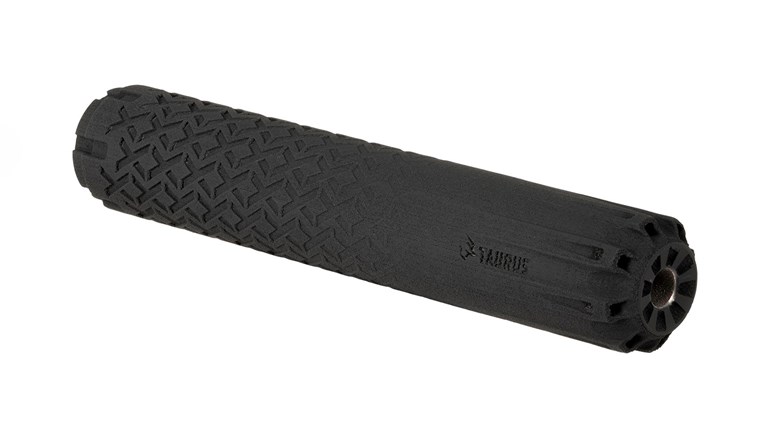
Deceptively mislabeling firearm suppressors as “tools of murder” in a press statement, Rep. Bonnie Watson Coleman (D-N.J.), along with Sen. Bob Menendez (D-N.J.), reintroduced the “Help Empower Americans to Respond Act” (HEAR) that would, if passed into law, ban the importation, sale, manufacturing, transfer and even the very possession of these strictly regulated firearm accessories.
“Gun silencers are dangerous devices with one purpose and one purpose only—to muffle the sound of gunfire from unsuspecting victims,” said Menendez. “The sound of gunshots is what signals you to run, hide, take cover, call the police and help others save themselves; however, this is nearly impossible when a gun silencer is used.”
None of this is true, as Knox Williams, president of the American Suppressor Association (ASA), told A1F.com. Yet, Menendez’s claims could be believed by those who simply don’t know the truth about suppressors.
“Those are blatant misrepresentations,” said Williams. “With the information and research that exists, these politicians can’t claim to be woefully ignorant about suppressors. Criminals almost never use suppressors, and suppressors are first and foremost effective tools for negating hearing damage for shooters.”
Suppressors simply attempt to reduce the noise produced by the muzzle blast of firearms to under the 140-decibel (dB) threshold; the level found to be damaging to the human ear by the US Occupational Safety and Health Administration (OSHA). But gunshots are still very much heard and obvious. A suppressor that reduces muzzle blast to 130 dB is still much louder than a jackhammer at 120 dB or chainsaw at 110 dB.
A suppressor doesn’t even remove the need for proper hearing protection—they are simply more polite.
According to data collected by the National Shooting Sports Foundation (NSSF), suppressors are rarely used in any sort of crime. NSSF analysis of a study looking at the criminal use of suppressors between 1995 and 2005 found that an infinitesimally low 0.00006% of felonies in California involve a suppressor. Based on records of prosecutions for violations of California’s suppressor laws, the vast majority of the violations did not involve a suppressor actually being used in the commission of another crime.
Criminals generally don’t use suppressed firearms for any number of reasons, including because suppressors often require modifications to firearms to make them fit and allow the firearms to operate correctly, the added length and weight of suppressors makes them much harder to conceal, and, as previously noted, they don’t actually “silence” firearms.
Research done by criminologist John Lott found that suppressors are anything but tools used by those intent on doing harm unto to others.
As Lott wrote, legal owners of suppressors “have been extremely law abiding. In the 10 years from 2008 through 2017, the ATF only recommended an average of 44 suppressor-related prosecutions per year. This means that roughly .003 percent of ‘silencers’ are used in crimes each year.”
The facts don’t matter to Menendez. He actually introduced similar legislation in 2019. That previous bill and the current one would create a program to confiscate currently owned suppressors. People would be given 90 days to turn in their suppressors to have them “bought back,” after which they would be in violation of federal law if they fail to comply.
Currently, suppressors are regulated under the National Firearms Act, and purchasing one requires extensive paperwork and a background check, as well as the submission of fingerprint and notifying local law enforcement of the intention to purchase the suppressor. Oh, and a $200 tax stamp must also be purchased at the time of application.
Not all the suppressor news is bad, though. Sen. Mike Lee (R-Utah), along with Texas Republican Sens. Ted Cruz (R-Texas) and John Cornyn (R-Texas), introduced the “Silencers Helping Us Save Hearing” (SHUSH) Act. It would “removes silencers from the list of firearms subject to regulation (i.e., registration and licensing requirements) under the National Firearms Act (NFA). Additionally, it excludes a muffler or silencer from the list of firearms subject to regulation (e.g., background check requirements) under the Gun Control Act of 1968 (GCA).”