On July 4, 1776, the Second Continental Congress adopted the Declaration of Independence of the United States of America. The delegates knew their cause was righteous, but they didn’t know if they could defeat the standing army of the world’s most-powerful empire.
Americans hoped their superior arms skills would make the difference. In a letter written on June 19, 1775, James Madison predicted that Virginia’s riflemen would defeat the British Redcoats before the Redcoats could approach close enough to use their muskets. In Virginia’s upland counties, Madison wrote, “You would be astonished at the perfection” of marksmanship. “The most inexpert hands” could regularly hit “the bigness of a man’s face at the distance of 100 Yards… . Indeed I believe we have men that would very often hit such a mark 250 Yds.”
 Madison was right. “The Colonists in America were the greatest weapon-using people of that epoch in the world,” Charles Winthrop Sawyer wrote in his 1900 book Firearms in American History. Because average Americans were proficient with arms, they transformed themselves from British subjects into American citizens; as a result, the Fourth of July is celebrated as our national birthday, and not mourned as a transient fit of public insanity—as King George had thought.
By the time of the American Civil War in 1861-65, American arms proficiency had deteriorated. One reason that war lasted so long was the Confederate soldiers, many of them raised on farms, were far more skilled than their Union counterparts.
So, in 1871, the National Rifle Association of America was formed to restore America’s historic culture of arms proficiency. To the NRA founders, American arms skills needed much improvement if the United States was going to be able to maintain its independence and liberty in the long run.
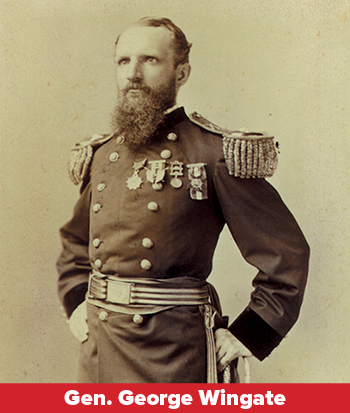
Initially, the Association and its members concentrated on promoting rifle competition. As the Association grew, its programs expanded. In 1907, NRA co-founder George Wingate published a manual for how high schools could offer students marksmanship instruction. School programs flourished all over the United States. Half a century later, when future U.S. Supreme Court Justice Antonin Scalia was growing up in the 1950s in Queens, N.Y., he carried his .22 rifle on the subway to school, to use the range that had been built thanks to the initiative of Wingate and others.
In the early 20th century, during the presidencies of Theodore Roosevelt and William Howard Taft—both of them NRA members—Congress created and then expanded the Civilian Marksmanship Program (CMP) to foster voluntary training. The NRA was Congress’s chosen agent to promote safety training and to distribute surplus U.S. military arms to patriotic citizens at low cost.
The NRA had helped prepare the American citizen-soldiers who would win the Spanish-American War in 1898 and then World War I in 1917-18. But the gravest danger to the survival of American liberty came in World War II. The NRA stepped up with massive support for arms training in the Army and Navy, plus a basic rifle training program for Americans about to be inducted into the military. Because of the NRA, American victory came sooner and more servicemen returned home alive.
Having been founded and led by illustrious Civil War generals, such as Ambrose Burnside, Winfield Scott Hancock and Ulysses S. Grant, the NRA’s attitude on civil rights was both unsurprising and unusual. The NRA resolutely refused to impose any sort of racial discrimination in membership or activities.
Yet the NRA and the CMP came under attack from politicians who resented the NRA’s effectiveness in resisting gun-control bills. So, in 1965, the CMP was subjected to an independent audit by the Arthur D. Little company. The Little report found that NRA/CMP gun clubs produced members who were more likely to enlist, to prefer a combat unit emphasizing rifle use, to achieve high marksmanship scores during basic training and to become military marksmanship instructors. Not a single NRA/CMP gun had been used in a crime. As more Americans were being sent to fight the Vietnam War, NRA gun clubs built their skills to prevail in combat and return home.
Ever since 1871, the NRA has brought more and more training to the American people, including for concealed carry, hunter safety, law enforcement and many other disciplines. Skilled American soldiers and skilled American self-defenders are part of the seamless garment of American freedom. For a century and a half, the NRA has ensured that sacred fire of liberty that was ignited on July 4, 1776, will always burn bright.