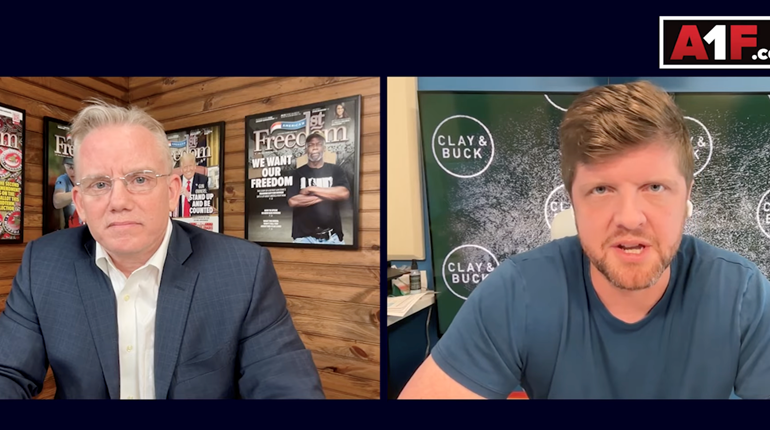
Often, when it comes to anything having to do with facts about guns, we have to unravel the mainstream media’s dishonest spin—spin they most often take directly from gun-control groups. That’s what this video, the first in a new series from America’s 1st Freedom called “A1F.com’s Firearms Facts,” does.
If our freedom is going to remain, and even grow, the truth needs to continue to get out. This video series is a new way for us to give the facts in a clear and compelling way that will hopefully reach even more people. To help, please forward a link to this video and others in this series to friends and talk about them on social media.
In this first installment, we cut away the tangles of spin surrounding suppressors, as many in the media and in politics push disinformation on even old gun technologies.
Suppressors (otherwise known as “silencers”) are certainly an old idea. In the first decade of the 20th century, Hiram Percy Maxim invented and perfected the “Maxim Silencer,” a suppressor he received a patent for in 1909. Today, companies like SilencerCo, Sig Sauer and Gemtech Suppressors are making steady advances in improving the technology, but the basics remain the same.
With suppressors, it is important to get the truth out, as these devices are hearing-protection equipment. A suppressor, after all, is nothing more than a gun muffler. Like mufflers on autos, suppressors basically just make guns a little more polite. This is why they are commonly used on hunting rifles in countries such as Finland and the United Kingdom (where they are often called “sound moderators”).
As they can help to protect a person’s hearing, suppressors have become so popular that well over a million of them are now in the hands of U.S. citizens.
Despite the usefulness and popularity of suppressors, some politicians are trying to ban them. Sen. Bob Menendez (D-N.J.), for example, introduced a bill in 2019 to outlaw suppressors. The legislation, called “The Help Empower Americans to Respond Act,” would ban the importation, sale, manufacture, transfer or possession of suppressors. This legislation would also authorize a silencer buyback program.
Nevertheless, thanks to lobbying from the NRA and others, a lot of states have legalized suppressors over the past decade. Currently, suppressors are legal for private ownership in 42 states—hunters can use them in 40 states. To legally purchase or possess a suppressor, you must live in an area that allows them to be sold, and you must:
- Be at least 21 years of age to purchase a suppressor from a dealer;
- Be a resident of the United States;
- Be legally eligible to purchase a firearm;
- Pass an ATF background check with a typical process time of four to nine months;
- Pay a one-time $200 transfer tax.
Basically, if you live in one of the states that allows you to purchase a suppressor, you’ll need to fill out forms, pay the high fee and wait—a very long time. If your application is approved, they’ll send it back to you with a stamp attached. You can then pick up your suppressor at the store you bought it from. You’ll need to keep a copy of this permit with you when using your suppressor.
The NRA has been lobbying for some time to get Congress to pass and a president to sign legislation that would take away this burden and fee.