One hundred and fifty years ago this week, Abraham Lincoln made his disastrous visit to Ford’s Theatre. In a peculiar twist of fate, the 16th president’s last official act had been to create the organization that would eventually protect his successors: the Secret Service.

In an even greater irony, Lincoln’s formation of the service had nothing to do with protecting himself or other government officials at the time. The primary work of the new law enforcement organization was to stem the littoral, er, literal ocean of counterfeit U.S. dollars that appeared during and immediately after the Civil War (as much as a third of all U.S. currency at the time was fake).
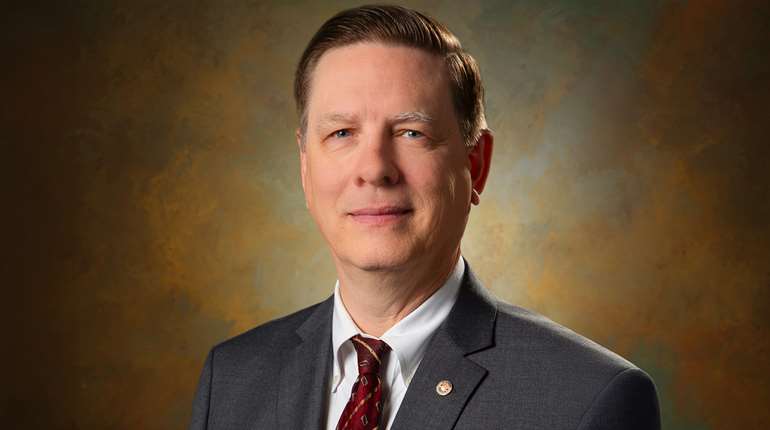
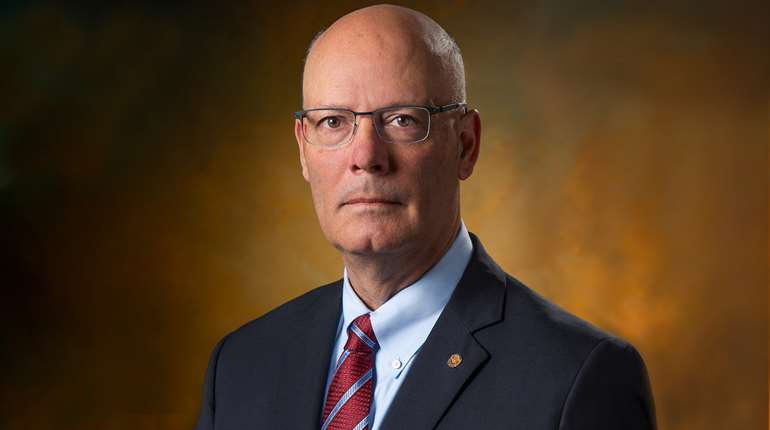
Secret Service training includes the history of these early days, as Dale Holmes, retired 21-year U.S. Secret Service Special Agent told American Warrior.
“Currency wasn’t systematically produced by the federal government until 1863,” he said. “Even then, it was as easy to counterfeit as the state- and federally-produced hodgepodge from before the war.” A daunting challenge indeed.
Despite being the fourth oldest federal law enforcement agency, no one seems to know quite where the name “Secret Service” originated.
The duties of the Service expanded through the latter part of the19th century, but still focused on detection and prevention of financial crimes and fraud. The assassination of President William McKinley in 1901 changed that. At the direction of Congress, the USSS acquired its best-known function—the personal protection of high government officials, and most especially, POTUS. Before the formation of the FBI (using a core of agents transferred from USSS to the Justice of Department in 1908 by President Roosevelt) and the various predecessors of the CIA (most famously, the OSS around 1941), the Secret Service was also the only American intelligence and counterintelligence agency through the 1920s.
Protecting the president has grown steadily more complex. Four agents or officers have been shot while protecting the chief executive. Only Private Leslie Coffelt died (during an attempt on President Truman in 1950, he was shot three times and mortally wounded, but returned fire and killed one of the two assailants). Despite being the fourth oldest federal law enforcement agency, no one seems to know quite where the name “Secret Service” originated.
At least two-dozen other attempts have been made on the lives of various presidents since McKinley. Only John F. Kennedy was killed (1963), although Ronald Reagan was wounded (along with Special Agent Tim McCarthy) in 1981. Despite the clear perils, Holmes still told us: “Most important duty? No surprise here—protecting the President of the United States.”
Beginning in the 1980s, Congress tasked the Secret Service to extend its financial scope abroad. Now beyond mere avarice, engineered financial crime was expanding into geopolitical manipulation on a global scale, including hostile governments willing to counterfeit U.S. dollars. The USSS had to match this burgeoning criminal ingenuity with increased technical and investigative capabilities—and locations—of its own. From 1,200 agents and three foreign offices in the 1970s, the Service now fields 3,200 agents in the United States and 20 foreign countries. An additional 3,300 personnel serve in the Uniformed Division, and in technical and professional roles.
Of course, the jewel in the Secret Service crown remains the protection of the president. Always zealous in its training, the Service moved from “lone gunman” threat models to sophisticated years-in-the-planning assaults by international terrorist organizations in the 21st century. This began in earnest with the addition of the Counter Assault Team (CAT) in 1982. Often the highlight of a Secret Service career, CAT assignment combines 80 years of internal experience with tried-and-true military and always-evolving Special Forces tactics. This premier intervention force can go virtually anywhere with POTUS, or protect visiting heads of state.
It’s difficult to form a 150-year perspective on a service that conducts, by necessity, most of its work in secret. But in a world where threats to our economic wellbeing and leaders are eminent—just pick up a newspaper—a little hard data helps where platitudes may not. On the financial front, a recent five-year period saw 29,000 arrests and a 98-percent conviction rate, with $12 billion in potential losses averted. With 24 known attempts on our presidents alone already noted, imagine the dozens more that will never be public. All-in-all, that’s a fine run, thanks to the likes of retired Special Agent Dale Holmes.
As for what happened during Act III, Scene 2 of "Our American Cousin" that night 150 years ago, we can only wish Abraham Lincoln had seen to his own safety a trifle earlier, rather than just to that of the nation he loved.