Last Christmas, the Bureau of Alcohol, Tobacco, Firearms and Explosives (ATF) officially reopened online processing of the required paperwork for National Firearms Act (NFA) purchases. That’s good news for anyone looking to buy or make a suppressor (silencer), short-barreled rifle or shotgun.
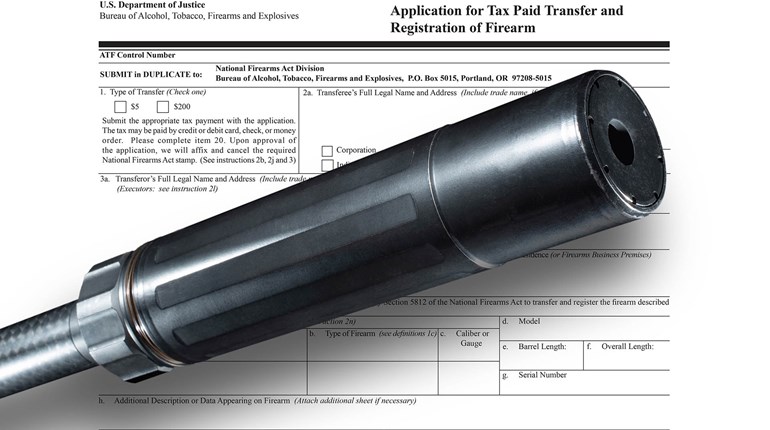
Such items have been under tight restrictions since 1934, when President Franklin D. Roosevelt (D)successfully got Congress to pass the NFA, just after Prohibition (1920-1933) had fueled gangster shootouts as rival gangs fought turf wars over who would supply then-illegal alcohol. The new law imposed additional permissions, paperwork, registration and a tax of $200 before one could lawfully acquire one of these regulated items.
An estimated 1.5 million suppressors are now being used by American hunters and gun owners who want to protect their hearing and be polite to others.
The result left consumers burdened with an unwieldy process similar to a car-title transfer, requiring them to leave a just-purchased NFA item at the store while they submit fingerprints, photographs, local law-enforcement notifications and a lengthy Form 4. With processing times averaging about eight months, it can be quicker to make a baby than get NFA approval.
According to Alphonso Hughes, assistant director of the ATF’s Office of Enforcement Programs and Services, the new process should make approval much faster.
Processing times are based on the number of touch points, says Hughes. “The application goes to our bank in Portland, Ore., where they physically tear it apart, process the tax payment, reorder the forms and submit them physically through the mail to our Martinsburg, W.Va., facility. Once it arrives, it has to be physically entered into the system. There were over 20 touchpoints for a physical application. eForms puts everything in one package.”
Hughes says the new turnaround time is predicted to be 90 days. “I don’t think you’ll see that out of the gate, just because we’re still processing our backlog,” he said. “But we’re going to strive really hard to ensure that forms are processed in 90 days or less.”
The ATF did have limited online form processing back in 2014. But the system got swamped due primarily to the growth in the number of gun owners purchasing suppressors.This rerouted numerous applications into the meager online system, which Hughes says was never developed to handle the volume. Forms 1, 2 and 3 remained online, but Form 4 processing was taken down until this past December.
While only 6,500 NFA transfers were processed annually 30 years ago, that number approached a quarter million in 2020.
Hughes expects that eForms will soon become the dominant platform for submissions, with only about 10-15% of applications coming by paper. Paper forms will still be available if you prefer old school, but don’t start over if you’ve already got paperwork pending. “You don’t want dueling or duplicate forms,” said Brandon Maddox, whose company, Silencer Central, not only sells suppressors but helps customers process the necessary paperwork. “And if you start over online, you’ll have to wait until they pull your paper form, which will still take longer.” Hughes agrees, though he adds that eForms should speed up both processes.
In the meantime, the new platform is already popular. “From go-live on December 23 to January 12, we’ve had about 35,000 logins, and probably about 105,000 form submissions,” Hughes said. “To date, about 2,700 Form 4s have been submitted.”
That includes a growing number of suppressor purchases. According to Maddox, suppressors were lumped in with things like machine guns in 1934 because legislators didn’t understand the issue they were regulating. (In much of Europe, such devices are sold over the counter.)
Over two million lawful suppressors are in use now, and despite the surprising ease with which they can be manufactured, crimes with them are rare. (Nonetheless, a recent NRA-backed effort to remove suppressors from the NFA registry was opposed by anti-gun politicians.)
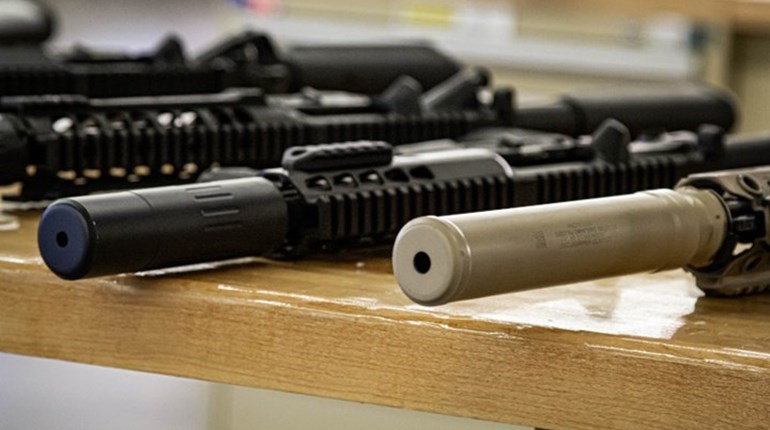
For those who don’t know, suppressors work by passing the bullet through a series of baffled chambers, each of which captures a portion of the pressurized gas that puts the shot in gunshot from its rapid expansion. It’s a quieter, cleaner process that can improve accuracy.
But that doesn’t mean Hollywood’s whisper-quiet portrayals are accurate either. “Contrary to Hollywood myths, silencers don’t mute the sound or eliminate the need for hearing protection,” Maddox said. “However, they do reduce the concussive effect and recoil, increase the velocity and can improve accuracy.”
Maddox says buyers often come for the mystique but stay for the benefits suppressors offer. Maddox’s company is one of several that helped test eForms ahead of its launch. Hughes says that’s an example of the ATF working with the firearms industry. “If there’s one corner of the firearms industry that’s tight knit, it’s the NFA side. There’s about 18,000 folks that are engaged in the business of manufacturing, importing or selling these items, and we have a good relationship with them.”
“We’re envisioning a lot of good things still to come,” Hughes said. “It comes with funding, but we’ve put it in our budget request. I love it when we can talk about some of the good things that we’re doing. ATF is committed to delivering for the industry in general.”
For all the other burdens imposed on gun owners through the ATF, the new system was a nice Christmas gift. If it works as promised, new buyers in the 42 states that don’t restrict the purchase of suppressors might even get to take home their purchases before next Christmas.