Just about the time criteria like “thin,” “light” and “small” resolve into a choice of pistol, holster and carry position—one of bearable comfort and with which you’re willing to practice—some wiseacre intones, “Ok. But whaddya do in the dark?”
It’s an annoyingly pertinent question, and a potential problem for those issues you thought were settled once and for all. But if we accept that a light is needed, where—just for openers—do we put it?
First, it has a huge impact on holster selection: Many of our favorites, for instance, have no provision whatever for adding a light to the accessory rail, and then using that holster, or even one remotely comparable. We’ve also assumed your pistol has an accessory rail for attachment of a light. Several of our favorites don’t, compounding the problem.
The holsters that do accommodate lights generally don’t have carry form factors, either: What was once a swatch of Kydex or leather is now taking on Belgian waffle-like dimensions. Fit that into an appendix carry position, if you dare.
These discommodious points not withstanding, where does a light—however carried—fit into the larger defensive paradigm?
An emphatic “somewhere” is our answer, though not for the reason you may immediately think. In a substantive number of aggressions, a modern light can be a formidable, non-lethal option to drawing your pistol, to say nothing of having to pull the trigger, however well-lit your target might potentially be. In a substantive number of aggressions, a modern light can be a formidable, non-lethal option to drawing your pistol, to say nothing of having to pull the trigger.
The first defensive mode of the flashlight—and we assume you’re employing a modern aluminum- or polymer-bodied type—has the same huge benefit as a firearm: It’s a “standoff” weapon, employable with useful effect at a useful distance. The beam of such a light in the face of an aggressor presents an instantaneous problem for him or her—genuine, if very temporary, blindness.
The second tier defensive benefits that result from “flashing” or “shining” are less severe, but also notably more durable. In the wake of the beam itself, a persistent, often disorienting retinal after-image results (which many people describe as quite literally painful in a conventional sense), and is accompanied by immediate, severe degradation of night vision. The severity of these more lingering discouragements depends on the brightness of your light, but even a modest—by current standards—60- or 70-lumen light is no fun, and 200-, 300- or 500 lumens? Yea, verily, it stinketh. For reference, 50 lumens is the generally accepted brightness needed to thoroughly trash night-adapted vision.
Both these effects confer real advantage: You can move to safety, or at least buy time for other measures. Just commit to acting quickly while your advantage lasts.
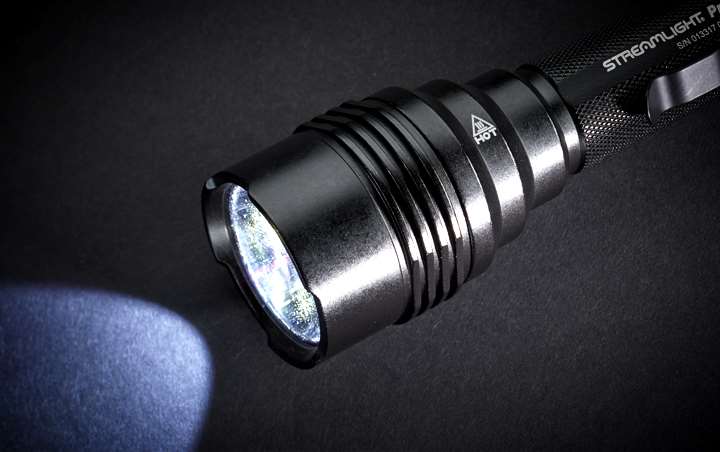
There’s a third defensive tier, too, though this depends very specifically on the details of your light. Many tactical flashlights have a “crenelated” bezel. Simply, this can be understood as a blunted saw-toothing applied to forward end of the lens-mount. Variously sharp, these are designed as applicators for pain-compliance techniques. In close quarters, they can apply a lot of energy to a very small area, i.e., pain. The downside, however, is quite likely obvious: This is not a standoff technique, and therefore cedes some important advantages. Your defensive measures are now at grappling distance, and are much more physically dangerous as well as legally complex.
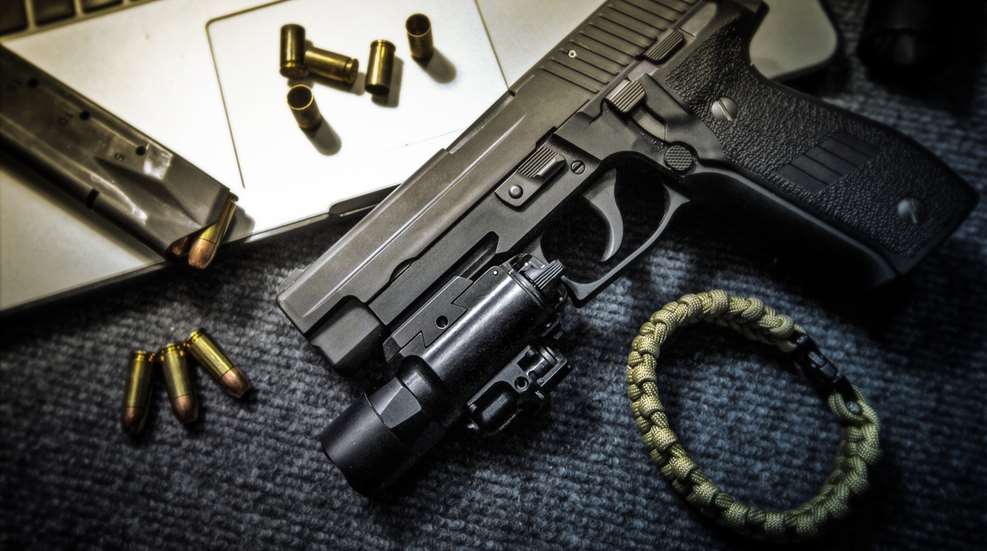
So having a light is a good idea, but where that light resides gets convoluted. Assume the holster issue is solved for the moment and that your light is on your pistol. This puts it in play for both “shoot” and “no-shoot” circumstances and makes all your draw practice that much more valuable, but it also requires you to draw the firearm to employ the light. For several reasons the educated CCW holder knows (or should know), this can be a problem—namely, brandishing—or worse in a carry-hostile jurisdiction. And don’t kid yourself: There are still lots of these.
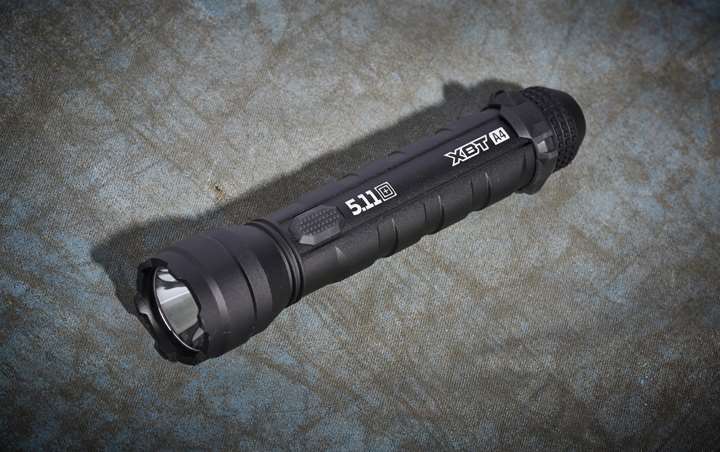
This is what drives us to separate carry of the flashlight. There are many more circumstances where you want your light, but not your pistol, than where you’d want your pistol, but not your flashlight.
In terms of training, however, you now have to get serious about using the two together, and employing a light has notable and conditional impacts. Consider just one case—garment clearing. If you always wear a cover garment and use hip or kidney carry, you’re likely OK for draw and presentation. Grip—on either device—becomes quite another story. But if you prefer appendix carry and can’t stage your presentation, garment clearance is a two-handed undertaking. Where does that light fit in now?
As you see, there are some complexities, and we’ll run them down in the coming weeks. In the short term, however, consider adding a flashlight to your defense and preparedness kit if it isn’t already there, and particularly think about it as an always-carried, less-than-lethal force supplement. This last point though, is where the hazard lies: There are likely still circumstances where only a firearm will do—like against multiple assailants—so don’t let light considerations blind you, as it were, to that unwelcome reality.
Now Carry on. And Merry Christmas.