Since President George W. Bush signed the bipartisan Protection of Lawful Commerce in Arms Act (PLCAA) into law on Oct. 26, 2005, those bent on civilian disarmament have sought to bypass the legislation’s clear commands. In fact, 20 years later, gunmakers were fending off a frivolous nuisance suit from the city of Gary, Ind., filed in 1999, despite the PLCAA and state-analogue legislation.
More recently, gun-control advocates have sought to enact so-called “gun industry accountability” legislation in jurisdictions controlled by anti-gun lawmakers as an explicit attempt to subvert the PLCAA. These laws pose a threat to more than just the firearm industry’s bottom line and directly impact law-abiding Americans’ ability to access the firearms, ammunition and other equipment necessary to exercise their Second Amendment rights.
First consider why the PLCAA was enacted.
In the mid-1990s, gun-control supporters, trial attorneys and anti-gun, big-city politicians teamed up to abuse tort law to attack the gun industry (and by proxy American gun owners) by attempting to hold the industry accountable for the third-party criminal misuse of their products. U.S. tort law has long held that a person or entity cannot be held responsible for a third party’s criminal acts. In enacting the PLCAA, Congress codified this longstanding principle of tort law that was under threat from the politicized litigation.
An obvious goal of this lawfare campaign was to impose severe costs on the firearm industry, which would be passed on to gun owners and potentially would bankrupt manufacturers. In 1998, the executive director of the anti-gun U.S. Conference of Mayors was quoted by the New York Times as stating, “The lawyers are seeing green on this issue.” A 2000 Washington Post article referenced an attorney involved in the anti-gun litigation, who noted, “The legal fees alone are enough to bankrupt the industry.”
A further objective was to strongarm the industry into implementing gun-control measures on themselves or to secure injunctions in the courts forcing industry members to comply with extra-legislative controls. These measures were in addition to the mountain of federal and state gun-control laws and regulations the firearm industry is required to follow. So, these are gun controls that anti-gun advocates were unable to secure through the democratic process, having been rejected by the people through their elected representatives.
This undemocratic anti-gun effort gained some traction before the PLCAA.
In 2000, Smith & Wesson, then under different ownership, entered into an agreement with the Clinton administration while threatened with ruinous litigation. A White House press release from March 17, 2000, detailing the settlement noted that the company agreed to implement “new design standards,” including “internal locking devices” and using company resources to develop so-called “smart gun” technology. According to the release, the gunmaker also agreed to what the White House called “new sales and distribution controls” that included “safety training for purchasers,” restrictions on firearm distribution to dealers who sell at gun shows and “restrictions on multiple handgun sales.”
The lawmakers who enacted the PLCAA understood the threat uncodified gun controls, as exemplified by the Clinton administration agreement, posed to Second Amendment rights.
In a July 27, 2005, floor speech in support of the PLCAA, Sen. Tom Coburn (R-Okla.) explained:
“Anti-gun activists have failed to advance their agenda at the ballot box. They failed to advance their agenda in the legislatures. Therefore, they are hoping these cases will be brought before sympathetic activist judges […] who will determine by judicial fiat that the arms industry is responsible for the action of third parties.”
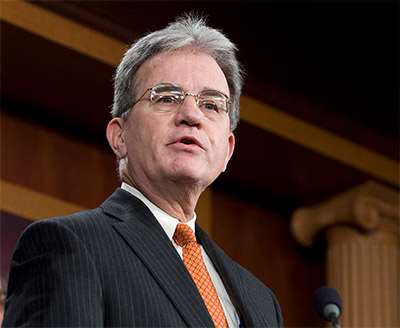
Later, the senator pointed out, “plaintiffs in these suits demand enormous monetary damages and a broad variety of injunctive relief relating to the design, the manufacture, the distribution, the marketing and the sale of firearms.” Coburn went on to list a host of gun-control stipulations backers of this type of litigation sought to impose, including changes to how firearms are designed and distributed and firearms rationing (“one-gun-a-month”).
Moreover, the PLCAA’ s findings section noted, in reference to such litigation:
“The liability actions commenced or contemplated by the Federal Government, States, municipalities, private interest groups and others attempt to use the judicial branch to circumvent the Legislative branch of government to regulate interstate and foreign commerce through judgments and judicial decrees …”
As made clear by the legislative record, the PLCAA was intended to ensure the U.S. firearm industry isn’t bankrupted through frivolous litigation and to preserve the federal and state legislatures’ prerogative as the peoples’ elected representatives over firearm regulation—providing such regulation comports with the U.S. Constitution.
With these “gun-industry accountability” strategies, gun-control advocates are once again seeking to subject the gun industry to frivolous litigation. Their goal is simple: Impose new gun controls without enacting legislation, which would put industry members on notice of how they can and cannot conduct business. Firearm-industry members throughout the chain of commerce would be tasked with instituting an ill-defined and unknowable array of “reasonable controls,” lest they be subject to liability. Of course, laws this vague, which do not provide adequate notice of what conduct is prohibited, are a violation of due process and should be void under the U.S. Constitution.
There’s nothing clever or coy about the anti-gun groups and politicians’ campaign to evade federal law. An October Associated Press item made this clear, carrying the title, “Congress shielded gun companies from lawsuits. Some blue states think they’ve found a loophole.”
So far, 10 states have enacted a version of this legislation. The sweeping threat these measures pose is best understood in the context of New Jersey.
The Garden State has some of the nation’s strictest gun-control laws; it is difficult for well-meaning people and businesses to thread their way through them to exercise their Second Amendment rights. On top of those laws, in 2022, the state enacted requirements for each “gun industry member” to “establish, implement, and enforce reasonable controls regarding its manufacture, sale, distribution, importing, and marketing of gun-related products.”
Just what is expected, on top of the heap of explicit requirements these businesses already face, is not explained. Gun-industry members are supposed to figure that out for themselves. The price for guessing wrong could be ruinous litigation from the state’s anti-gun office of the attorney general (AG).
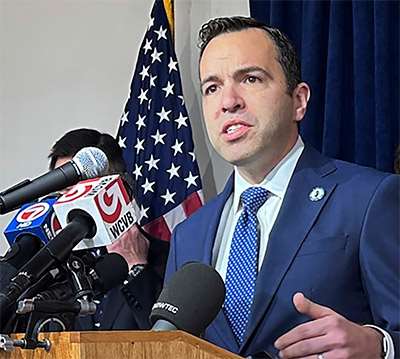
On July 22 of last year, a judge from the Chancery Division of the Superior Court of New Jersey granted AG Matthew Platkin’s motion for summary judgment against Butch’s Gun World of Vineland in an enforcement action of the “reasonable-controls” statute. The court also granted the AG’s request to force the shop to comply with a list of requirements that go well beyond codified law.
The case concerned two undercover buys from the shop by agents of the AG’s office. The first was a box of .223-caliber ammunition and a six-round magazine for a Walther .380 pistol. The second was a 1,000-round case of .223-caliber ammunition. The buyer in each of these purchases paid cash.
New Jersey law imposes various explicit (and likely unconstitutional) requirements for the sale of “handgun ammunition.” Sellers must be a licensed gun businesses. Buyers who are not so licensed must display a valid Firearms Purchaser Identification Card, a permit to purchase a handgun or a permit to carry a handgun. Retail sellers of handgun ammunition must record sales and make these records available to state authorities. Sales of 2,000 or more rounds must be “immediately” reported to the State Police.
Following the undercover purchases, the state AG initiated a civil enforcement action against Butch’s Gun World under the “reasonable-controls” statute. Significantly, the complaint did not claim .223-caliber ammunition or the Walther magazine were “handgun ammunition,” nor claim the sales were a direct violation of the “handgun ammunition” requirements. Instead, the complaint relied entirely on the idea that Butch’s Gun World had an affirmative duty under the “reasonable controls” law to apply additional safeguards to the sales of “gun-related products” beyond those specifically dictated by the New Jersey legislature. These “products,” moreover, include not just all types of firearms and ammunition, but “any … ammunition magazine, firearm component or part including, but not limited to, a firearm frame and a firearm receiver, or firearm accessory … .”
The complaint asserted, for example, that Butch’s Gun World should have understood the “reasonable-controls” statute as extending certain requirements of the “handgun ammunition” statutes to all “gun-related products,” even though there is no language in the laws that specifies this. Ultimately, New Jersey’s anti-gun AG managed to get a court to extend statutory requirements that apply to one specific category of ammunition to a whole universe of products the legislature never subjected to those restrictions.
In essence, New Jersey’s version of a “gun-industry accountability” law empowered the AG’s office to make up the laws on firearm commerce, one enforcement action and court decision at a time. What future requirements might be added are only limited by their imagination.
Aside from the legislative history, this is exactly what the U.S. Supreme Court recently said the PLCAA was meant to prohibit. Concurring with the Court’s unanimous decision in Smith & Wesson Brands v. Estados Unidos Mexicanos, Biden-appointed Justice Ketanji Brown Jackson recognized, “Activists had deployed litigation in an effort to compel firearms manufacturers and associated entities to adopt safety measures and practices that exceeded what state or federal statutes required,” and that the “PLCAA embodies Congress’s express rejection of such efforts—stymying those who, as Congress put it, sought ‘to accomplish through litigation that which they have been unable to achieve by legislation.’”
Strategies aimed at undermining the PLCAA may not garner the same attention as high-profile gun-control laws like gun bans, red-flag laws and private firearm-transfer restrictions, but the threat posed by these measures is just as grave. Of course, gun owners can hope that a diligent judiciary upholds the PLCAA to rein in the attacks on the firearm industry and the right to keep and bear arms these laws are designed to promote. In the meantime, it is up to NRA members and other well-informed gun-rights supporters to educate other Americans about how these laws threaten all corners of the U.S. firearm industry and the citizenry’s ability to access the tools necessary to exercise their Second Amendment rights.