This feature appears in the May ‘17 issue of NRA America’s 1st Freedom, one of the official journals of the National Rifle Association.
Falling back on euphemism to explain the arrival of Springfield Armory’s Saint MSR is easy: “Better late than never.” But honesty compels the enthusiastic addition of: “Late, but worth the wait.”
It occurs to us that a snide observer might invoke “Year At A Glance” calendar metaphors—or several in serial—when commenting on the arrival of Springfield Armory’s Saint modern sporting rifle. “Ouch,” is all that comes to mind, for several reasons. First, because it’s a darn fine rifle, and we hope readers won’t have settled for less. Next, because getting so much right the first time took patience and a corporate sort of grit—missing the big wave of the last two years would make any free-marketeer (or stockholder) wince. Last, because the Saint might become hard to find in very short order.
Upside? At least the Saint is here, and our impression is that it will have an easy time staying afloat in the crowded MSR/AR pool.
A hasty once-over is tempting for the Saint. It has the lines, dimensions and operational basics of any Stoner/Sullivan/Fremont pattern rifle, after all. Springfield’s variation rewards a tutored eye, however, and hints at many of the characteristics we shortly discovered—accuracy, refreshing first-shot/every-shot reliability, and a “no-blanks” feature set, especially for the price range.
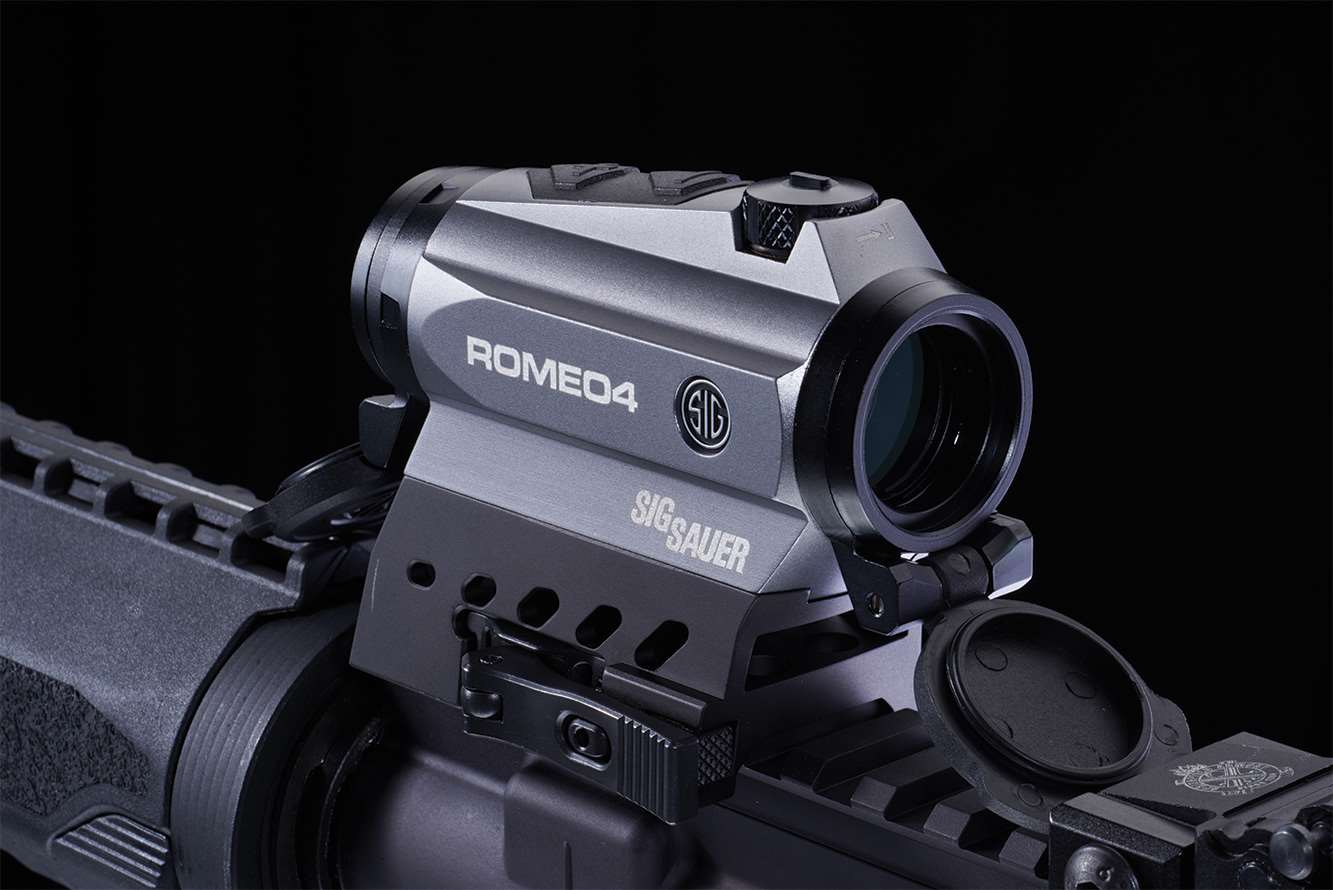
Practical accuracy circumscribes several of our favorite traits, with the 1-in-8 twist, 16-inch melonite barrel heading our list. This is plenty of rotation to stabilize projectiles up to 77 grains, about the heaviest that’s advantageous in a carbine-length rifle and gas system. Don’t think that “practical” hints at disguise, though: We had run-of-the–mill .223 Rem. in 55-grain and 69-grain match turn in near 1-MOA performances over and over. The factory sights were regulated to near perfection, too. We used them to bore sight a 1x SIG Sauer Romeo4, and both proved to be right on from the first shot, and out to 200 meters.
If we used stars, a certain fiver rating would be due in terms of reliability. We had occasion to shoot the Saint well beyond the needs of our immediate “Exercise” application, and had only two hiccups through it all. Both occurred during a very cold range session, with .223 Rem. at the bottom of the power curve; a chock-full magazine; and a flint-dry, dirty rifle. The fix was a time-tested one: A few rounds pulled out of the magazine moderated the up-tension that was slowing the bolt carrier, and got us back to trouble-free shooting.
We also found no evidence of magazine preferences. The supplied Magpul performed as Magpuls almost always do, but our test stable from other makers presented no problems, either. While we could find no conclusive proof of superiority while shooting, a vintage Brownells aluminum-bodied magazine seemed particularly smooth in cycling. This may be especially welcome intelligence for those in magazine “jail” states: They come from the folks in Montezuma in 5- or 10-round capacities, but with extended lower gripping real estate. Proper reload technique that short, count-limited versions can’t support can still be practiced with a few of these in your range bag.
Two internals deserve special mention. The first addresses an old complaint in moderately priced MSRs—the wobble present in many upper/lower receiver pairs. Springfield stomps most of this with the Accu-Tite receiver mating system. Set at the factory, this adjustment puts tension between the two components, stopping just short of making the takedown process a teeth-clencher.
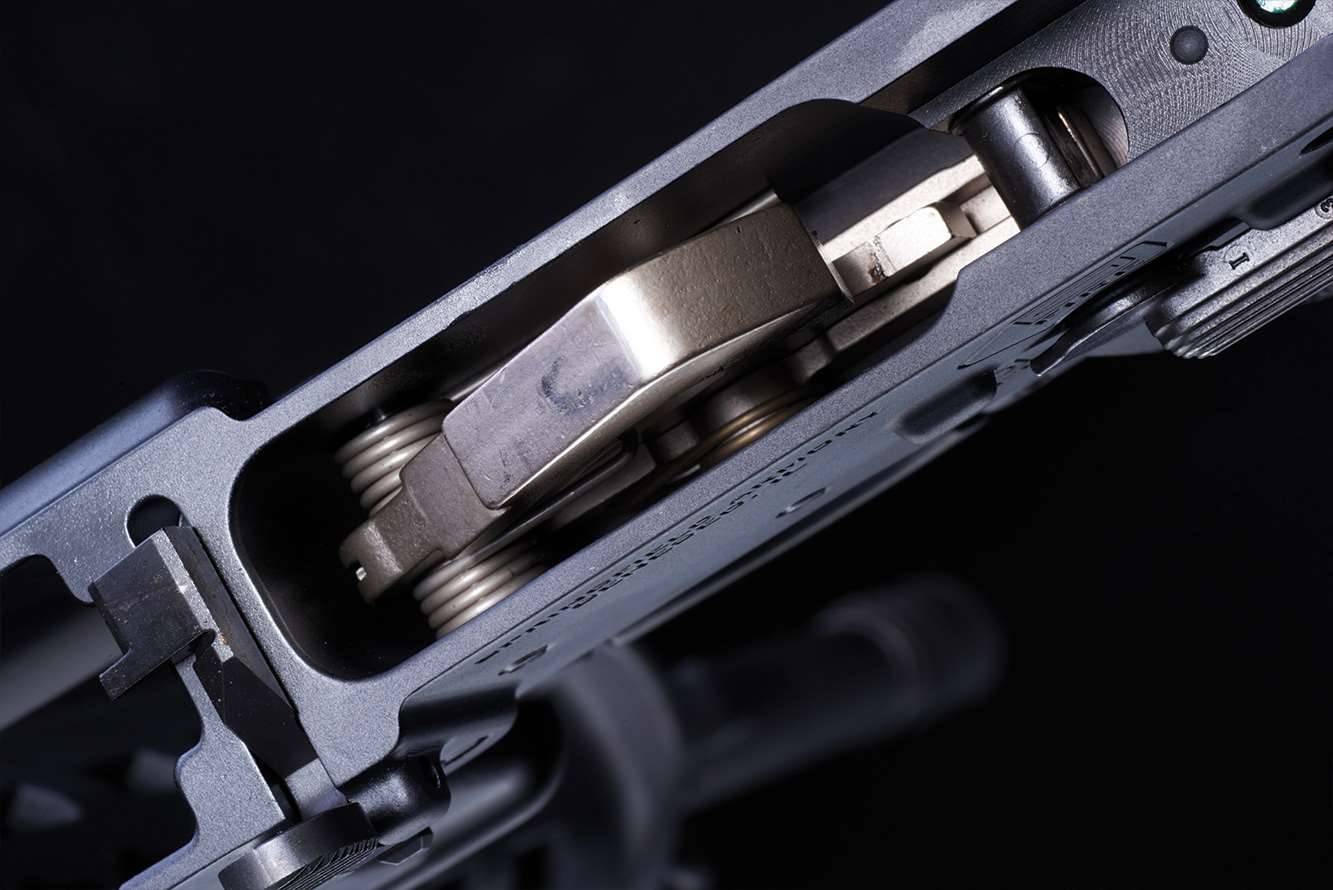
Second, and just forward, are nickel-boron treated trigger components, though we’ll rein in the deeper science. Such a treatment renders these parts slick, hard and durable in a way few other finishes can match. They also ease maintenance, and make the “GI”-weight trigger feel better than its 6.5-pound measurement.
Our remaining chore may look like suggesting a decisive fit for Springfield’s fine Saint, and there’s no mystery as to why. As we said, it’s a crowded pool now. But reflection yields a different and—we hope—more helpful take: If you’re an experienced shooter but not yet MSR/AR savvy, it makes no negative departures from millions of similar rifles. You’ll add type knowledge safely, economically and enjoyably to your existing skills. Configurability as your tastes and uses evolve is by no means out—in fact, that’s where the real fun comes in.
If a Saint won’t be your first MSR, but you need a utility rifle to ease the workload on a purpose-built gun, it won’t annoy you with omissions, or worse, mushy performance a grander version long ago banished. Strong interoperability with other direct impingement rifles might sweeten this particular pot.
And if you’re just dipping a toe in, a Springfield Armory Saint may suit you best of all. Easy on the eyes, budget and shoulder, there’s no better way to get to know America’s favorite rifle.
Nuts and Bolts
Gripes in the “really small” and “tiny” classes do bubble up. The first is probably just tolerance stacking—that phenomenon where acceptable dimensions in one part create problems when mated up with another part, also of acceptable dimensions. In our case, “tiny” is the otherwise excellent six-position Bravo Company stock on the buffer tube: tight, shall we say. A little lube did not solve the problem, but repeated exercise seems to be slowly easing the fit. The ample, lockable Saint rifle case means we don’t care that much—adjust, and forget. We’d note that many competitors go too far the other direction, and solid feel in the shoulder mount and cheek weld suffers. Otherwise, the Bravo Company furniture (handguard, grip and enhanced trigger guard) are worthy of their namesake.
Our “small” is arguable, especially among purists—the A2-style sight tower/gas block combo. Even what sort of “purist” you talk to matters. AR guys and ladies of one stripe might say the rifle was meant to be run with iron sights and should be, a la Camp Perry, Camp Atterbury, etc. The MSR sort of purist says “Poppycock! I’ll choose my sights, thank you—including optical types—so stow your so-yesterday tower.” Both have a point.
The tower gets us back to shooting the Saint. We did most of our shooting with a spiffy SIG Sauer Romeo4 “reflex” optic in co-witness with the front post (the rear dual aperture folds neatly down in another nice touch). We didn’t have a lick of trouble. The dual reticle has a sharp 2 MOA dot for distance, and strings of hits on an MGM reactive steel (12x12) were easy at 200 meters. All we did was change cheek weld and head position slightly to get the dot above the front sight post. Remember, as long as the dot overlays the target, it does not have to be centered in the tube of the optic—use your distance prescription for a clear view of dot and target.
The alternate Romeo mode adds a 65 MOA circle around the original dot. This lets the rifle swing with enviable speed but decisive precision on closer targets.
For those who like everything about the Saint except the tower, don’t forget that swaps like this are what have made the MSR so popular. Local gunsmiths tell us this would be a $75, short-order proposition, and will let any sort of optic aboard thereafter. We didn’t do it on Springfield’s rifle, but have a sneaking hunch those groups would shrink further if we saw as well as the Saint shoots.
Frank Winn has been studying arms and their relationship to tyranny, meaningful liberty and personal security all his adult life. He has been a firearms safety/shooting instructor for more than 20 years, and earned state, regional and national titles in several competitive disciplines.