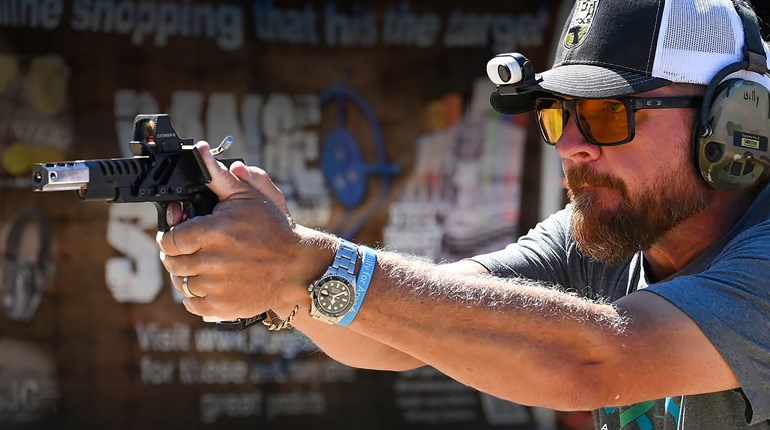
We’re certainly gratified if you’re enjoying and following our “Open” Glock build. Better still is the fact that we’re getting very close to a fully operational pistol—an installment, maybe two, away—so it won’t be long before the gestures and hand-waving manifest some actual holes in targets. Or “dings” on steel.
Last time out, we dealt with the trigger; by any account, the front of the ignition system. Now we’re at the back, so to speak, of that crucial operation—igniting the all-important primer.
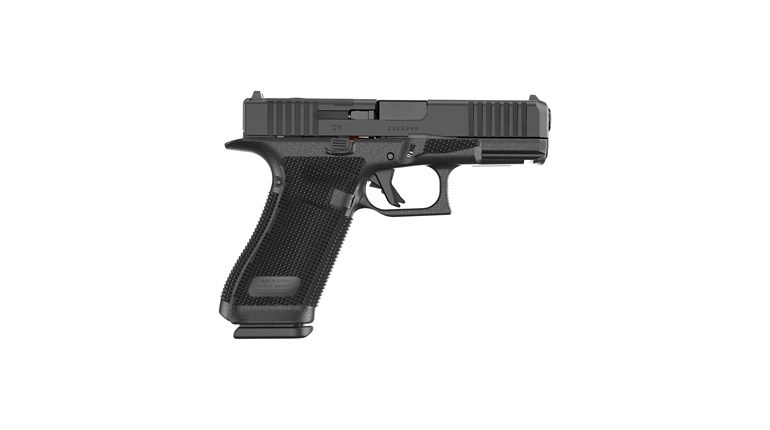
It's no surprise that the heart of striker-fired ignition systems is the “striker.” Understanding how these differ from hammer-based systems is more straightforward than most folks expect, and especially so in a Glock like our “build” G17.
If you look at a 1911, there are four parts that combine in chain reaction-like fashion to get from finger press energy to primer detonation and subsequent firing. Ignoring the action (or inaction) of various safeties, these are: Pressure on the trigger is transferred to the sear, which rotates out of the way of “hooks” on the hammer, which falls forward onto the firing pin under spring pressure, with the pin’s kinetic energy overcoming another spring to strike and partially crush the primer cup. If all has gone well, “bang” ensues. Any questions about efficacy were long ago settled, and these systems are famous for the delicacy to which they can be tuned. (See nifty and very complete animations of how a 1911 works here).
Striker systems generally dump one or more of these parts, and therein lies part of their substantial advantage in terms of lower cost.
In Glock pistols, a camming action governs the use of trigger pressure, first to complete cocking the striker, and then to release it to strike, dent and loose primer energy. In the place of the meticulously machined, ground, hardened and mated sear/hammer surfaces are a couple of stamped steel parts that have astonishingly wide tolerances (by comparison), yet still function with reliable precision. (See a Glock animation here.)
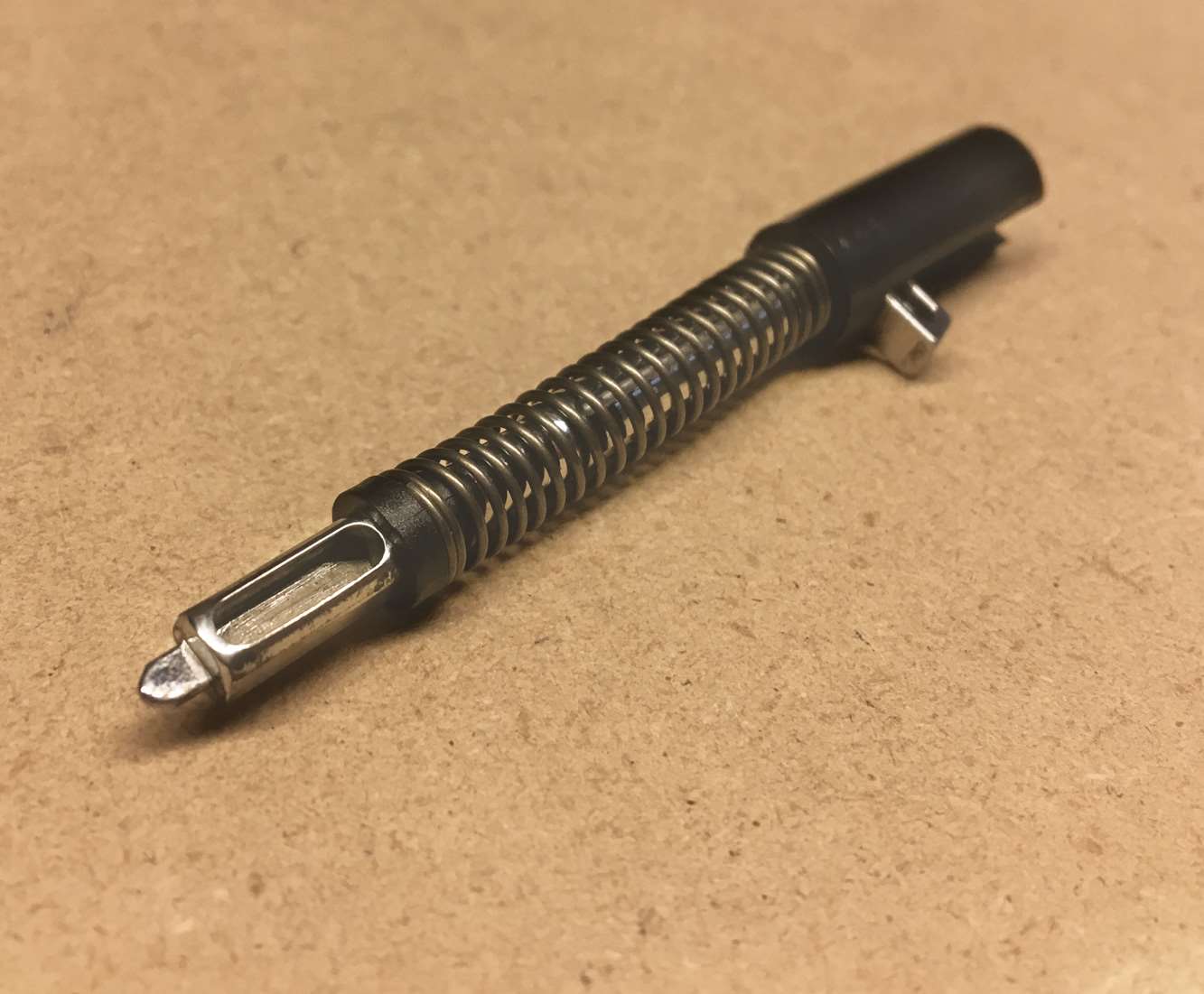
Where either gets tricky is when you try to shorten and make more precise—in common parlance, “make lighter”—the duration and press weights needed to make ignition happen. Quicker ignition actuation in other words, but without sacrificing reliability or safety.
We go back to our Jager Products Open kit to affect this on the G17. While a crucial camming surface improvement came with our Robar/Overwatch Precision trigger, the striker end of the process is where some delicacy is required. Even the most die-hard Glock nuts (we include ourselves) concede the crucial point: Slicking things up and lightening springs will certainly work, but these expedients can also introduce “click” as an aggravating substitute for “bang.”
The dynamics that make this happen are a modest physics exercise, but hardly impenetrable: G17 reliability and durability balances spring tensions and striker mass to a nicety. Changing that balance often requires more than just new springs (or the often-substituted competition-style connector of the G34/35) as is suggested in nearly endless YouTube videos.
That “more,” Jager’s Billy Lester recommends, is the “Ultra-Light” striker. Combined with a lighter striker spring (part of the kit), this hardened steel substitute for the OEM part is comparatively riddled with reliefs to reduce mass without sacrificing strength. The result is that the “cocking” portion of striker spring tensioning—early in the trigger press—is compensated for with the lightened striker moving faster. This keeps overall striking power sufficient to detonate the primer while preserving fabled reliability.
So far, we’ve found this to work very well. If the “so far” sounds like a waffle of sorts, we concede, but with a reminder: Part of the point of the “build” or “project gun” is to find the edges of what runs, and what doesn’t.
By next time, we’ll know where we stand. What makes the G17 such a great platform for the project may also be clear by then: Few indeed offer such simplicity in backing up a little, unlikely as we think that is.
Frank Winn has been studying arms and their relationship to tyranny, meaningful liberty and personal security all his adult life. He has been a firearms safety/shooting instructor for more than 20 years, and earned state, regional and national titles in several competitive disciplines.