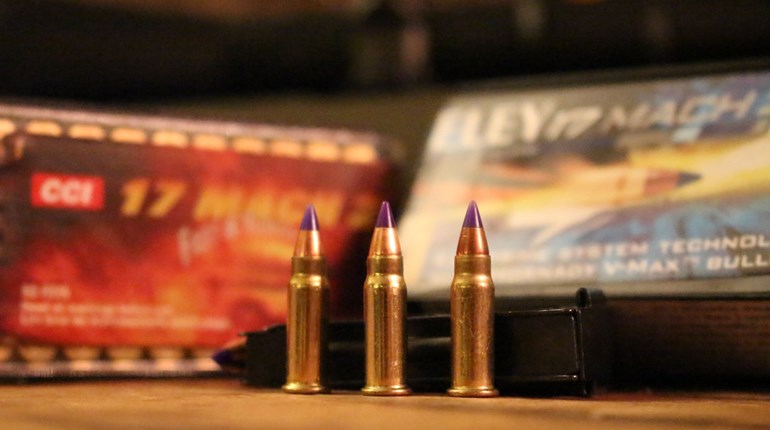
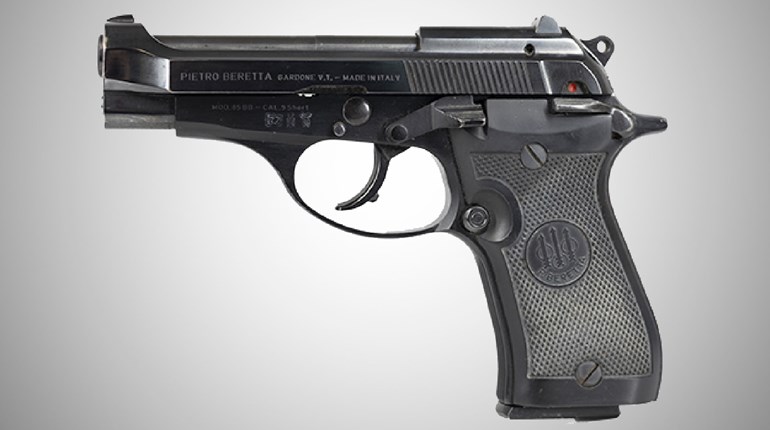
Does a bullet’s shape have an impact on its performance, both in the manner in which it feeds in an autoloader and in the terminal phase? Yes; in fact, depending on the style of firearm, the bullet’s conformation might make or break the operation, so you should factor this in while deciding which projectile type works for your situation.
Regarding the correlation between bullet profile and penetration, there are many tests demonstrating the differences in penetration, wound channel and expansion. Do you want the penetrative qualities of a full-metal-jacket projectile? Or does the rapid expansion and larger wound channel of the premium hollowpoints apply more to your needs?
For an autoloading handgun, the profile of a particular bullet may or may not agree with the firearm. As we’ve discussed in earlier installments of this series, the ammunition needs to feed properly in your gun—this is the first and foremost consideration. Many of our modern hollowpoint bullets are optimized for reliable feeding as much as for their terminal performance. Sometimes the flat-nose projectiles don’t operate well with certain feed ramps, and even the semi-wadcutters can pose an issue. So, projectiles for autoloading defensive handguns will often have a slight curve on the projectile as it transitions from the shank (which stays at caliber dimension) to the meplat, or nose of the bullet. This aids tremendously in the feeding process and doesn’t hinder the projectile during the terminal phase. Looking at examples of the most-popular projectiles for the autoloaders, from the venerable .45 ACP to the wet-behind-the-ears .30 Super Carry, the profile of the bullet won’t vary all that much; especially among the jacketed designs, whether they are bonded, lead-free or simply cup-and-core. Even among the many cast-bullet designs, a truncated cone or any other tapering profile will help aid in proper feeding.
Just about any type of bullet profile will function in a revolver, including the cylindrical wadcutter, which can be seated flush with the case mouth. Round-nose, flat-nose, truncated- cone, hollowpoint and even some pointed-spitzer designs can be used, as the cartridges will be fed by hand into the cylinder, with the rim (or a false rim) handling the headspacing duties. The cartridges for revolvers are usually rimmed and will sport a heavy roll crimp to keep the projectiles in place. Though a wadcutter—a cylindrical projectile cut off perpendicular to the axis of the bore, and used to cut neat circles in paper targets for competitive purposes—might not be looked on as a logical choice for a defensive projectile, Federal Premium once adapted its HST bullet into such a conformation by seating the meplat of the bullet flush with the case mouth in .38 Special HST Micro ammo. That heavy roll crimp I mentioned is a very important feature in revolver cartridges, as the recoil of the gun can cause the projectiles to “pull” (or move outward) from the case. (Should that bullet move too far forward, it will prevent the revolver’s cylinder from rotating.) It’s a logical deduction that, in a revolver, the terminal phase of a particular bullet shape will play a more important role. Looking at the varied number of bullet profiles for revolvers, you’ll see a bunch of hard-cast-lead, flat-point designs, as this style will quickly transfer its energy, and when a threat needs to be stopped, energy transfer is good; in fact, I like the wide, flat-nose projectiles for both hunting and defensive situations. Companies like Choice Ammunition have a defensive load designed for carrying in bear country, and that will certainly work against two-legged threats as well.
In the rifle world, bullet shape plays a huge role in accuracy, as targets may range from up-close-and-personal to being measured in fractions of a mile. In the defensive realm, however, distances are generally very close—FBI reports indicate that most defensive shooting occurs inside of seven yards—so the factors that affect a rifle bullet don’t generally apply to a defensive situation.