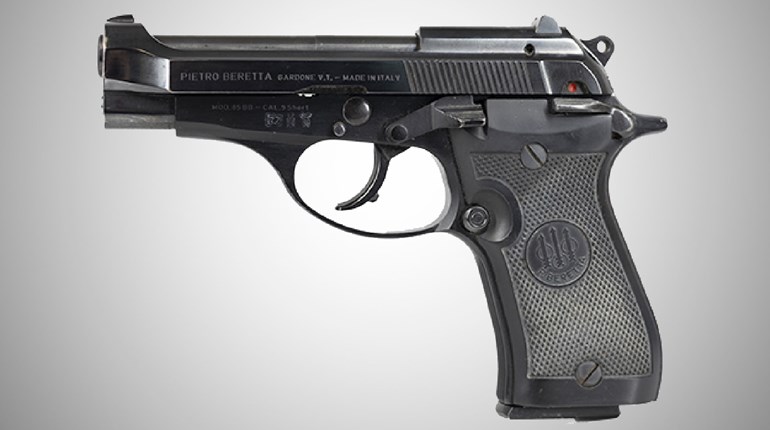
Semi-automatic handguns pack a plethora of advantages over revolvers; however, they aren’t without downsides. Shooters with dexterity issues often have difficulty racking the slide, for example, while others struggle with some of the snappier chamberings, like 10 mm Auto or .40 Smith & Wesson. Lastly, and although not as prevalent as in years past, one might experience reliability issues, particularly with used guns.
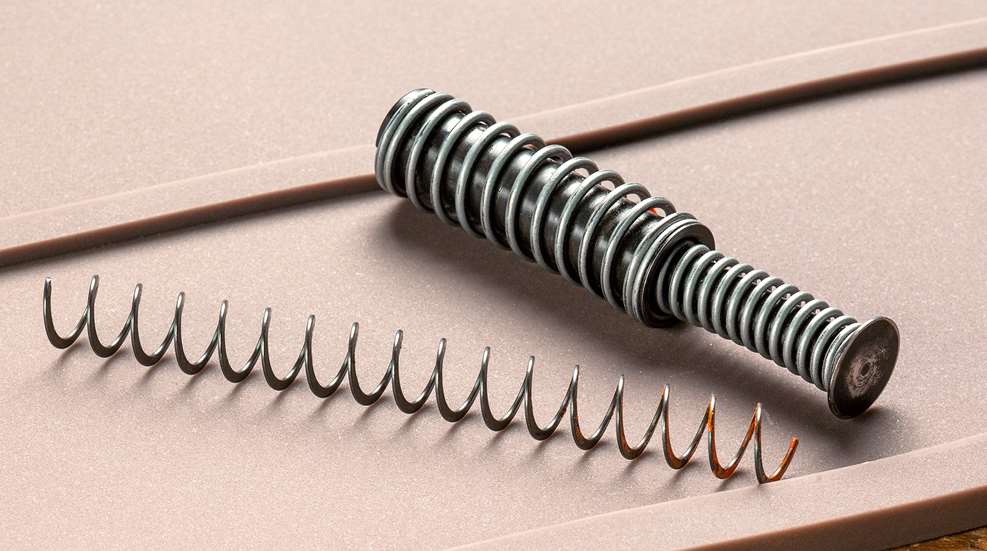
Many semi-auto maladies can be addressed for just a few dollars and in less than a couple of minutes with the most basic gunsmithing task of replacing the recoil springs—yet it’s a frequently overlooked option. (For newer gun owners, the recoil spring is located inside of your slide assembly and is responsible for returning it to battery after each shot or whenever the slide stop is disengaged.)
Your gun left the factory with a generic spring weight designed to function with a variety of bullet weights and power ratings. This weight changes over time and might not be perfectly matched to your choice of ammunition or other defining characteristics. Adjusting the weight by swapping in an aftermarket unit can restore your gun to factory dependability, make it easier to use and moderate its felt recoil.
Going Heavier
Being that the recoil spring provides forward pressure on the slide, it controls how hard it will bang the back of the frame when a shot is discharged. Swapping out the standard spring for a heavier one will slow its travel, thus reducing the blow. In this case, shooters will feel less of a thump with each shot and perhaps even experience less muzzle flip.
Like most things in life, you can’t gain something without losing something else, so those looking to go this route are warned of potential reliability issues. As there is now extra force on the slide, it may no longer be able to create enough energy to overcome the force, which would result in the action cycling only partially. This presents itself as a failure to feed, stove-pipe-style stoppages or both. Often, higher-pressure ammunition can overcome this, but one must test a handful to be sure, looking for that perfect ratio. Lastly, one must also ensure that they have the hand strength required to rack a pistol with an extra-heavy spring.
Going Lighter
As you might have imagined, choosing a lighter spring can cause the opposite problems associated with installing a heavier one. Cutting back the closing force is going to allow the slide to hit harder, increasing felt recoil in some cases. This can be mitigated with reduced power loads, which, as a bonus, will now likely cycle better in the modified pistol.
On the other hand, some might experience trouble with their handgun sliding the next round off the magazine, as the reduced-weight spring doesn’t create the same amount of inertia as a standard or increased power spring. Sometimes nickel-plated ammunition helps in these instances, as it has better natural lubricity than bare-brass cased ammo. Lastly, one needs to ensure that the gun can handle the extra beating, which is typically conducted through live fire, followed by measuring the distance the brass travels. Each manufacturer will provide a safe range as to how far away it should land.
Replacement
Like all metal parts, springs wear from use. Some argue that keeping a gun in slide lock expedites this process, but most experts agree that is not the case. Therefore, if your pistol has seen several thousand rounds of ammunition, it’s a good idea to replace the recoil spring. Signs that it is time to do so include malfunctions with ammunition that it used to run with impunity or trouble returning to battery. Most original manufacturers will offer you a replacement for little to no cost, and there are plenty of companies making higher-quality springs to the original specifications. If you bought your gun used, it’s not a bad idea to do this preemptively, as it’s tough to tell if the previous owner kept everything original or tuned the gun to his or her tastes and ammunition.
Fine-tuning your pistol to your own needs is wise—and your recoil spring is one of the easiest customizations that can make a big difference. Zero gunsmithing experience is required, since changing out the recoil spring is as simple as field-stripping your pistol and reassembling it with the new part. Doing so at the range (if they allow) is simple and in your best interest, as it provides an opportunity to immediately test-fire it in its new condition. For my money, there are few improvements that offer this ratio of effort to outcome, so spring to it!