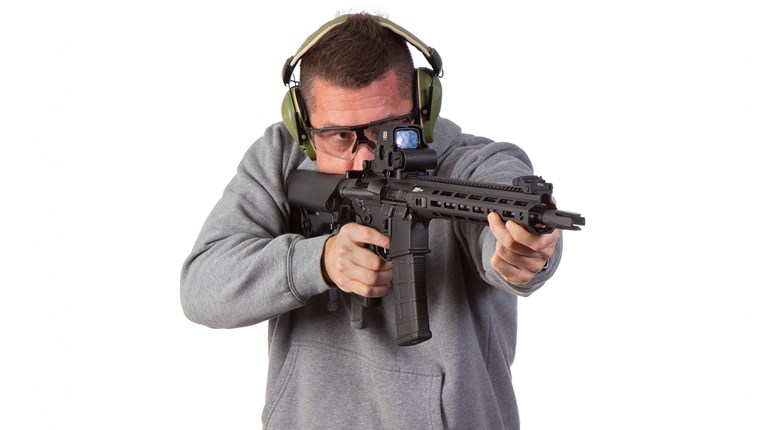
My Gunsite Academy students might remember hearing me preach this: Achieving high-speed, low-drag is nothing more than applying basics. While everyone wants to move on to advanced training, you must first master the fundamentals, then apply them to every shot.
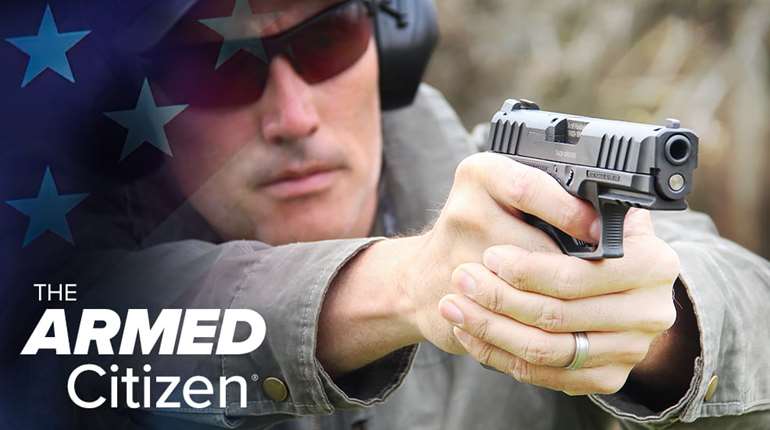
So here’s a drill that will benefit any pistol shooter, but especially those new to the sport. Set up with your target three yards off and observe all the NRA safety rules as usual.
1. Low-Ready
Set your two-handed grip on the pistol, with your trigger finger straight on the frame and with the barrel pointing at about a 45-degree angle toward the ground.
2. Up
Bring the gun up and point at the target. As you do so, establish your firing grip and lightly touch the trigger with your trigger finger. (If you have a manual safety on, sweep it off on the way up.)
3. Look
If you want to hit your target, you must use the sights.
“Sight alignment” is the way we see the sights in their proper relationship. We look through the rear sight and align the front sight so the tops of both sights are even and there is an equal amount of light on both sides of the front sight. “Sight picture” refers to taking those aligned sights and seeing them in relation to the target.
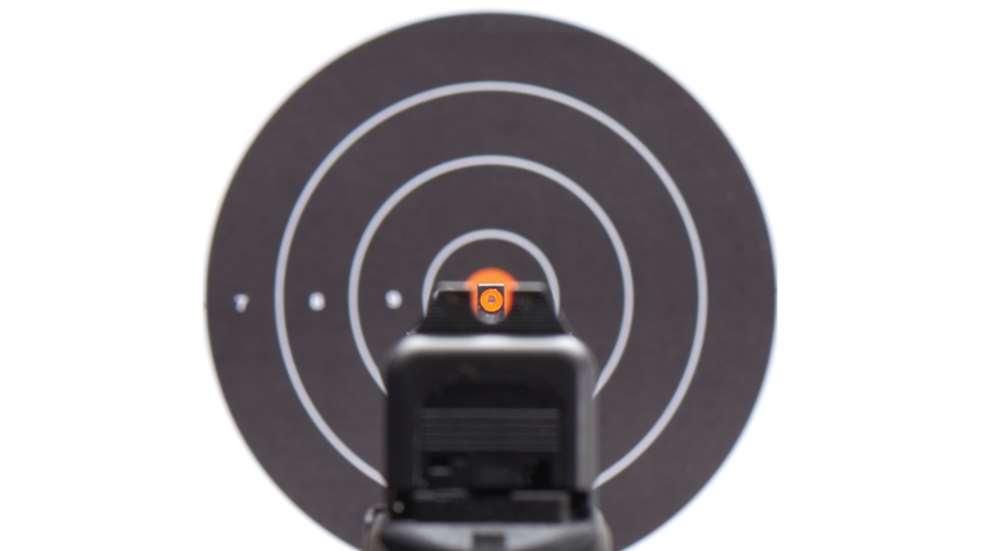
Now here’s the hard part: Focus on the front sight. We all want to look at the target, but what we should do is align the sights and direct our focus from the target to the front sight. You should see the front sight clearly while the target and the rear sight are a little blurry. Why is that? It’s because our eyes can’t focus on three planes (rear sight, front sight and target) at the same time. Get used to seeing the front sight sharp and clear.
4. Press
While some folks refer to pulling or squeezing the trigger, we tell students to press the trigger. (Pulling and squeezing might infer tightening the rest of your grip.) Smoothly press the trigger straight to the rear with the trigger finger only—supporting fingers don’t move but maintain a firm, consistent grip on the pistol.
In the beginning, or when there’s plenty of time to make a precise shot, you might want to think of the trigger press as “presssssss.” It’s okay to talk yourself into doing this right—I still do it after many years of shooting. Think “front sight, presssssss.” As you press the trigger, the gun will fire. If it surprises you when it fires, you have achieved a surprise break—you let the gun fire at some point in the trigger press rather than interfering and trying to make it fire on your own timing, which usually results in a poor hit or a complete miss.
5. Follow Through
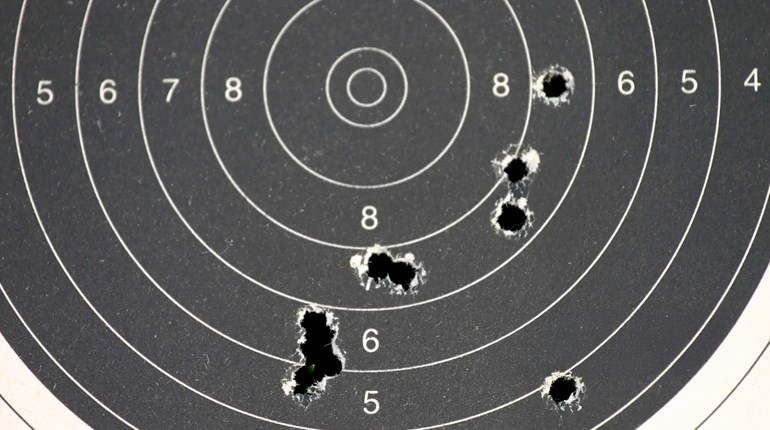
Follow through is what we do after the shot fires. This means looking at the front sight while the gun is firing and keeping your focus on the front sight all the way through. It might seem like the gun has fired and the bullet is gone. But not exactly—you see, many shooters want to lift their eyes off the sights to see the bullet hole on the target, and this moves the gun before the bullet can leave the barrel, resulting in low hits. Another instructor I know trains new shooters in follow through by having them count out the pause (“one-one-thousand, two-one-thousand”) before they’re allowed to relax.
6. Reset
After the shot, as you reacquire your sights, reacquire your trigger reset point as well. That is, let your trigger finger come forward until you hit the reset point. You may hear an audible click, or you may not, but the gun is ready to fire again at this point without you having to take up the full trigger slack again. Tell yourself, “front sight, presssssss, follow-through, front sight and trigger reset.” Yes, all that for a single shot. Later, we can speed things up and manage the trigger a little differently, but for precision marksmanship, this is the way.
Run this drill six times at three yards and see how you’re doing. If your shots are hitting where you want them to, move back to five yards and try it again.
So, there you have it, an abbreviated version of a very complex subject that could easily take up a book or two. But the point is, if you want high speed and low drag, master the fundamentals and apply them every time you shoot.