There was a time when western Massachusetts and Connecticut represented the epicenter of American firearms production. Much of that production was centered on the Connecticut River Valley, nicknamed “Gun Valley,” and home to such iconic operations as the original Springfield Armory, and later Colt, Smith & Wesson and Winchester.
No more.
As the Boston Globe recently reported, at one time four Northeastern States—Connecticut, New Hampshire, New York, Massachusetts—manufactured nearly one-half of all non-military firearms produced in this country. But by 2020, that had crashed to just 18% of the nation’s total production.
The title of that Globe story sums it up this way: “Gunmakers are fleeing the Northeast, complaining about the region’s tough gun laws as they go.”
Those gun laws the Globe referred to aren’t simply “tough.” They are often downright anti-Second Amendment, and frequently treat the gun makers as if they are co-conspirators in violence perpetrated with firearms. And when they “flee,” these manufacturers take well-paying jobs with them, accounting for tens of millions of dollars in lost wages, taxes, and economic stimulus, as they relocate to states that do not view them as an enemy.
Among the latest to leave Gun Valley: Smith and Wesson, incorporated in 1852 and headquartered in Springfield, Mass., will be moving to Maryville, Tenn.
In a 2021 press release announcing the move, Mark Smith, Smith & Wesson’s president and chief executive officer, specifically cited bills proposed in the Massachusetts legislature that, if enacted, would prohibit “any rifle or shotgun containing a semi-automatic mechanism” to be possessed within state borders.
“These bills would prevent Smith & Wesson from manufacturing firearms that are legal in almost every state in America and that are safely used by tens of millions of law-abiding citizens every day exercising their Constitutional Second Amendment rights, protecting themselves and their families and enjoying the shooting sports,” Smith noted. “While we are hopeful that this arbitrary and damaging legislation will be defeated in this session, these products made up over 60% of our revenue last year, and the unfortunate likelihood that such restrictions would be raised again led to a review of the best path forward for Smith & Wesson.”
That legislation was House Docket No. 4192, “An Act to stop mass shootings.” The bill appeared in April 2021, and was created to ban the manufacture of so-called “assault weapons” within Massachusetts, unless those firearms were being made only for law enforcement or the military.
That legislation seems to have stalled, though it has yet to be withdrawn. But stalled or not, it was the final push to get Smith & Wesson to leave Massachusetts and take some 750 good-paying jobs with it.
In Massachusetts alone, firearms manufacturing generates over $4.5 million in state and federal taxes annually for a $2.4 billion economic impact, according to the National Shooting Sports Foundation.
As America's 1st Freedom reported last year, Troy Industries was another company that left the Northeast for a friendlier business and Second Amendment environment. Troy is one of America’s largest suppliers of small-arms accessories and upgrades, supplying the U.S. military and law enforcement, as well as civilian shooters. Many firearms manufacturers, including Smith & Wesson and Sturm, Ruger & Co., incorporate Troy’s components into their products.
In May 2021, Troy announced it was moving from the company’s original location in West Springfield, Mass., to Clarksville, Tenn. In a press release regarding the move, company founder Steve Troy said, “While Troy has enjoyed a very successful period of growth in Massachusetts, the changing climate for firearms manufacturers in the state determined the need for our relocation to Tennessee to ensure the continued success of the company.”
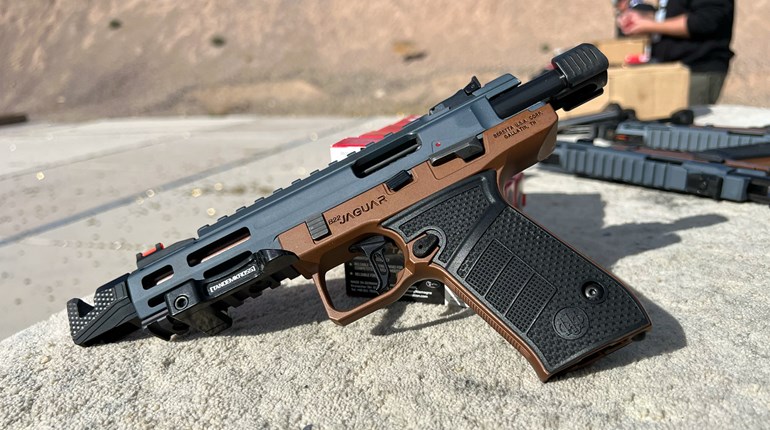
Others that have left the Northeast over the years, in whole or part, include Beretta, Dark Storm Industries, Kimber, Stag Arms and Sturm, Ruger and Co.
“I call it the ‘we’re outta here’ list,” said Larry Keane, executive vice president and chief counsel for the National Shooting Sports Foundation.
Keane said economic development organizations from across the nation hold numerous meetings with shooting-industry companies interested in a better location—better both economically and culturally.
Of course, businesses, like individual Americans, can move as they see fit. And many of the states courting these gun makers have better tax rates and lower wage scales, plus attractive relocation packages. Business, after all, is business.
Yet, even with tax breaks and other incentives, it is still costly for these manufacturers to build new facilities, relocate employees, hire new employees and physically move manufacturing equipment hundreds if not thousands of miles. They avoid moving unless they have to, and an increasing number of companies in the firearms industry have concluded that relocation is a must if they are to succeed.