Ramiah Jefferson, once a “general” of the Detroit gang the Bounty Hunter Bloods, is now serving 30 years in prison for racketeering conspiracy and illegal possession of a firearm. The gun he was caught with had the serial number drilled out. Jefferson was convicted last April after a joint operation by the Bureau of Alcohol, Tobacco, Firearms and Explosives (ATF) and local law enforcement took down gang leadership. But in his bloody wake, investigators say, is an example of how gangs get their guns.
Jefferson’s gang name was “Nightmare.” He lived up to that name.
ATF Special Agent Joe Nether said, “An informant told us that Ramiah Jefferson would hand guns out to his soldiers and tell them to commit armed robberies and BEs [breaking and entering]. Jefferson and other gang leaders would tell their soldiers to look for guns when they robbed homes. This is how the gang Bounty Hunter Bloods chiefly got guns. They stole them.”
One of the guns used by Jefferson’s soldiers had been stolen from a gun store. This pistol was used to kill a security guard—Courtney Meeks—outside a CVS store in Detroit on Feb. 26, 2014. Meeks saw two Bounty Hunter Bloods gang members, Jamare Rucker and Jeremy Jackson, forcing two women and a young boy out of a car at gunpoint. Meeks ran out of the store to stop the carjacking and was shot in the neck and killed. The gang members who murdered Meeks would later each get 33 to 60 years on a second-degree murder charge.
A subsequent investigation by the ATF and local law enforcement turned up a murder weapon at a residence, a semi-automatic pistol chambered in .45 ACP. The ATF’s National Tracing Center found this pistol had been shipped to a gun store and stolen from the store’s inventory sometime later. The store reported the theft.“Theft is the easiest way for gangs to get guns.” — ATF Special Agent Joe Nether
“Theft is the easiest way for gangs to get guns,” Nether said. “People often leave guns unlocked and in places that are easy to find. The guns they were largely getting were not from gun shows or stores. They were from people’s homes.”
Nether says the gang members would be ordered by gang leaders to “put work in” by robbing homes. They’d do this with illegal guns on them. “They were ready to shoot it out with an armed homeowner,” said Nether. “One of the gang members did run into an off-duty police officer in a home. That officer killed one of the gang members.”
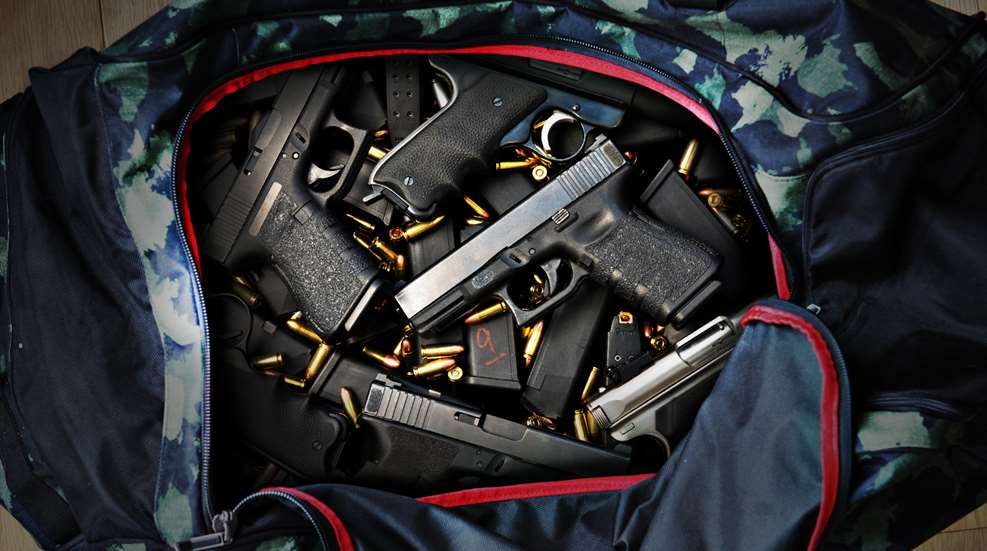
America is, of course, a nation with over 100 million legal gun owners who have over 300 million guns. So the opportunity for theft is there. The ATF used to keep a statistic that attempted to estimate the number of guns stolen annually. In 2012 the ATF estimated that 190,342 guns were “lost or stolen” in the United States. This estimate wasn’t an anomaly: Each year the ATF had estimated that about 190,000 guns were lost or stolen in the U.S. The statistic was a guestimate based on different sources of data.
When asked about this large number of lost guns, ATF Chief of Public Affairs Ginger Colbrun said, “The only substantiated numbers of lost or stolen firearms is of those in a federal firearms licensee’s (FFL) inventory. They are required to report any loss or theft of a firearm to ATF and local law enforcement within 48 hours.”
In 2015, gun dealers reported that 6,163 guns were stolen from their stores. The pistol used to murder Meeks was one of those guns.
Through these thefts and other means, such as straw purchasing (when someone who can’t pass a background check gets someone who can pass it to buy a gun for them), is how criminals get around the National Instant Criminal Background Check System (NICS). Though many in the media and some in Congress are focusing solely on adding more people to NICS to make it harder for criminals to get guns, this shows that the push for a “universal” background check scheme isn’t a solution to the criminal gang problem.
(In the next column, we’ll see how law enforcement took down this gang, and hear what investigators say did stop murders.)