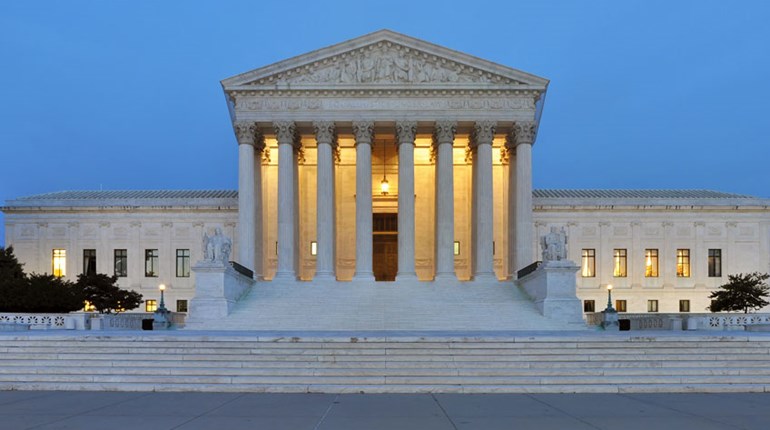
On Nov. 3, 2021, the U.S. Supreme Court heard oral arguments in New York State Rifle and Pistol Association v. Bruen, an NRA-backed challenge to New York’s highly restrictive may-issue licensing scheme for concealed carry.
These licenses are the only way for residents of my home state to lawfully carry a gun outside their dwellings for self-defense.
But unless you happen to live in a rural area with a pro-gun sheriff or—in the more populated areas—unless you’re a judge, former police officer or celebrity, you can basically forget about getting one.
That’s because the law actually requires applicants to show a “special need” for self-defense that distinguishes them from the general population.
The result is that licensure is the exception, rather than the rule, turning the Constitution on its head and making the right to bear arms a privilege reserved for the few, the connected and the “special.”
How, the case asks, can New York justify this?
Arguing for the petitioners was former U.S. Solicitor General Paul Clement, one of the most-experienced Supreme Court litigators in the country. He ably negotiated a minefield of questions and hypotheticals, many concerning the sorts of “sensitive places” where the carrying of firearms could be restricted, even if New York were forced to recognize a right to bear generally.
Justice Stephen Breyer, who believes there is no individual right under the Second Amendment, at times opted to dismiss the right entirely.
“I mean, they are dangerous, guns,” he editorialized, while also suggesting the plaintiffs want to “carry a concealed gun around the streets or the town or outside just for fun.”
But, as Mr. Clement calmly explained, that’s not what they want. They simply seek the same rights to defend themselves that are already available to residents of the District of Columbia and 43 states.
“This is not something where we’re asking you to take some brave new experiment that no jurisdiction in Anglo-American history [has] ever done,” Mr. Clement noted. He then mentioned several cities where shall-issue concealed carry is already the norm and where it has not been implicated in any surge of violent crime.
Justice Samuel Alito would later point out it’s not a question of if people carry concealed guns in the streets, but who carries them.
“There … are a lot of armed people on the streets of New York and in the subways late at night right now, aren’t there?” he pointedly asked New York Solicitor General Barbara Underwood.
“[T]here are people with illegal guns if that’s what you’re … referring to,” she acknowledged.
“Yeah, that’s what I’m talking about,” Alito said, and then asked how many illegal guns were seized by the New York Police Department last year.
Ms. Underwood was unable to provide any official figures but admitted, “it’s a substantial number.”
When Justice Alito pressed her on how it’s compatible with the Second Amendment that the law seems to favor the ability of criminals to carry over upstanding citizens, Ms. Underwood lamely suggested the law-abiding should rely on the police.
Ms. Underwood even came under some difficult questioning from the court’s more liberal wing. Justice Elena Kagan, for example, asked her how it’s possible to use geography and population density as factors in restricting a constitutional right. While Kagan agreed she found that “intuitive” in the case of carrying firearms, she admitted, “it’s a hard thing to … match with our notion of constitutional rights generally” and asked, “what justification is there for allowing greater flexibility here?”
When Ms. Underwood tried to dodge the question, Justice Sonia Sotomayor—another reliably left-leaning vote on the court—prodded her by suggesting that America’s history of gun control supports giving jurisdictions a greater range of options to regulate firearms.
But Chief Justice John Roberts seemed skeptical of this reasoning. “[I]f the purpose of the Second Amendment is to allow people to protect themselves, that’s implicated when you’re in a high-crime area. It’s not implicated when you’re out in the woods,” he stated. He then asked for emphasis, “How many muggings take place in the forest?”
There are no guarantees with Supreme Court litigation—both sides faced tough questioning in this case—but the tenor of these proceedings was encouraging.
One thing is for certain, however. The Court’s eventual decision won’t be the end of the battle, but, hopefully, it will be a step in the right direction.
Regardless, your NRA won’t rest until the Second Amendment is fully recognized in every American jurisdiction.