Wondering what the next big breakthrough will be in firearm technology? You may soon see your ammunition do a sort of striptease. A number of manufacturers and users are determined to ditch the cartridge case. Indeed, in some places it’s already happening.
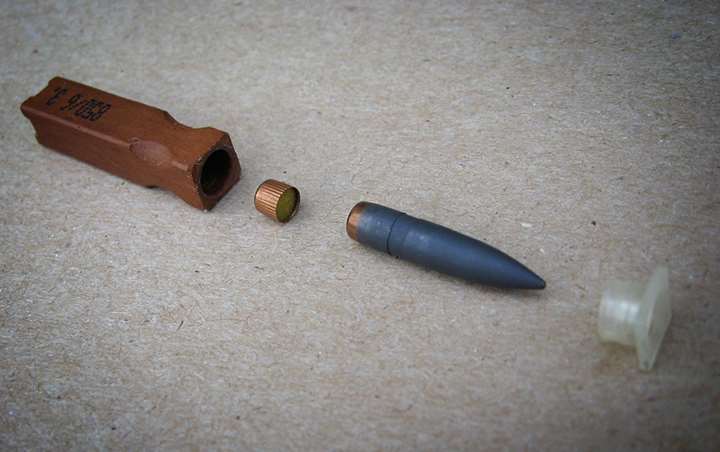
Ever since shooters began putting bullet, propellant and primer together inside a flimsy paper shell, some form of cartridge has been the preferred method for loading firearms—faster, more consistent and much more reliable than pre-cartridge days. The modern ones tend to use brass or steel cases, but you’ll see aluminum as well. Metal cases undeniably do the job, but they add weight, cost and debris whenever they are used. That’s to say nothing of how they feel when a spent case lands on your arm or, if you’re especially unlucky, makes its way down your shirt.
Caseless ammunition offers clear advantages. And in recent years its cause has gotten a big boost from the existence of the Lightweight Small Arms Technologies (LSAT) program—a research project by the U.S. Joint Service Small Arms Program to reduce the overall weight of guns in the field.
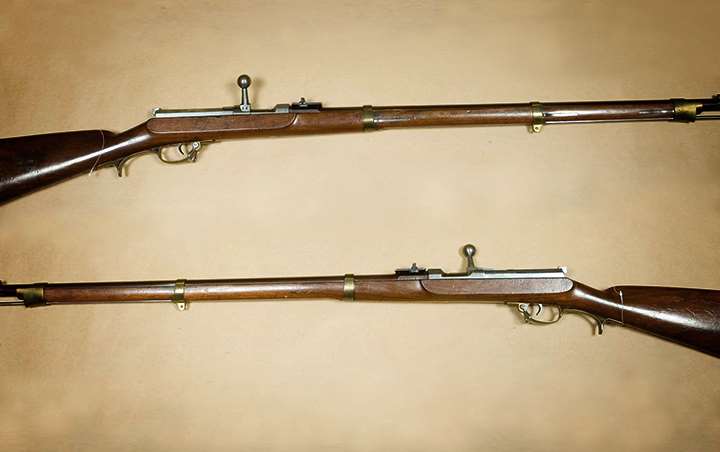
In fact, the idea of going caseless is hardly new. The breechloading Dreyse needle gun, adopted by the Prussian military in 1841, used a cartridge that was not technically caseless, but achieved much the same effect. A thin, highly combustible paper case held the components together. When the gun fired, the case flared out of existence and left no significant residue inside the chamber.
In 1968, the first production rifle to use true caseless ammunition appeared from an unlikely source—Daisy, the beloved airgun manufacturer. The Daisy V/L fired a .22-caliber bullet with a small wad of propellant stuck to the back and no primer. A unique firing mechanism generated compressed hot air sufficient to actually ignite the propellant. While the V/L was an engineering and commercial success, it fell prey to regulatory action after just a year. BATFE (still the ATF in 1969) ruled that this innovative piece constituted an actual firearm, which Daisy was not licensed to produce. Instead of pursuing the course to become a licensed firearms manufacturer, Daisy discontinued the line.
In the intervening decades there have been many attempts to produce viable caseless ammunition, but a few fundamental problems have plagued the design. Most significantly, the absence of a metallic case makes it much easier for rounds to “cook off” from residual heat in the chamber, essentially an uncommanded ignition and a major safety flaw. Caseless designs also have to address how to seal the rear of the chamber, as well as how to safely eject the round for clearing misfires or unloading.
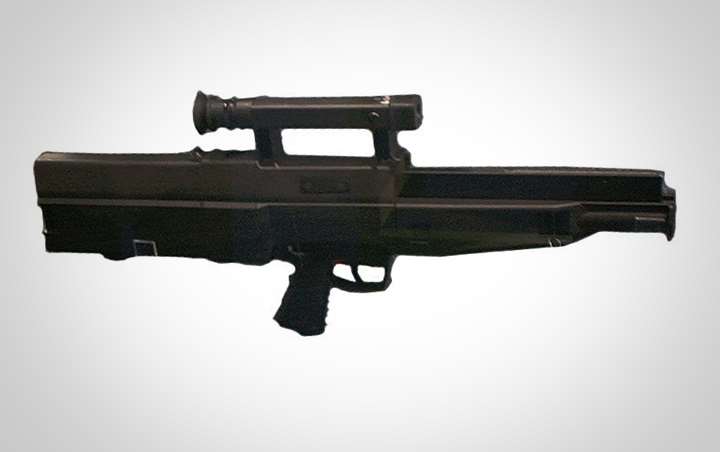
Heckler & Koch tackled the heat problem by partnering with the chemical firm Dynamit Nobel to design a heat-resistant coating and propellant that would ignite at much higher temperatures. While typical nitrocellulose propellant ignites at a temperature in the ballpark of 350 degrees Fahrenheit, HK’s offering required heat of more than 500 degrees. This ammo was used in HK’s prototype G11 rifle, which handled misfires with a mechanism that would eject the round with a twist of the cocking handle. The G11, which was intended to be a standard NATO firearm, never entered production. But several of its technological aspects, including the effective caseless round, were adopted by the LSAT program for use in future development efforts.
Austrian gunmaker Voere took a different approach to the thorny problem of propellant ignition by developing an electronic firing system for its VEC-91 rifle. A pair of batteries sent an electric charge to ignite the nitrocellulose packed around the bullet. This mechanism was conducive to improved accuracy through reduced “lock time”: The speed with which trigger press is translated into actual cartridge ignition means less muzzle movement during the beginning-to-end firing process. The VEC-91 achieved some success in Europe, but it never became commercially viable for introduction to the U.S.
The history of caseless ammunition is littered with almost-success stories, but technological advances and the existence of a large-scale government program dedicated to implementing the design make it likely that this type of round will eventually become an everyday reality.
Whether or not you’ll think ammo sexier stripped of the brass case is entirely a matter of taste. But it seems likely no one will miss policing up brass.