Last May, I wrote about the Protection of Lawful Commerce in Arms Act (PLCAA) and a lawsuit, Smith & Wesson Brands v. Estados Unidos Mexicanos, in which U.S. firearm prohibitionists colluded with the government of Mexico in an attempt to gut this critical law. This was an audacious gambit, not only siding with a foreign sovereign against Americans and their constitutional rights, but also with a country known for corruption and human rights abuses. The U.S. Supreme Court appeared highly skeptical of Mexico’s case during oral arguments in March, leaving observers to wonder how badly it might lose.
We now know. In a no-nonsense opinion issued June 5, the Court handed Mexico and its U.S. allies a stinging rebuke, ruling 9-0 that their lawsuit failed to state a valid legal claim under its broad theory the companies “aided and abetted” illegal firearms trafficking. This news, moreover, was delivered in an opinion written by Justice Elena Kagan, a Barack Obama appointee hardly known as being pro-gun.
The plaintiffs sought to undo the PLCAA. Instead, they accomplished nearly the opposite, creating precedent that could shoot down similarly bogus efforts to circumvent Congress’ intent in passing the law.
The PLCAA codifies the common-sense notion that gunmakers and sellers are not liable for harms committed by criminals unlawfully using their lawfully sold products. But if the product was not lawfully sold, including if the business aided and abetted the transfer of a gun to a prohibited person or the falsification of business records, then a suit can proceed if the plaintiff can establish a proximate cause between the violation and the claimed harms.
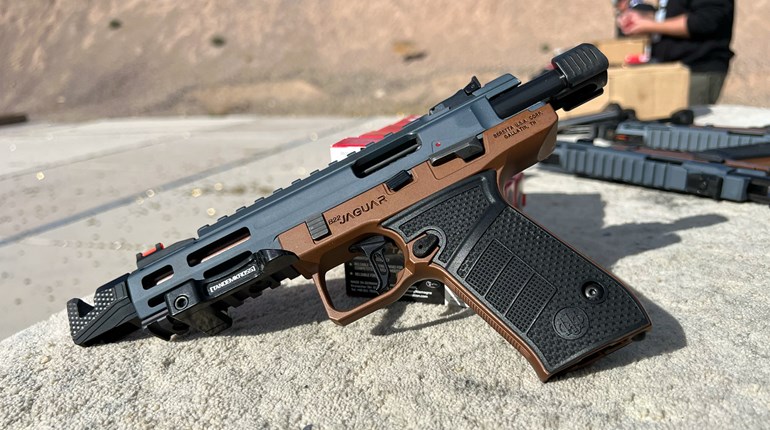
Yet Mexico, instead of explaining the specific gun-control violations the companies supposedly aided and abetted, broadly accused them of generally facilitating violent crime in Mexico through their business practices. Specifically, plaintiffs claimed the companies sold guns to dealers they knew illegally supplied traffickers, failed to go above and beyond the law to address trafficking, and designed and marketed guns that, while perfectly legal in the U.S., might happen to appeal to cartel members.
Under Mexico’s theory of the case, American gun companies weren’t just responsible for following U.S. firearm laws. They had to conduct business in a way condoned by Mexico itself.
That farcical proposition was destined to meet the brick wall of the PLCAA. The fact that three justices appointed by two of America’s most anti-gun presidents agreed underscores just how over-the-top it really was.
Mexico’s claims—which originated in a sprawling, 139-page complaint—were dispatched in a terse, 15-page opinion.
“Mexico has not adequately pleaded what it needs to:” Justice Kagan wrote, “that the manufacturers participate in those [illegal] sales as in something that they wish to bring about and seek by their action to make succeed” (internal punctuation and formatting omitted).
The Court stated, in summary:
Congress enacted the statute to halt a flurry of lawsuits attempting to make gun manufacturers pay for the downstream harms resulting from misuse of their products. … Mexico’s suit closely resembles the ones Congress had in mind: It seeks to recover from American firearm manufacturers for the downstream damage Mexican cartel members wreak with their guns. Of course, the law Congress wrote includes the predicate exception, which allows some suits falling within PLCAA’s general ban to proceed. But that exception, if Mexico’s suit fell within it, would swallow most of the rule.
Along the way, the justices made an observation that might make astute gun-control advocates wish the case had never been brought. Mexico had faulted the companies for producing so called “‘military style’ assault weapons,” which it claimed included “AR-15 rifles, AK-47 rifles, and .50-caliber sniper rifles.” But “those products are both widely legal and bought by many ordinary consumers,” the Court wrote, and the “AR-15 is the most popular rifle in the country.” Manufacturers “cannot be charged with assisting in criminal acts just because Mexican cartel members like those guns too,” it continued.
This is a strong indicator that if the question of a ban on these firearms ever reaches the Court, there will be unanimous support for the conclusion they are in common use for lawful purposes. This is the standard, earlier Supreme Court opinions have explained, that determines which “arms” receive Second Amendment protection.
Following 2024’s NRA v. Vullo, this was the second unanimous loss the Supreme Court handed gun controllers. For now, it’s hasta la vista. But we just might see a 9-0 Supreme Court hat trick should the Court take up a semi-automatic ban.