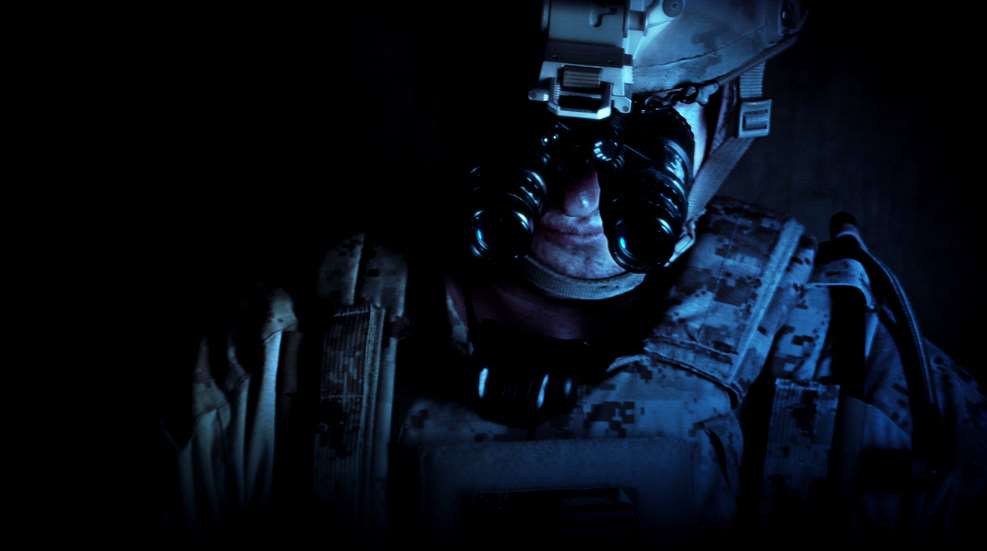
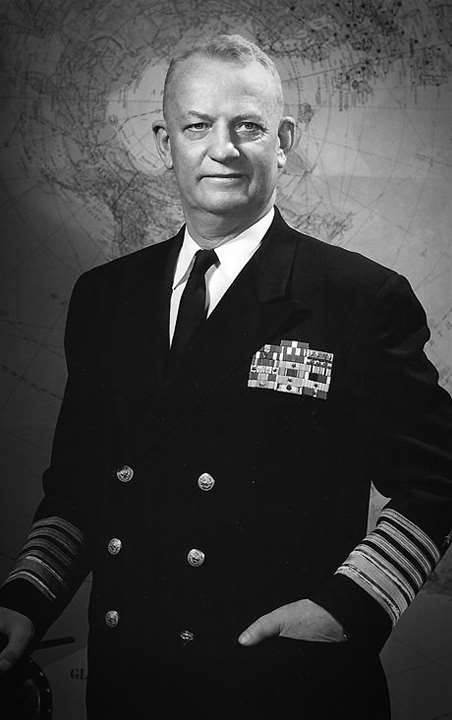
A suitable American Warrior topic seemed to us a bit of a “gimme” for this week: 55 years ago, then-Chief of Naval Operations Admiral Arleigh Burke saw a March 1961 directive come to fruition with the establishment of “guerilla and counter-guerilla forces” within the U.S. Navy. Stationed respectively at naval amphibious bases in Coronado, Calif., and Little Creek (Virginia Beach), Va., SEAL teams One and Two comprised personnel from the Navy’s already-vaunted Underwater Demolition Teams (UDT). Beginning in January 1962, they were prepared to strike at America’s enemies anywhere in the world from sea, air or over land.
But about the “gimme” part, we could hardly have been more wrong. The modern role of the SEALs is part of our difficulty: The Global War on Terror has educated most Americans about many aspects of Naval Special Warfare training and operations, but the idea of the 1962 activation of the “teams” as a true beginning is flawed.
America’s entry into World War II is a clearer milestone, though it lacks the “SEAL” name. The United States had only been engaged with the Allies against the Axis powers for nine months when the potential for multiple and complex amphibious assaults emerged. The necessity of detailed reconnaissance of shorelines both above and below water became clear, yet no established military units had such a capacity. From a joint Navy/Marine Corps/Army unit called the Observer Group, the Scouts and Raiders were formed.
Membership by service in the Scout/Raider units would prove fluid in the early days, with most of the eventual work falling on Navy specialties, such as they were. Nevertheless, every theater of the war saw Scout/Raider or Naval Demolition Unit actions, including those by eventual Rear Admiral, Naval Academy Commandant and two-time recipient of the Navy Cross Draper Kaufmann—the “Father of Naval Combat Demolition.”
Another Scout/Raider and double recipient of the Navy Cross was eventual Captain Phil Bucklew, and the community calls him a father too–of Naval Special Warfare. Bucklew was certainly a harbinger of things to come in terms of diverse excellence. He saw consequential action in every theater of the war from landings in North Africa (Operation Torch/French North Africa) and Europe (D-Day/Normandy) to guerilla warfare training and intelligence gathering with Chinese forces in the Pacific theater. Bucklew served in Korea and Vietnam as well, retiring in 1969.
A beyond-coastal role for non-traditional warfare became inescapable in Korea. UDT units grew even more adept at surreptitious operations while using their demolition skills against a variety of Communist targets—particularly bridges and tunnels—and in the insertion of intelligence assets into North Korea. By the time Admiral Burke became CNO in 1955, the forerunners of the SEALs were a small but valued community within the larger Navy, though there is an argument to be made that their modern role had to wait on a man, and sailor, like Burke.
Not only would Burke prove to be the longest-serving chief of Naval Operations, but the 1923 Annapolis grad had also risen through the ranks of a Navy awash, so to speak, in change.
A 1931 University of Michigan Master’s of Science in Engineering hints at Burke’s wide scope, though it lodged him in a highly unsatisfactory—at least to Burke—shore billet at the opening of World War II. Persistent requests took him to the Pacific fleet in March 1943, and brought a long string of successful surface commands and engagements (22 in the Solomons alone) through the end of the war. It also gave him wide exposure to emerging and very different modes of warfare. (He would later become a major proponent of super carriers and nuclear power for the U.S. Navy, nearly at the cost of his career. Stricken from the roles for promotion to rear admiral, only direct intervention by President Harry Truman secured his flag in 1950.)
The difficulties of French allies against Communist insurgency in southeast Asia in the 1950s were surely on Admiral Burke’s radar. Indeed, the loss at Dien Bien Phu (May 1954) was either nine years after the first post-World War II American casualty in the new kind of warfare in Vietnam (Army Lt. Col Peter Dewey) or five years before the Military Assistance Advisory Group lost Major Dale Ruis and Master Sergeant Chester Ovnand at Bien Hoa. Either way, the era of large opposing forces meeting in planned battles on known terrain was over. Beginning with Vietnam and in every conflict to come, Admiral Burke’s broad view and the guilt-edged experience of warriors like Bucklew and Draper made the modern SEALs a certainty.
Today, U.S. Navy SEALs comprise roughly 9,000 sailors in nine groups or “teams” (or 10, counting the former Seal Team Six, more correctly known as DEVGRU). Their physical training/qualification is widely known for being punishing in the extreme, though accounts like that of Marcus Luttrell or Chris Kyle make clear why such ferocious physical capacities are necessary. Beyond such extreme fitness, their battery of skills is even more amazing. To the Underwater Demolition skills of the 40s and 50s, modern SEALs have added at least a dozen other recognized specialties or core skills, and in a post-9/11 world peopled with the likes of Osama Bin Laden, it’s hard to imagine getting along safely without them.
On the occasion of their 55th anniversary, it’s sequitur that there are many SEALs among us. In common with our other special operators, most are characteristically self-effacing about their service. If you can do so discreetly, however, this week is a good one to find a SEAL and say, “Thank you.”