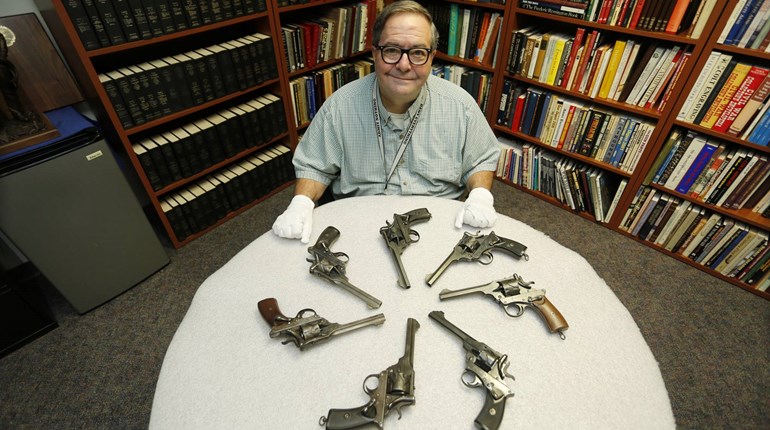
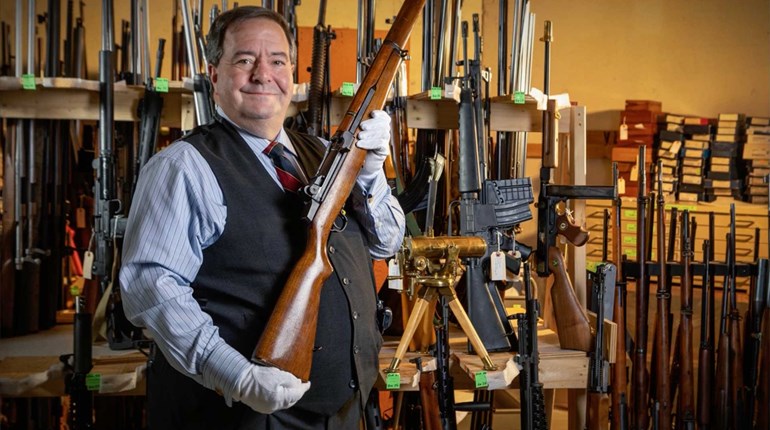
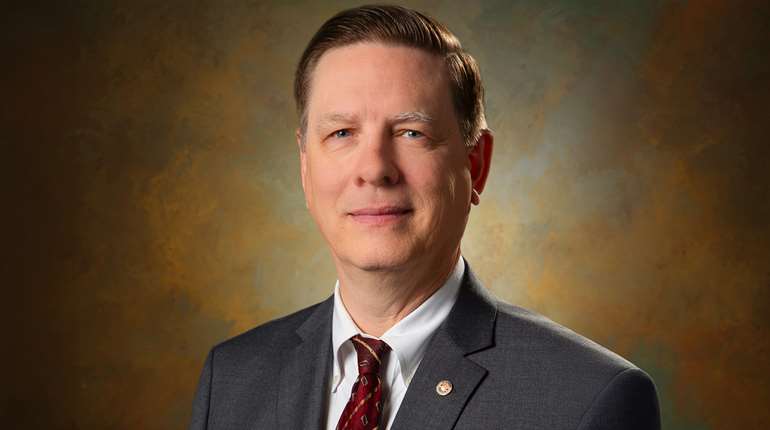
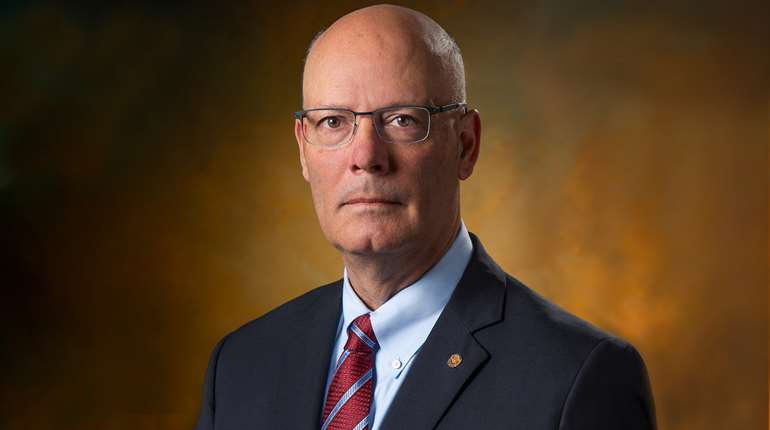
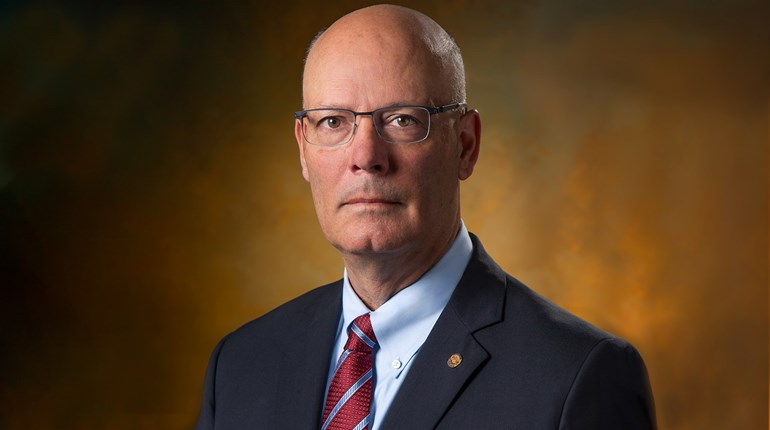
NRA took a serious hit on December 28th. It wasn’t from Chuck Schumer or Letitia James. It wasn’t from a billionaire oligarch trying to take your gun rights—those things still are real and out there—it was from AML (Acute Myeloid Leukemia). The Director of NRA Museums Phil Schreier did everything the doctors asked of him and then some. He had a bone marrow donor lined up, a hospital room reserved and a plan for a transplant. But it wasn’t enough. Leukemia won, and we all lost.
If you didn’t know Phil Schreier personally, you probably knew of him. And frankly, considering his body of work, you have time to study up before reading any further. If nothing else, watch this video tribute by a “Friend of Phil,” NRA’s Jake Stocke. I’ll wait.
I first met Phil in July 1979. I was a homesick 13-year-old attending Boy Scout junior leadership training, and he was the coolest guy in the world. He knew everything. He had muskets and a Civil War belt buckle. He was an Eagle Scout.
But what Phil really had was the ability to put people at ease and to tell a story, whether you were 13 or 103. He could give you the context of a person, place or event and especially a gun. For a couple of generations, he made guns and the importance of them to our freedom comfortable, real and relevant. He did nothing less than make the history of the gun cool and the part the gun has played in human freedom, liberty and dignity understandable and tangible.
His journey as an NRA employee began as a curatorial assistant at NRA’s National Firearms Museum in 1989, then located in Washington, D.C. It was far more janitorial than it sounds. He took the museum from guns on burlap with typed index cards to the modern museum in Fairfax, Va., today. Walk its galleries, and you will be walking hand-in-hand with Phil.
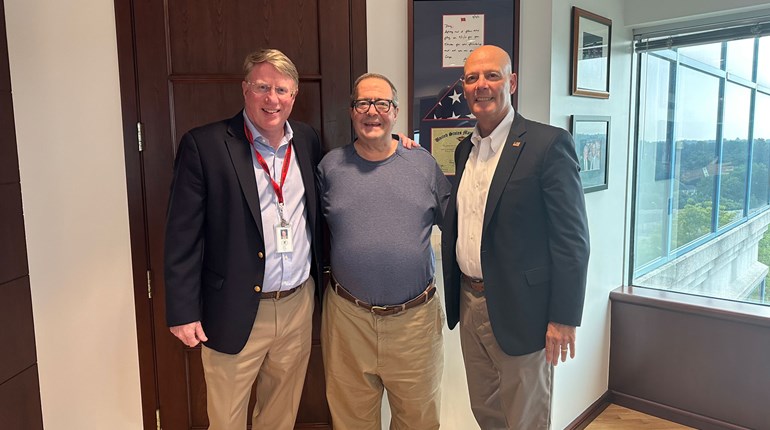
His path was one that included him becoming friends with William B. Ruger, Sr., as cranky and demanding a man as I have ever met. Mr. Ruger called me “kid,” but he addressed Phil by name with genuine warmth. Phil was friends with Robert Petersen, founder of the publishing empire that bears his name and the only billionaire I’ve ever known. Medal of Honor recipient and past NRA President Joe Foss was his hero and dear friend. He was invited to the set of “Blue Bloods“ by his friend Tom Selleck. He was preceded in death by his friend R. Lee Ermey. It is my hope that Phil and the Gunny are having a cigar together on the other side as this is written.
His character was unlike anyone I’ve ever known. Smart, funny and stubborn. Whatever standard an organization or the world imposed, his own was higher. He was a public face of NRA, not because he sought fame and fortune; the latter is extremely unlikely as an NRA employee of 36 years. He took that role on as not only his vocation but as a responsibility. Most of NRA’s millions of members will never meet an NRA staffer, one of the dedicated people that goes to work for them every day, so you better leave a good impression. Phil had the Cal Ripken attitude: No matter what’s going on in your life, you stay and sign the last baseball. At the thousands of gun shows he attended, and the dozens of NRA Annual Meetings, he would always make time to answer a question or shake a hand, much to his own peril when seeking to reach the bathroom on time. He once told me that if you’re on TV enough, you’ll never make it to the men’s room alone again. There was simply no quit in him.
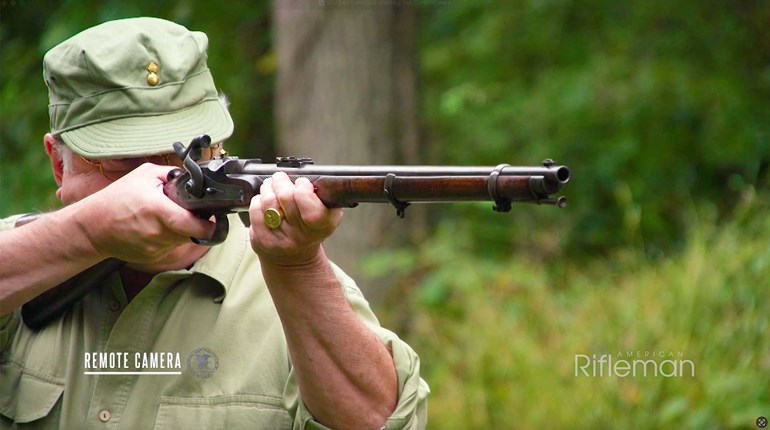
When I was asked to start “American Rifleman Television” on the Outdoor Channel in 2002, the first thing I did was head to Phil’s office and tell him, “We’re doing this, but I can’t do it without you.” He was part of every episode for 44 seasons, 22 years. We can do the show without him, but I don’t have to like it.
When it looked like a coalition of nations would rid the world of Saddam Hussein, Phil came into my office and told me he wanted to be the first embedded war correspondent for American Rifleman since Bill Shadel during World War II. He sent a series of letters and did all the legwork, resulting in his being embedded with the 101st Airborne Division. He was on the ground representing NRA for American Rifleman and “American Rifleman Television.” A true gun guy, his knowledge of guns was both historical and practical. He even designed a fixture to hold belted machine gun ammunition boxes on the side of American vehicles. I’ve spoken to troopers who used that locally made accessory on their Humvees in combat. They had no idea it came from Phil.
As he prepared to be embedded (at his own expense), I wished him well and told him, “Don’t die over there, Phil, or I’ll kill you.” He not only went over there to tell a story, but he was there long enough that, as he was getting ready to return home, he met with the 101st’s commanding general, David Patreus. He’d been on the ground with the 101st long enough that Gen. Petraeus personally presented him a Screaming Eagle patch and told him to wear it on his right shoulder for seeing more than 30 days of combat with the 101st. The general also gave him a Screaming Eagle lapel pin that Phil will wear the last time anyone sees him at his funeral memorial. He made friends over there, friends who will be at his memorial service, and he passed out a lot of Old Bay. Later, NRA sent him to Afghanistan, to report and represent us.
Wherever he went, he always represented NRA and the positive side of the gun culture. He was a guy that, even if you didn’t know him, you felt like you did. From his work on “Tales of the Gun,” ”American Rifleman Television,” “Gun Stories,” “Lock n’ Load with R. Lee Ermy,” and dozens of other appearances on both broadcast shows and hundreds, if not thousands, of YouTube videos, he represented all of us that have guns and freedom in our hearts. He brought culture to the gun culture. He was an example to follow; he spoke for us. I miss him. And you should, too.