When Ben Kuroki passed away last week, he took an important piece of American military history with him. In 1941, the 24-year-old Kuroki heard something not often said at U.S. Army recruiting stations just after the bombing of Pearl Harbor—“Go home.”

He and brother Fred were there in a common display of patriotism, particularly in rural America—specifically Grand Island, Neb. Encouraged by their father, they went to another recruiter down the road in North Platte. One anecdote suggests “Kuroki” was interpreted as Polish in origin there. By January, the brothers were headed for Sheppard Field, just outside of Wichita Falls, Texas.
Like all Nisei enlistees (second generation, American-born children of Issei—Japanese immigrants to America), young Kuroki discovered to his dismay that he would not be allowed to serve in either the European or Pacific theaters. With a doggedness that would mark his every undertaking, he eventually persuaded his stateside commanding officer to transfer him to an administrative post in the Eighth Air Force. There, he volunteered for gunnery training, and was soon assigned to a B-24 “Liberator” heavy bomber. A normal tour was 25 missions (though the average crewman only made it to 10), but Ben flew 30 before returning home. His 24th was the notorious August 1943 raid on Ploesti, Romania, where 53 B-24s were destroyed and over 50 more damaged by ferocious German air defenses.
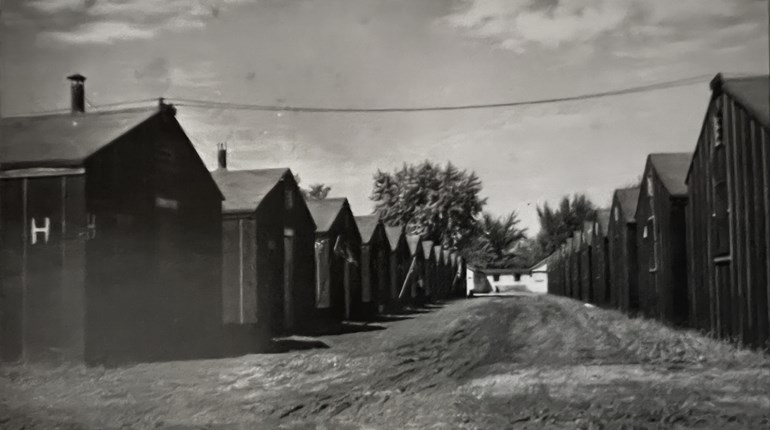
Back in the United States, most Americans of obviously Japanese ancestry were living in internment camps on the thin pretext of West Coast security. But by the time Ben Kuroki returned stateside, the need for skills only Nisei were likely to have were becoming more—even desperately—apparent. The sergeant toured every camp, encouraging his fellow Nisei to join the fight, and he was hugely successful.
Nearly 6,000 Japanese Americans served in intelligence roles. They translated thousands of captured documents, and generated thousands more as leaflets or other propaganda. They also assisted in interrogations all over the Pacific theater, and were present at every major engagement on land or sea. A Military Intelligence Service radio operator intercepted the radio transmission that code-breakers used to set the most important trap of the war: Air Corps P-38s were waiting for Admiral Isoroku Yamamoto as he tried to land in the Solomon Islands, and Japan lost its best officer.The all-Nisei 442 Regimental Combat Team established a fighting reputation equaled by few: By size and length of service, it is the most decorated unit in the history of the U.S. Armed Forces.
Other translations were crucial in the Battles of the Philippine Sea and Leyte Gulf, where the Empire lost the remainder of her aircraft carriers, naval aircraft and any real hope of victory. Fourteen Nisei troops were with elite unit Galahad too—Brig. Gen. Frank Merrill’s famed Marauders. These included eventual Master Sergeant Roy Matsumoto, Military Intelligence Corps Hall of Fame member and winner of the Congressional Gold Medal (along with other surviving Nisei veterans), Bronze Star and the Legion of Merit.
Nisei service was by no means limited to specialized language-related skills. Serving first as part of the 100th Infantry Battalion and then as the 442 Regimental Combat Team, it established a fighting reputation equaled by few: By size and length of service it is the most decorated unit in the history of the U.S. Armed Forces. Its 522nd Field Artillery Battalion liberated Dachau’s Hurlach satellite concentration camp, freeing 3,000 mostly Jewish survivors. Twenty-one 442nd soldiers earned the Medal of Honor, more than 9,000 won Purple Hearts and eight won Presidential Unit Citations, including five in a single month.
Before the war ended, no lesser person than Secretary of War Henry L. Stimson would intercede on SSG Kuroki’s behalf and return him to combat at the sergeant’s request. He flew another 28 missions in the B-29 Superfortress. There he would be promoted to Technical Sergeant, win his third Distinguished Flying Cross, and the Air Medal with Five Oak Leaf clusters. Nicknamed “Most Honorable Son” by his crewmates, they would christen their Superfort in his honor as well: “Sad Saki.”
Ben Kuroki would spend his postwar years as purposefully as he had those in the service of our nation. Armed with a journalism degree from the University of Nebraska, over the next 34 years he was a reporter, editor, husband and father, retiring in 1984. Through it all, he would weave what he called his 59th mission—the fight against prejudice and race hatred that nearly kept him from serving his country at all. “I had to fight like hell for the right to fight for my own country,” he said as he received a belated Distinguished Service Medal in 2005. ”And now I feel full vindication.”
Our dwindling pool of World War II veterans grew importantly smaller when Ben Kuroki left us at the age of 98.
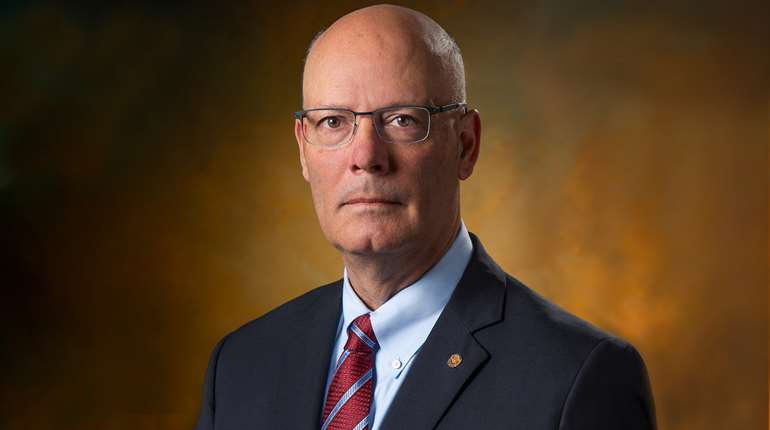
Photos of Ben Kuroki by Spencer Weiner via Getty Images
B-24 Liberators Photo by U.S. Air Force