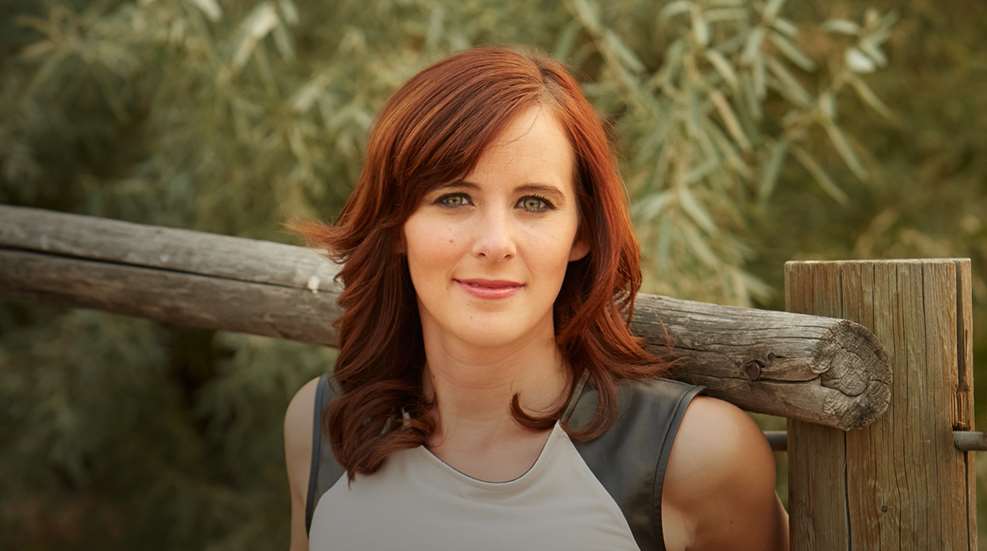
Ashley Hlebinsky isn’t your average “gun girl.” A former ballroom dancer who until recently was headed toward a medical career, Hlebinsky accidentally discovered something she enjoyed even more than medicine—firearms history. She became hooked on the historical aspect of firearms, which led to a series of museum fellowships where she learned all she could about the topic.
Now a full-time curator at the Cody Firearms Museum in Cody, Wyo., Hlebinsky is working hard to inform the public about the rich stories firearms tell about manufacturers, consumers and users, and their overall role in American history and culture.
Despite having a fascination with firearms, I didn’t grow up around guns. My original career aspiration was to be a surgeon. It was a Civil War medicine tour in Gettysburg, Pa., that so greatly altered my career path. The tour guide spoke of the evolution of firearms and artillery from the American Revolution to the Civil War, and how those technologies impacted the role of medicine during the war.
For me, the tour contextualized firearms as a larger part of American history, and after that I was hooked. I completed an internship at the Soldiers & Sailors Memorial Museum in my hometown of Pittsburgh, cataloging a range of military arms. While there, I encountered a .577-caliber Enfield rifle used by George Allison of the 149th PA Volunteer Infantry, hailing from the wilds of Pennsylvania and otherwise known as the Bucktails. Carved into the stock of the Enfield were 23 battle names, including Gettysburg, fought by Allison and his company of esteemed marksmen. This artifact captivated me, and helped me understand the person who used it.
These sorts of experiences sparked my passion to understand and appreciate firearms for their technological innovation, aesthetic value and the stories they reveal about people, as well as their use. After my internship, I completed an NRA FIRST Steps course and began target shooting recreationally. This hands-on study, combined with my historical research, prepared me for my next internship, this time with the Smithsonian Institution’s National Firearms Collection in Washington, D.C.
I have continued throughout my career to study not only the objects, but the stories they capture. As a member of the curatorial staff of the Cody Firearms Museum, I conduct research on firearms within the collection and write articles about them for publication. The Cody Museum, part of the Buffalo Bill Center of the West, houses one of the largest, most comprehensive collections of American firearms in the world. Since its inception in 1917, it has grown to more than 7,000 historically significant firearms.
Firearms have rich stories to tell about manufacturers, consumers and users—and their overall role in American history and culture. For example, I own several modern handguns as well as a few antique firearms, including a Springfield Model 1861. I really love the Springfield because it was given to me by a family friend who found it in the walls of a house when he was growing up. The gun was in pieces, including a broken stock. I worked with a firearms curator in Pittsburgh to repair the gun for him, and when I was finished, he gave me the firearm to keep.
As a museum professional with a specialty in the history of firearms in American culture, I use objects to educate the public, and use stories to lend a unique perspective to the interpretation of firearms throughout history. It is not my desire to draw conclusions about these stories. Instead, I want to provide a learning environment for enthusiasts, novices and those with apprehension toward firearms to come together in amiable discussion.