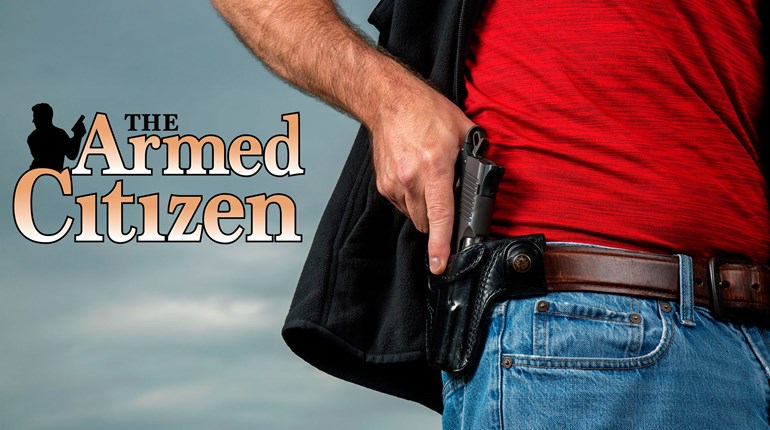
President Donald Trump (R) is pushing concealed carry as both a principle and a practical tool. On August 25, he made explicit his backing for expanding concealed carry in D.C., affirming that “people have to be able to protect themselves.”
“I’m a Second Amendment person, very simply. People have to be able to protect themselves. Especially like in Washington, you walk down the street and a guy comes up and slugs you and he’s got a pistol in his hand; you can be tough, you can be in great shape, you can be a powerful person, or you can be a guy that weighs 100 pounds with a gun in your hand,” he said at a recent press conference. “I’ll bet on the guy with the gun 100% of the time, right? So, you need protection.”
That federal push to restore order has also reopened a deeper debate: D.C.’s long history of resisting the Second Amendment, even in the face of repeated court rulings.
A Legacy of Restricting Rights—and Safety
Since its ban rolled out in 1976 under the Firearms Control Regulations Act, D.C. enacted some of the nation’s most-restrictive gun laws—banning handgun possession, registration of all firearms, and requiring weapons in the home to be unloaded, disassembled, or trigger-locked. That long-standing regime was struck down nearly three decades later in District of Columbia v. Heller (2008), where the Supreme Court affirmed individuals’ right to keep firearms for self-defense inside the home.
Yet even after Heller, D.C. continued erecting heavy barriers to exercising that right. In Wrenn v. D.C. (2017), the D.C. Circuit decisively ruled that the “good reason” requirement for a concealed-carry permit violated the Second Amendment’s protections.
For years, D.C.’s leaders framed rising violence as a failure of responsible gun owners while stiff-arming access to law-abiding concealed carry. However, with crime spiking—homicides hitting a 25-year high in 2023, even as recent stats show violent crime back down to 2024 levels—leaders have finally started to confront the reality of criminal violence, not constitutional rights.
Trump Speaks Out: Reciprocity, Rights and Safety
Most notably, the president publicly endorsed the idea of D.C. recognizing concealed-carry permits from other states, framing it as a matter of reciprocity and a broader affirmation of Second Amendment protections, as well as a meaningful signal that his administration is committed to restoring rights, not just exerting federal control.
Concealed carry is technically legal in all 50 states and in Washington, D.C. Still, in many jurisdictions, the process to obtain a permit where required remains so burdensome that it effectively denies citizens their right to bear arms. The Trump administration has moved to change that.
Earlier this year, a federally backed task force in D.C. reported cutting the wait time for carry permits from four months to just four days. At the same time, the Justice Department’s Civil Rights Division has launched an investigation into Los Angeles over its lengthy delays in accepting and processing permit applications.
These developments mark a sharp reframing: responsible gun ownership and public safety are no longer treated as opposing goals. D.C.’s old playbook of blaming constitutional rights while crime soared has collapsed. In its place is a more pragmatic approach, driven by federal action and a renewed emphasis on empowering law-abiding citizens to defend themselves.
For pro–Second Amendment advocates, three key lessons stand out. First, streamlining carry permits in D.C. not only respects lawful behavior but also reduces unnecessary bureaucratic hurdles and strengthens constitutional rights. Second, the federal surge demonstrated that visible enforcement—not disarmament—is what truly deters crime and reduces violence. And third, ensuring that D.C. recognizes out-of-state permits reinforces reciprocity and affirms the principle that constitutional rights do not stop at arbitrary borders.
As D.C. continues its crime battle, the lessons are clear: when government stops punishing responsible citizens and starts targeting violent offenders, communities become safer—and constitutionally resilient.