Promises made, promises kept. It’s the phrase President Donald Trump’s White House uses to emphasize this administration’s commitment to delivering on the agenda the American people endorsed at the ballot box. And unlike the case with so many cheap-talking politicians, the Trump administration has plenty of accomplishments to point to. This is especially true when it comes to President Trump’s promise to protect Americans’ Second Amendment rights.
Speaking at the 2024 NRA Annual Meeting in Dallas, Texas, President Trump told NRA members, “Let there be no doubt, the survival of our Second Amendment is very much on the ballot.” The president went on to explain, “In my second term, we will roll back every Biden attack on the Second Amendment.” President Trump’s Make America Great Again platform made clear that his party would “Defend our Constitution, our Bill of Rights, and our fundamental freedoms, including … the right to keep and bear arms.”
Upon taking office on January 20, President Trump got to work on keeping his word.
Reining in the Administrative State
In February, President Trump issued an executive order, “Protecting Second Amendment Rights.” Of chief concern was reorienting the administrative state to protect, rather than infringe, the right to keep and bear arms.
During his inglorious term, President Joe Biden and his handlers had instituted a “whole-of-government” approach to attacking gun owners, the gun industry and Second Amendment rights. This means that they sought to leverage any bit of the sprawling federal bureaucracy they could to wage their anti-gun jihad.
The most formalized representation of this effort was the ill-named, and Kamala Harris-led, White House Office of Gun Violence Prevention. The outfit served as a taxpayer-funded gun-control advocacy wing of the federal government, coordinating efforts to undermine the Second Amendment throughout the administrative state. Explaining this far-reaching undertaking, the former deputy director of the White House gun-control office told anti-gun publication The Trace, “Within our first week on the job, there was a cabinet meeting where the president and vice president challenged each agency to do more.”
President Trump shuttered the gun-control project immediately after assuming office.
The federal public health bureaucracy has been a crucial target for reform. In March, the Trump administration removed Biden Surgeon General Vivek Murthy’s anti-gun policy document, “Firearm Violence: A Public Health Crisis in America,” from the official Department of Health and Human Services (HHS) website.
There is an ongoing effort to realign the Centers for Disease Control and Prevention (CDC) toward its original function (controlling communicable disease) and away from boutique political concerns. To this end, Trump administration reduction-in-force efforts have included the CDC’s historically anti-gun National Center for Injury Prevention and Control (NCIPC). Moreover, reporting from the journal Nature suggested the National Institutes of Health, which has funded dubious and bizarre gun-related research, is exercising more judgment in grant-funding decisions.
Then there’s the Bureau of Alcohol, Tobacco, Firearms and Explosives (ATF).
In 1992, Congress defunded ATF from administering a statutorily authorized procedure whereby a person prohibited from possessing firearms can petition “the Attorney General for relief from the disabilities imposed by Federal laws[.]” Designed to give reformed citizens a chance to restore their Second Amendment rights, ATF had managed this program under a delegation of authority from the U.S. Attorney General.
In early 2025, the Trump administration moved the statutorily authorized function into the Department of Justice’s Office of the Pardon Attorney and began processing relief petitions once again. In July, the Justice Department issued a proposed final rule seeking to further formalize the restoration-of-rights process.
The Biden administration weaponized ATF against the gun industry. In June 2021, the Biden White House announced its intent to revoke Federal Firearms Licenses from licensees (FFLs or gun dealers) under a new “zero tolerance” policy purportedly aimed at “rogue gun dealers that willfully violate the law.”
Since enactment of the Firearm Owners Protection Act of 1986, the government must prove that an FFL’s violation was “willful” to revoke its license. This change was in response to congressional findings that ATF was taking an overly harsh approach to routine inspections of FFLs, including revoking licenses for honest and harmless mistakes, instead of working with the FFLs to improve compliance.
The “zero tolerance” campaign effectively read the “willful” standard right out of the federal statute. As a result, the Biden effort subjected well-meaning FFLs to license revocations over minor infractions, including harmless paperwork errors.
On April 7, President Trump formally put an end to Biden-era “zero tolerance.” In so doing, the DOJ acknowledged, “The prior administration’s ‘Zero Tolerance’ policy unfairly targeted law-abiding gun owners and created an undue burden on Americans seeking to exercise their constitutional right to bear arms.”
While it’s impossible to undo all the damage done to well-meaning gun dealers whose livelihoods were a casualty of Biden’s war on the Second Amendment, on May 21, ATF announced that “Federal firearms licensees that surrendered their licenses, had their licenses revoked, or had their applications denied based on the [zero tolerance program] may reapply.”
In the same April announcement ending “zero tolerance,” the DOJ also made clear its intent to revisit Biden-era regulatory restrictions on the use of pistol-stabilizing braces. In July, the DOJ made clear that it would not appeal a Fifth Circuit ruling that had vacated the Biden-ATF brace rule, ending enforcement of the braced-pistol ban.
Further, the Trump administration has reversed a Biden-era regulatory effort to use the Department of Commerce to inhibit commercial export of firearms from the U.S. to other countries. In protecting the American firearm manufacturers’ ability to do business abroad, the Trump administration is protecting jobs in this vibrant industry and ensuring these companies’ capacity to continue to produce their products for domestic gun owners.
A Monumental Tax Cut
On July 4, President Trump signed the One Big Beautiful Bill (OBBB) into law. The legislation zeroed out the unconstitutional National Firearm Act of 1934 (NFA) $200 tax on suppressors and short-barreled firearms, along with the $5 tax on “any other weapons.”
The tax cut offered gun owners a welcome reprieve from an intentionally punitive tax. Still, the OBBB’s most consequential impact may be yet to come. President Trump’s signature opened the door to a new legal attack on the NFA regulatory regime.
Under the U.S. Constitution, the federal government is limited to its enumerated powers—one of which is taxation. The drafters of the NFA specifically used the taxing power to regulate the items implicated under their legislation. Using this power, the government constructed an onerous registration and transfer regime for NFA items, which requires transferees to submit sensitive personal information for retention in a federal registry. The legal fiction supporting this oppressive scheme is that it exists to administer the NFA tax. Without the corresponding tax, there is no justification for the registration regime for the now untaxed items.
Prompted by President Trump’s legislation, NRA has joined a coalition of gun-rights organizations in a federal lawsuit to eliminate the NFA’s registration requirement for the items not subject to the NFA tax.
Civil Rights Litigation and the Judiciary
In 2001, U.S. Attorney General John Ashcroft shifted DOJ policy to recognize that the Second Amendment protects an individual right to keep and bear arms. This was a meaningful recognition of the proper interpretation of the Second Amendment seven years before the U.S. Supreme Court acknowledged the individual right in District of Columbia v. Heller (2008).
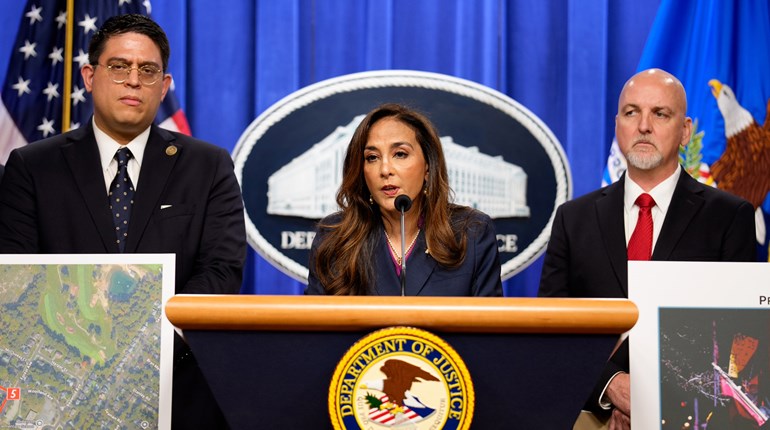
However, it took President Trump and his Justice Department to truly treat the Second Amendment as a right commensurate with other civil liberties. This can be seen in Assistant U.S. Attorney General Harmeet Dhillon and the DOJ Civil Rights Division she oversees’ emphasis on protecting the right to keep and bear arms.
In June, the Civil Rights Division submitted an amicus brief supporting the plaintiffs’ position in the Seventh Circuit case Barnett v. Raoul. The case challenges Illinois’ ban on commonly owned semi-automatic firearms and standard-capacity magazines.
Further, Dhillon participated in oral arguments on behalf of the U.S. In doing so, she made clear that it is the U.S. government’s position that the commonly owned semi-automatic firearms gun-control advocates are eager to ban are arms protected by the Second Amendment.
In September, the Civil Rights Division filed a federal suit against the Los Angeles County Sheriff’s Department for its woeful administration of the state Carry Concealed Weapons License regime. The complaint alleges the Los Angeles licensing authority “systematically denied thousands of law-abiding Californians their fundamental Second Amendment right to bear arms outside the home—not through outright refusal, but through a deliberate pattern of unconscionable delay that renders this constitutional right meaningless in practice.”
While there were no U.S. Supreme Court vacancies in 2025, President Trump’s careful attention to nominating judges with a fidelity to the U.S. Constitution and rule of law in his first term paid dividends this year.
On June 5, the Court issued a unanimous decision in Smith & Wesson Brands v. Estados Unidos Mexicanos. The case concerned an effort by Mexico, aided by domestic collaborators, to hold the U.S. gun industry liable for cartel violence committed south of the border.
Under longstanding tort principles, manufacturers aren’t responsible for the criminal acts of third parties perpetrated with their products (e.g., General Motors isn’t liable for the actions of drunk drivers). Faced with anti-gun efforts to undo this basic tenet of tort law to bankrupt the gun industry, the U.S. Congress enacted the Protection of Lawful Commerce in Arms Act in 2004, protecting the gun industry from illegitimate third-party liability.
The Court rejected Mexico’s case and in doing so invigorated the PLCAA, which has faced an increasing number of dubious legal attacks in recent years.
On October 3, the Court granted certiorari in Wolford v. Lopez. The case concerns Hawaii’s concealed-carry law enacted in the wake of the Court’s landmark New York State Rifle & Pistol Association v. Bruen (2022) decision. The Aloha State law prohibits license-to-carry holders from carrying on private property open to the public without the property owner’s express consent.
While nothing is certain, gun-rights supporters can hold a cautious optimism that the Court may seek to rein in some of the worst post-Bruen intransigence while offering further limitation on what defiant jurisdictions so frivolously deem “sensitive places.” Property prohibitions akin to Hawaii’s in New York and New Jersey have been struck down in the Second and Third Circuits, respectively.
With all this early progress on Second Amendment rights, gun owners are right to be hopeful about what can be accomplished in President Trump’s next three years. Yet, there will be challenges ahead. The 2026 midterm elections, a stubborn bureaucracy, and persistent anti-Second Amendment obstinance from the lower federal courts make clear that gun owners must stay engaged and committed to working toward our goals.