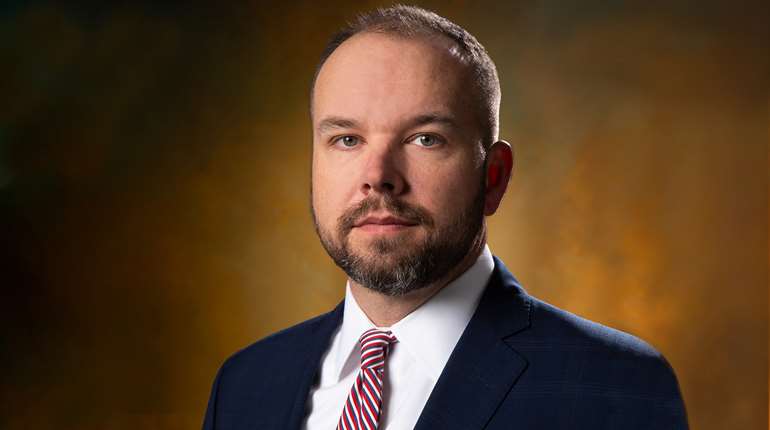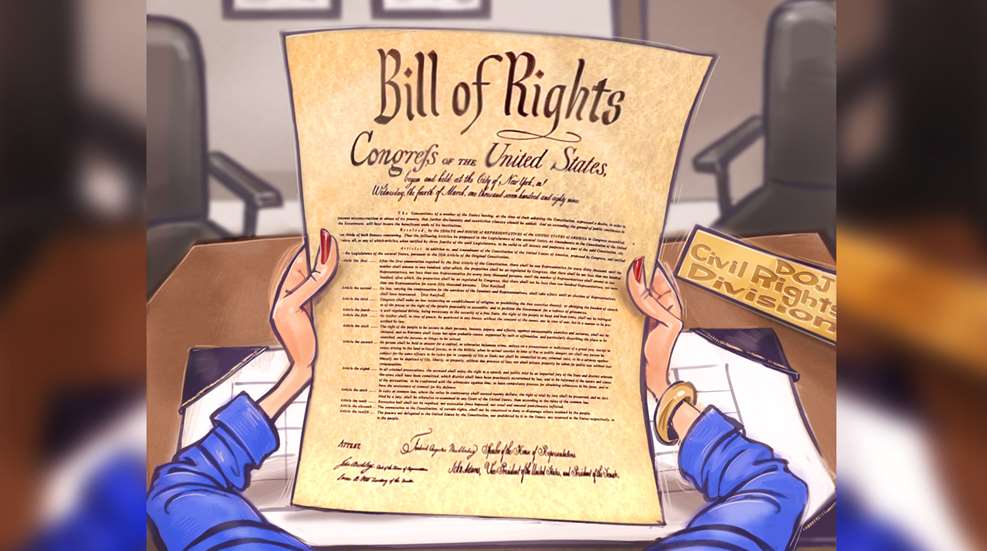
Harmeet Dhillon, the recently confirmed Assistant Attorney General for Civil Rights, a division within the U.S. Department of Justice (DOJ), has announced a new focus: The protection of the Second Amendment against any state or local government that hopes to undermine it. “Prior Republican administrations haven’t paid a lot of attention to affirmatively doing that,” said Dhillon, with the result being that “city after city, state after state are eviscerating those rights” while “mocking the Supreme Court.” Henceforth, she concluded, that mockery will have consequences.
Dhillon suggested that the decision to make the Second Amendment “a focus of the Civil Rights Division” may come as a “surprise to many people on both sides.” And, given the way that the right to keep and bear arms has often been treated in the nation’s capital, she is probably right. As a historical matter, though, the move ought not to surprise anyone, for, instead of being an aberration or an innovation, ensuring that the Second Amendment was “affirmatively” extended to everyone was one of the first things that Dhillon’s agency ever did.
Immediately after the Civil War, Congress passed measure after measure designed to guarantee that newly freed slaves would not be denied their unalienable rights. This was a core purpose of the two Freedmen’s Bureau Acts of 1865 and 1866, of the Civil Rights Act of 1866 and of the Fourteenth Amendment to the Constitution, which was ratified in 1868. The Second Freedmen’s Bureau Act of 1866 insisted explicitly that “the constitutional right to bear arms” would not be countermanded by any states that, to borrow from Dhillon’s language, sought to “pass laws that make it virtually impossible” for American citizens to own and carry firearms, while, per its author’s own description, the Fourteenth Amendment was written to “restrain the power of the states and compel them in all times to respect these great fundamental guarantees secured by the first eight amendments of the constitution.” Between 1865 and 1870, these laws were enforced by the War Department and local United States attorneys. After 1870, they were enforced by the DOJ.
And quite rightly so. The U.S. Constitution contains an unmitigated promise that “the right of the people to keep and bear arms shall not be infringed.” For many years, figures such as Clarence Thomas and Antonin Scalia correctly complained that the Second Amendment was being treated as “a second-class right” in the nation’s courts. As Dhillon has now made clear, that problem has been evident within the DOJ, too. That is a disgrace. The federal government does a great number of different things these days, but its primary function remains the protection of liberty in the United States. If its Civil Rights Division is to exist, its purpose should be the safeguarding of civil rights. If it does not achieve this—not selectively, but across the spectrum—it is unfit for its purpose.
Taken together with the Trump administration’s desire to ensure that all federal firearms laws are consistent with the Constitution, it seems fair to conclude that the people of the United States have elected the most reflexively pro-Second Amendment executive branch in living memory. For too long, politicians in both parties have simply ignored one of the foundational liberties enjoyed by the American citizenry—as if it were an optional extra or a remnant that could be discarded at will.
Harmeet Dhillon’s declaration confirms that the right to keep and bear arms is neither of those things, and that, from now on, those who pretend otherwise will not do so with impunity.