You’ve acquired a firearm and want to carry. Now, it’s time to train. What does this mean and where do we begin? While some states require a person who wants to carry to have gone through some training, a person who is committed to carrying might ask, “Is this enough?” Some people who carry concealed believe that a concealed-carry course that meets their state requirements is all they need. Believing this way does not mean the person is arrogant or over-confident. Mostly, it is simply a case of not knowing what they don’t know.
Those who believe that meeting the minimum requirement is sufficient often draw an analogy to obtaining a driver’s license. We want to drive, so we study the laws in place in the state we live in. We take a written test, a vision test and a driving test to demonstrate our readiness to obtain a driver’s license. Upon passing, we are given a license that confirms we have the legal ability to drive a motor vehicle.
But, here is what they’re overlooking. We go through the testing, pay our state-mandated fees and—ta-da—we are licensed legal drivers. Does that mean we learned absolutely everything we need to know? Not by a long shot. We continue to learn every time we drive a vehicle. We gain experience as we drive and we learn how to deal with new situations as they arise. We are afforded daily hands-on experience applying the techniques that we learned, but we also acquire new skills. There is no way that we can learn all we need to know from a short course. We only get the main points and objectives that are the foundation for becoming safe drivers.
There is a similar mind-set when it comes to firearms. People have taken the concealed-carry class, performed a hands-on test and obtained their license, so they begin daily carry. But the stark difference between the analogies is this: We do not get daily hands-on experience with our firearm. We have the daily ritual of putting on our holster and gun to carry, but there isn’t much opportunity to run our gun. We are so conditioned to trust the process that we have stopped using our critical-thinking skills beyond the scope of what they tell us. The fact is, there might be more you have to learn, per your individual needs, than what is taught in a class that is designed to just meet stand standards. So if you carry a firearm, it is crucial to gain additional training.
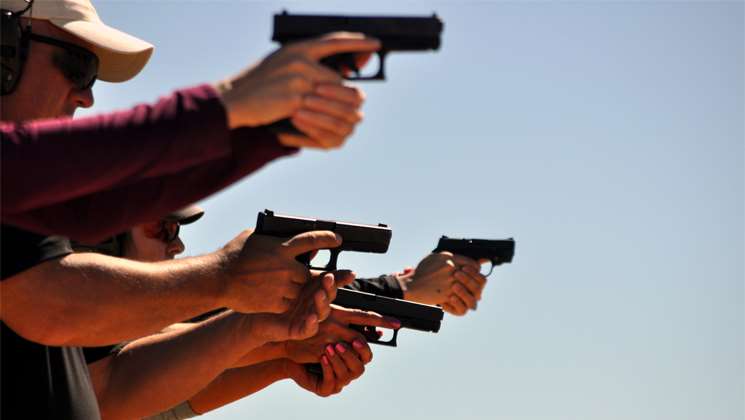
Finding a firearm training program is not difficult. You can go to any social media platform and be inundated with trainings, trainers and specific groups—so much so, that it could be overwhelming. It’s also easy to fall prey to the messaging, thinking for instance, “Wow! If I do this training I can become a tactical hero!” We must be able to sift through the slick advertising. First, you need to ascertain what type of training you need and why. Most of us do not live a “tactical life.” We carrying our firearm for self-defense; therefore, we need in-depth defensive handgun training. I am not in any way bad-mouthing tactical training. That has its purpose. But you need to ask yourself whether that purpose is relevant to your daily life and activities. Unless you work in a job that could put you in threatening situations where you need a gun, most of us just have the daily firearm interaction of gearing up and our firearms never leave the holster until range day. We carry to protect those we love and ourselves, and we view it as a last-resort measure we hope we never have to use. This is where our focus needs be.
A good defensive handgun course will focus on these key elements.
- Situational awareness. This is where they teach you the importance of understanding and being dialed in to your surroundings, how to scan your environment and be able to detect a possible threat, and the importance of getting away before the situation escalates.
- How to truly run your gun. Besides going over safe handling and carrying, they teach the ability to draw from the holster and quickly acquire the threat. Among other things, you’ll practice moving and shooting, shooting from cover, and firing at multiple targets from disadvantageous positions. You’ll learn to identify different malfunctions and how to rectify things. A good course also might provide information about reloads and choosing the best ammunition for your puposes.
- Mind-set. What happens mentally and emotionally if you were ever to find yourself in a situation that required you to use your firearm.
- Self-directed training. You should walk away with a plan that allows you to continue honing your skill so that you can take your training beyond the basics of static shoot at a target downrange.
Also, check out the trainer’s bona fides. When it comes to choosing a course, remember that you need to go deeper than the perceived image a company or trainer is trying to project. Ask questions, including the big one: Where did they acquire their experience and how has it been applied? Find reviews by people who have attended classes and see what the majority have to say. This is your money and your time that you are spending. You have the right to research and verify credentials before you spend either.
Most of all, know this: Training is essential because shooting is a perishable skill. Once we understand why we carry and we recognize our individual needs, we can find a training program to suit us.