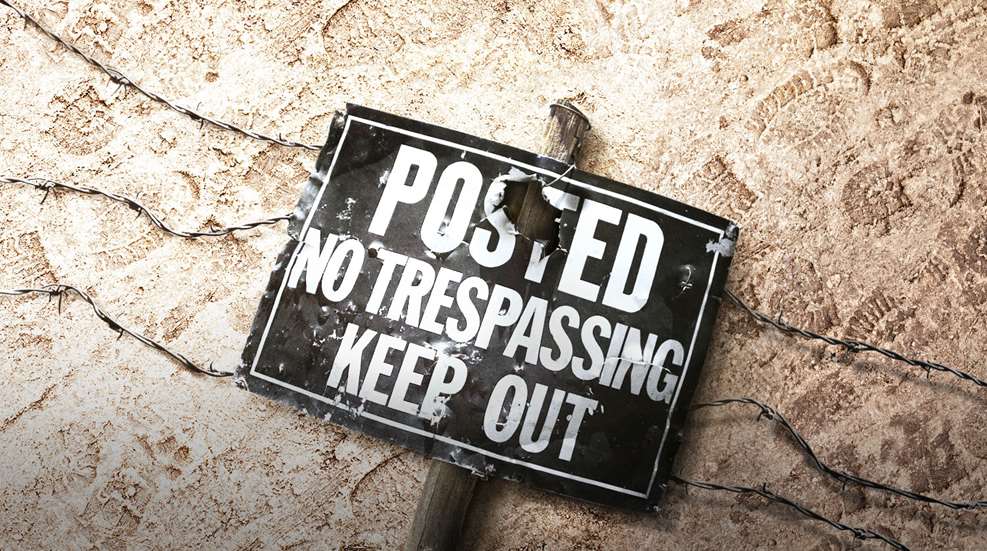
A feral hog’s bad attitude is matched only by its disgusting personal hygiene.
Three of us—my son Keaton, his college buddy Sam, and I—trekked to a friend’s Texas ranch over spring break to hunt these ill-tempered escapees from a “Star Wars” bar scene. We met a friend—let’s call him John—in San Antonio and headed for his ranch at dusk.
We arrived well after dark and immediately set out in John’s pickup to bait the roads. Flares from far-off fracking operations lit the fog that shrouded the senderos John’s son had bulldozed. We took turns scanning the eerie mist with the spotlight and chumming the road with the corn, fermented in Big Red Cola, that passes for Skittles to hogs. I allowed myself to imagine a “Jurassic Park”-sized pig joining us in the truck bed á la “Jaws.” I also allow myself to watch too many movies.
However, John’s was apparently the only ranch in Texas not yet overrun by feral hogs. By Day 3, we had only taken half a dozen shots, so I cautiously agreed to dismount and proceed on foot.
The fog had turned to light rain when we crept half a mile south to the riverbed on the edge of John’s property. We descended the mucky bank to find a game trail and Keaton took the lead, with Sam and I trailing.
We hadn’t gone 20 feet before we found our first sign.
“Every three or four days, three guys with backpacks full of drugs head north,” John had said on the drive in. “A couple days later, one guy with a backpack full of cash heads south. A rancher 50 miles from here shot one of the drug mules, and the cartel found the grave on his ranch. He was later found hanging from one of his own deer stands.”“They told me not to get out of the car to unlock the gate at night without a pistol at the ready. That’s when they can jump you and take your truck.”
Keaton had read of encounters with Mexican drug mules on the Internet. I didn’t want to stoke his Web-fed concerns, but it was hard to miss the bars on the windows of the bunkhouse when we arrived. John pointed out the dents in the heavy steel security door left by a crowbar. Once, he arrived to find the door twisted off its hinges, foul clothing on his bed and his own closet ransacked.
“They broke into this bunkhouse four times,” he said. “We used to put food out for them, and they left us alone. Now they break in, trash your house and sleep in your bed.” John bought the ranch 25 years ago for his wife, who loved riding and hunting there. Now, “I don’t like coming out here anymore,” he mourned.
“Border Patrol told me not to get out of the car to unlock the gate at night without a pistol at the ready,” recalled John. “That’s when they can jump you and take your truck.” One of John’s neighbors pulled up to his gate one night to find a crowd of men emerging from the dark. They were openly discussing rushing him—“There’s only one of him”—not realizing he spoke Spanish. The neighbor pulled a shotgun from his truck, and the crowd vanished into the night.
“People in other parts of the country don’t understand that we’ve been invaded,” John said.
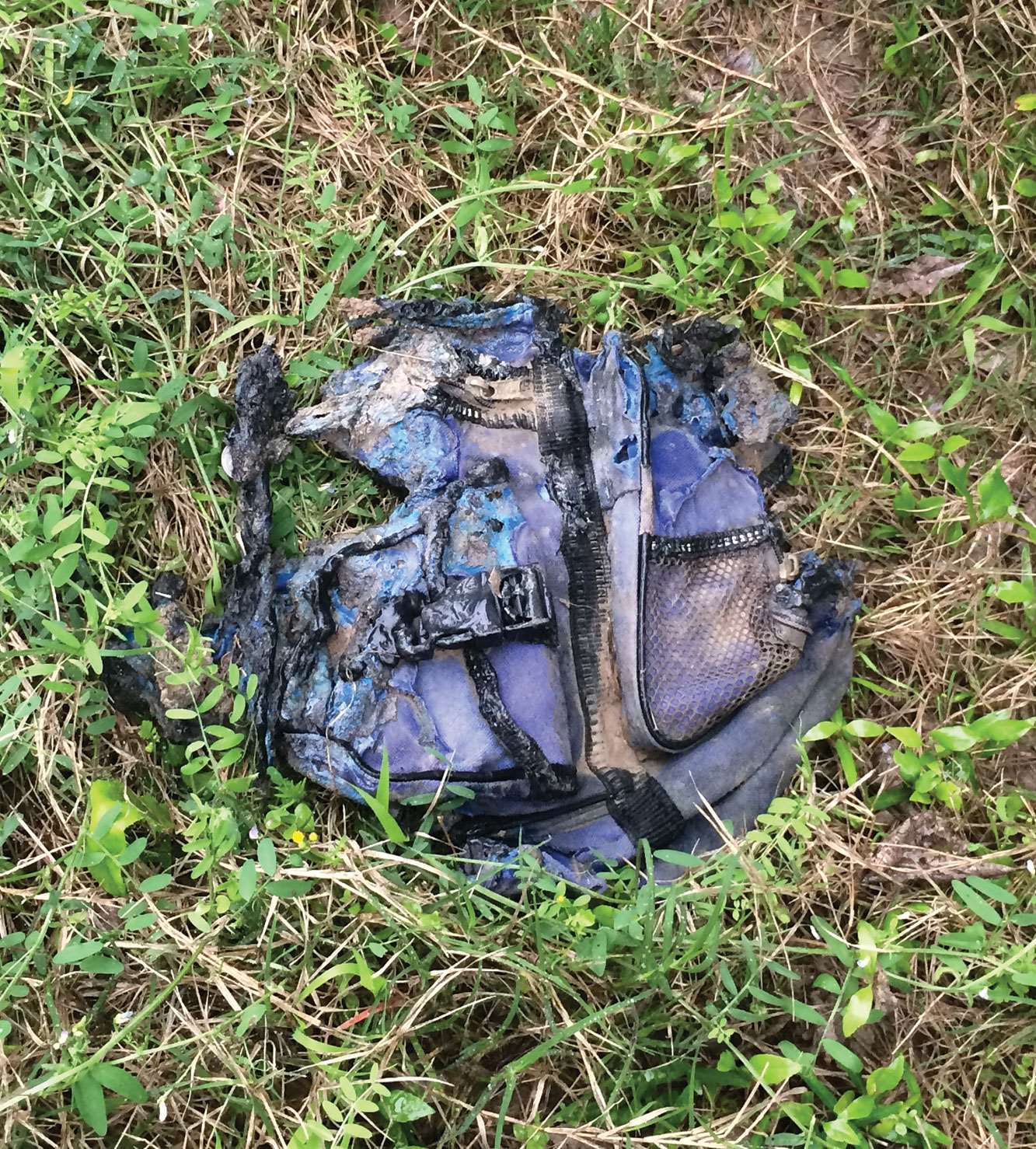
I thought, “Who burns a backpack?”
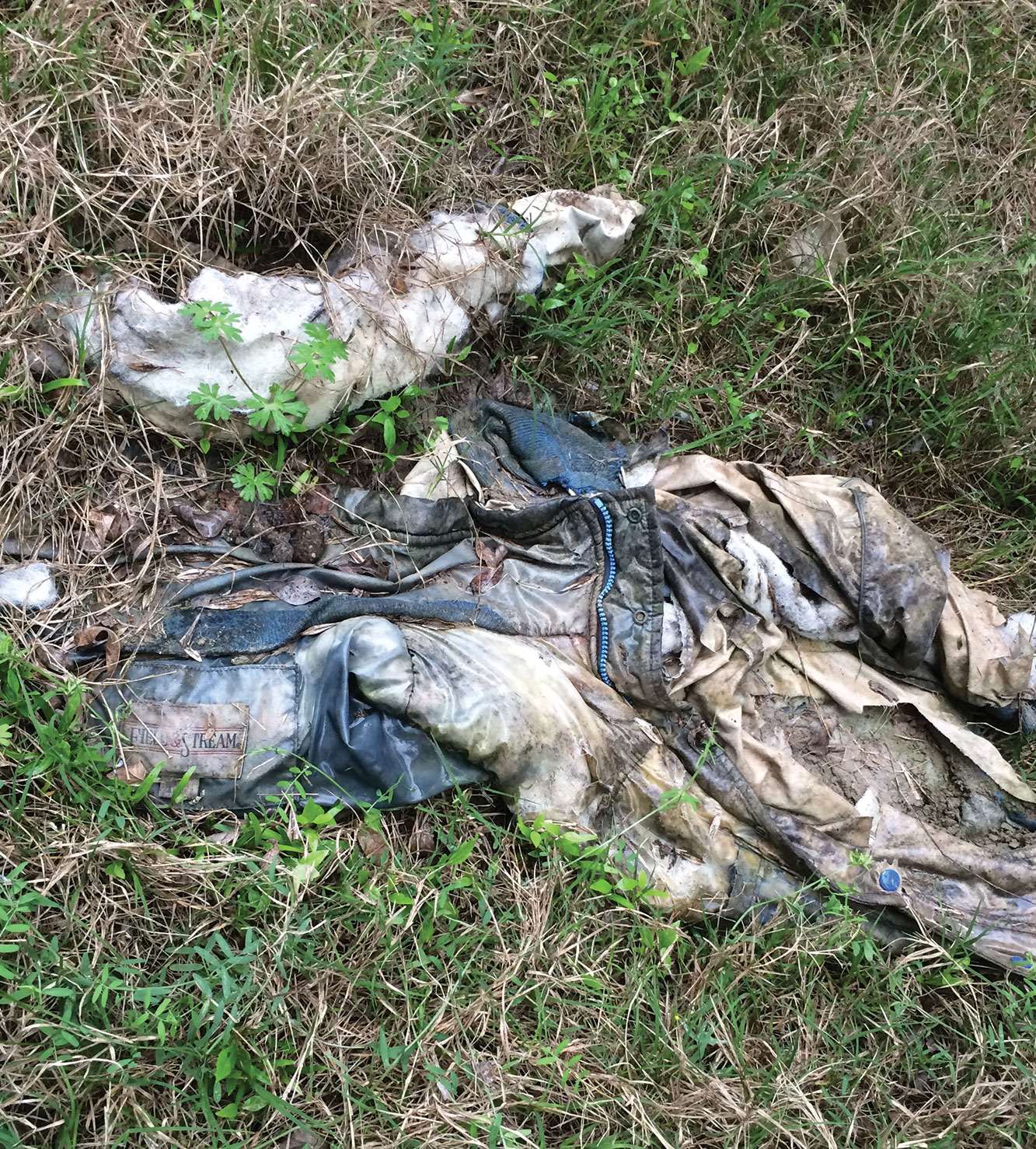
I stood in the riverbed, staring at the half-consumed backpack, trying to understand how it got here. We were standing in a field of discarded backpacks, knapsacks, clothing, boots, shoes and trash bags stretching out for 50 yards. There was a campfire site and an overturned BBQ grill.
We quietly picked our way through debris. Unable to make any sense of it, we resumed our stalk, my son 50 yards up the riverbed in the lead.
We’d gone about 100 yards before it began to dawn on me that perhaps this was not a game trail at all.
Team Benelli 3-gun competitor Lance Dingler grew up on a ranch near the Texas border town of Del Rio. Recalling a recent hunting trip to Sonora, Mexico, just south of Arizona, he said: “Every day, you’d see 10-12 young to middle-age males with these big backpacks. They had guys in the desert mountains with spotting scopes, binoculars and radios every four or five miles, spotting for the runners down below. You ignore them and they ignore you. Everyone looks the other way.”
“It got down in the 20s one night,” he continued. “In the morning we ran across a lady dressed in a light t-shirt and pants, almost frozen to death. We took her to a rancher’s cabin, built her a fire, gave her a jacket, socks and food. She had paid a coyote $4,000 to help her rejoin her family, who had crossed earlier, but he left her 15 miles from the border.”
Maybe that’s who burns a backpack.
There used to be a cabin near the riverbed, an older wooden structure with a pipe erected for hanging flowerpots. People sneaking across the border used it to get out of the elements—their presence evidenced by the backpacks and clothing strewn about. Unable to keep them out, John’s problem was solved when his unwelcome guests accidentally burned the cabin to the ground some years ago.We’d gone about 100 yards before it began to dawn on me that perhaps this was not a game trail at all.
Illegals routinely cut through his high fences; ranches like the famous YO lose many exotic animals this way. Ranchers repaired them at night until it became too treacherous. According to John, the illegals “quit being nice guys and starting shooting at them.”
Tim Fallon is part of the Sportsman’s All-Weather, All-Terrain Marksmanship (SAAM) hunter training team at the 12,000-acre FTW Ranch near Barksdale, Texas. “A lot of the 500-plus hunters who come through FTW have had Coues deer hunts disrupted by illegal travelers,” he said. “I know of several outfitters in Arizona that have shut down their operations due to major issues, shootings or scares.”
Both Fallon and Dingler are complimentary of the U.S. Border Patrol’s efforts in Texas. Whenever Dingler encountered suspected illegals, “we’d call Border Patrol, and they’d pick them up within an hour or so,” he said. “They were literally in planes overhead in 10 minutes.”
John’s wife loved to hunt deer on their ranch. One fall afternoon, she watched from her tree stand as 20 border crossers came crashing down the dry riverbed. Shortly thereafter, a Border Patrol officer came through in pursuit. When he was directly beneath her, she asked, “What are you doing on my property?”
Startled, the officer retorted, “What are you doing here?”
“Well, I own this ranch.”
“Oh, well, I was looking for these illegals.”
“They went that way, down the riverbed.”
“OK.” He shouted out to the other officers, and started down the riverbed again.
15 years later, my son was creeping down that same riverbed, rifle at low ready. Twenty-five yards back, Sam held his bolt-action off to one side, conscious not to sweep Keaton. Another 25 yards behind Sam, my alarm was growing.
People who get into real trouble often ignore warning signs until it’s too late. We tell ourselves everything will be all right, and we ignore red flags until we’ve reached a point of no return.
We knew drug runners had been in that riverbed: We had seen multiple signs of recent passage. John told us they came through every three or four days, and that half-incinerated backpack had been there for some time. We were pig hunters, not gunfighters. I didn’t need any more red flags; it was time to turn around.
Hiking back to the truck, we passed garbage, clothing and campfire ashes just a few feet off the road. We mused about the possibility we were being watched. Sam said they hadn’t mentioned this in his hunter safety class.
Looking back, we never really felt threatened—perhaps only because we told ourselves it would be all right.