A couple of weeks back, we began talking about choosing a Carry Life-compatible handgun. We didn’t get very far for an entirely comprehensible reason: Wisely done, it is a nuanced undertaking. Despite dictatorial exhortations to the contrary (“My Uggahonk 9641B has never let me down!”), it ought to be plain why such opinions run the risk of being unalloyed balderdash: Not all Carry Lifers are the same, ergo the defensive handguns that fill their needs will not be the same, either.
That said, two crucial criteria did emerge. Caliber sufficient to the task is a no-brainer, though far from uncontested: An absolute minimum of .380 ACP is our “floor,” and 9 mm is to be preferred. We know staunch fans from the more-is-better school still roam the fruited plain, and to them we say, “Suit yourself.” As long as they can run that presumably larger handgun caliber well, we’ll keep our thoughts to ourselves. Just remember: Accurate bite trumps imagined or historical bark every time.
Handgun size came next. This we set at a level where the carry practitioner is not required to adopt model-specific technique for that first carry pistol. The notable exception is for the relatively experienced pistolero adding a carry gun: If you can run one of our suggested “quals” or the Confidence Drill with reliable precision, you’ve earned the right to broadened criteria. Well done, you: This puts a truly amazing number of modern firearms in the running, at least as a personal choice.
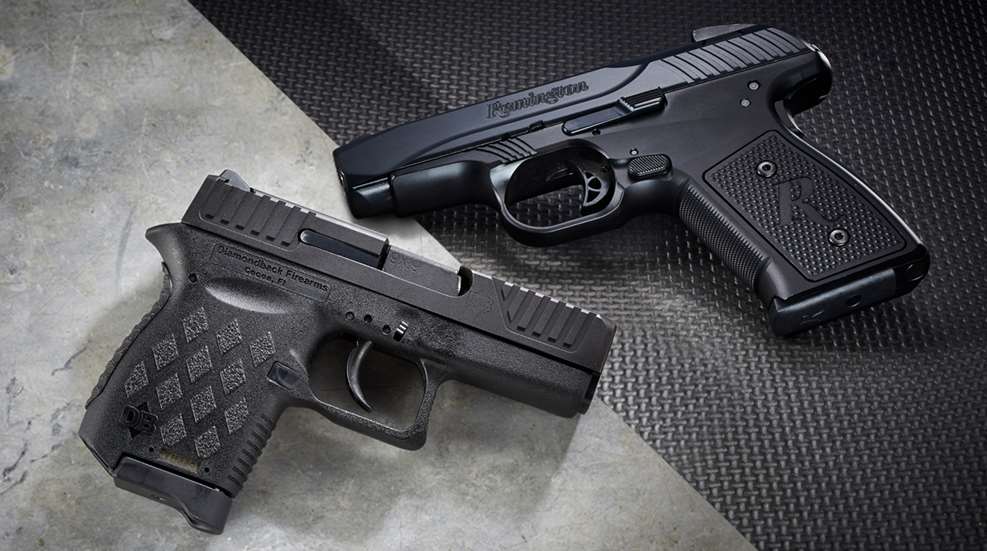
A size corollary now follows, and it’s a predictable one—weight. Here the trend is down, down, down, abetted by polymer- and aluminum-framed guns of grand variety. Long experience tells us that a loaded pistol much over 32 ounces is tough on clothing and rarely very discreet in the absence of a cover garment. Much under 22 gets you back to technique issues, especially on magazine changes. The Remington R51 is a relatively rare exception—right at the bottom of the weight range, yet most adults can shoot the pistol with no technique adjustments. Allowing for wunder-carries that don’t come immediately to mind, we’ll therefore set the weight guideline at 18-34 ounces, including ammunition.Long experience tells us that a loaded pistol much over 32 ounces is tough on clothing and rarely very discreet in the absence of a cover garment.
Action type is a logical, though intricate, “next.” A huge percentage in the present era are striker-type, double-action-only semi-autos. This is no accident. Such arms can range from very small (Ruger’s LC9s, for instance, or a fine Smith & Wesson) to the hunting-capable scale (Glock 40 in 10 mm). Our criteria would preclude both—specialized small gun technique on the lower end, and by weight (and dimension-too heavy/large) on the other—but the ability of striker actions to reduce and streamline controls is unparalleled. Within our other criteria, they make our “cut” with ease.
Other action choices are certainly possible. Revolvers have long been popular for carry in certain circles due to their mechanical simplicity and reliability. If there’s no ”bang,” just press the trigger again, up to the limit of cylinder capacity (generally five or six rounds). That’s a nice fallback in extremis, to be sure.
As much as we like those revos, there are substantive downsides. Foremost is a double-whammy of sorts—capacity and reload speed. Those undersized semi-autos that we’ve ruled out on technique grounds still reload faster than most revolvers, often even those aided by speed loaders of some type. Practice can amend this considerably, of course, but a lot of practice is required.
Revolvers also have more felt recoil per unit of downrange energy. A carry-proportioned revo will most likely be .38 SPL, and they’re thumpy for most shooters—just no way around it. This is a worry mainly because it can discourage adequate practice. Revolvers of carry dimensions often have modest sights as well, and this combines with long, double-action triggers to make them challenging—or frustrating—even at defensive distances.
Cylinder thickness is another potential disadvantage. As much as we love the 17-ounce (loaded) S&W 642, the cylinder is 1.3 inches wide. A roughly comparative semi-auto (by size) will add nine ounces, but will be thinner, have twice the round count, offer faster reloading and come with better sights. Keep in mind that most revolvers have no safeties whatsoever, and that has implications for their carry around children or other “unauthorized” users.
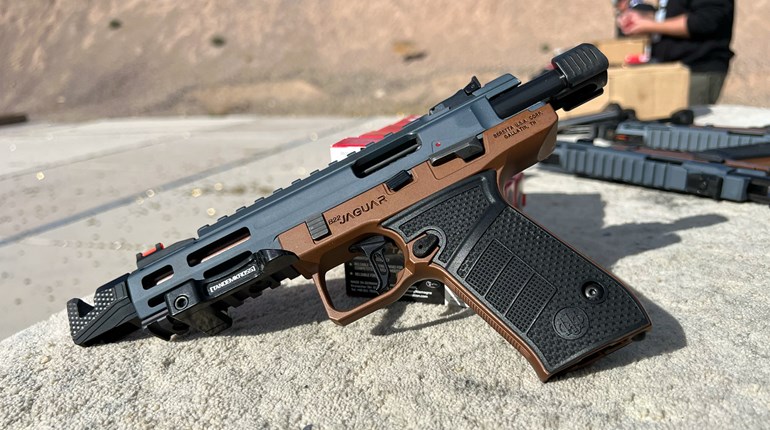
Single action semi-autos are still popular for carry, as well. Modern versions of these have an advantage with some veteran shooters: They can require the least in terms of technique accommodation. This Kimber is a 30-ounce gem, for instance. We grant it’s on the upper end of the weight range, but we’ll trade an ounce or two any time for a “little gun that shoots like a big gun,” as this does.Deconstructed, this means you’re on a non-target with your finger on the trigger—not one, but two of the shoot/no shoot rules have been broken.
The issues with SA are carry condition and getting the safety disengaged under stress. Both are contentious, and by roundabout means contribute to the popularity of striker-system pistols, most of which have on-trigger, frame block safeties. There’s also a tendency to invest single-actions with overly light triggers in defensive roles. This deserves very careful consideration in a defensive handgun: “Bang” must be fully intentional. A three-pound—or lighter—SA trigger is a delight on the range or in competition, but can spell trouble when uncertain bumps in the night occur.
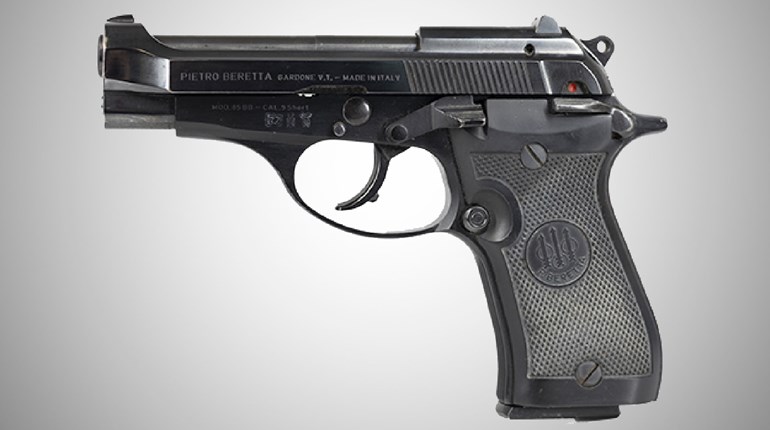
Finally, there are DA/SA pistols out there in what we’re calling carry class, but they’re smaller in number than you might expect (though a fine one from SIG is here, or a Beretta here). As a general rule, we aren’t fans: It is difficult enough to master one trigger press. That said, they have demonstrable advantages, and a case of “no bang” is probably the most obvious. Like a revolver, you can just press again.
In defensive situations, we think the other advantage is, well, overstated to say the least—the idea that the long first pull gives you more time to consider the true/real/actual necessity of the shot. Deconstructed, this means you’re on a non-target with your finger on the trigger—not one, but two of the shoot/no shoot rules have been broken. In other words, this is a thought experiment advantage that may have no real-world application. (Not coincidentally, another reason to train and practice more: Gun-covering-target and finger-to-trigger occur after a decision to fire has been made, not during—ergo, speed matters.)
We now have four criteria for that “first” carry firearm. In order, we’d rank them: 1) Don’t choose something that makes it harder to learn sound handgun technique—and especially avoid cramped proportions; 2) Make sure the caliber is sufficient to the task of ending a fight; 3) Pick a gun with a weight you can truly tolerate, and that your likely wardrobe will bear; and 4) It’s important that your selection has an action type you understand, and that caters to your strengths as a shooter.
The last item is where we’ll pick up next time and cast it against one of the biggest barriers to a good choice: How to make the best use of the help you’re sure to get in this process.
Until then, Carry on.