Three decades ago, a routine traffic stop produced one of my best friends. I’d noticed the tags on a vehicle were expired, and when I hit my blue lights, the car pulled over. I radioed in the stop and approached the vehicle. The driver had both his hands on the wheel and before I introduced myself, he said, “Officer, I have a carry permit and a pistol on my right side.” I thanked him for the information, explained the violation and we talked briefly after he signed the warning ticket. A few years later, I was in his wedding.
Legally armed citizens and law-enforcement officers are both often tense during face-to-face encounters. Citizens are wondering if they’re going to get a ticket or be fined, and the cops are wondering if they’re dealing with a good guy or bad guy. With citizens, some of the apprehension stems from a lack of understanding of the law, and the police cannot discern someone’s character just by looking at them.
Police officers have a job to do, but they also have discretion in how they do it. During traffic stops and investigative detentions, it’s the actions of the citizen that almost entirely guide the tone and pace of the contact. Let’s look at what an armed citizen should do when dealing with a law-enforcement officer during a traffic stop or when on foot, and even when interacting with other civilians.
During a Traffic Stop
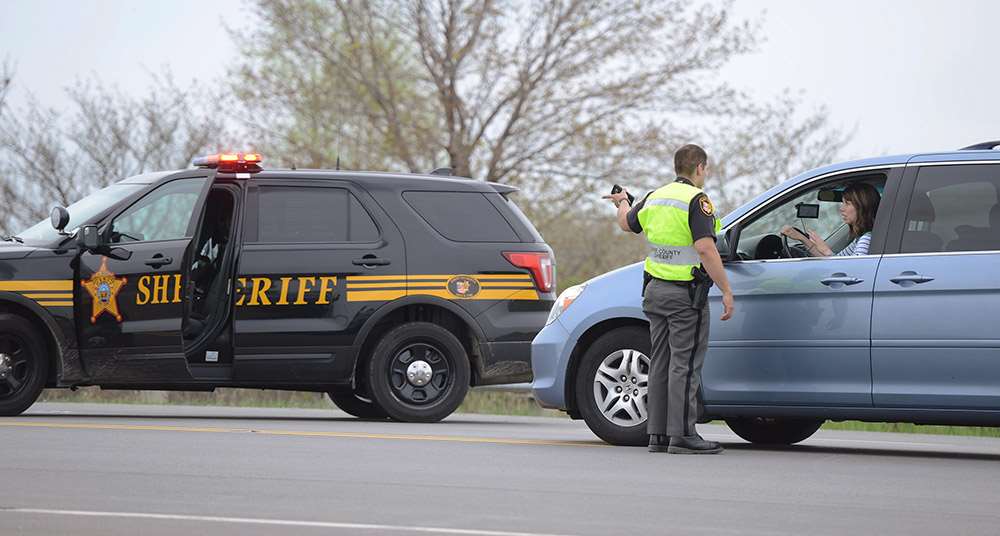
To best appreciate how you should act if you’re pulled over, you should fully understand the potential danger traffic stops pose to cops. Short of having verifiable reasons to believe you’re armed or dangerous, when police approach your vehicle, department policy and good manners require politeness. Trained police officers know that approaching a vehicle during a traffic stop is statistically very dangerous, so they are on edge. There are, however, several things you can do to help put the officer at ease.
As soon as you notice blue lights, pull over to a safe location. If you cannot immediately find one, signal the officer with a wave of acknowledgement. When you do pull over, slightly angle your car away from the highway, place it in park, turn off the vehicle and take your foot off the brake. This position partially shields the officer’s approach to your window, while the rear of your vehicle offers some protection from traffic. It also doesn’t telegraph the notion you’re planning a quick get-a-way. Once stopped, roll your driver’s side window down and place both hands on the steering wheel.
When arriving at your window, the officer will likely introduce himself and advise you of the reason for the stop. If you’re armed, the first thing you say should be something like, “Officer, I have a valid concealed carry permit and a handgun.” If you are in a constitutional-carry state, your response could be, “Officer, I’m exercising constitutional carry as per state law, and I have a handgun.” Regardless, next say, “How would you like to proceed?” (Trust me, this will go over much better than asking the cop, “What do you want?”)
In some jurisdictions, you’re required to notify the police if you’re armed. I’ve seen advice offered from sources many consider reputable that suggest you should only do this when mandated. I believe that’s bad advice, because during the traffic stop, it’s possible the officer might discover you have a gun. That discovery, combined with its concealment by you, is what a long-time West Texas sheriff and friend would call a “clue”—a clue you might be bad guy instead of a good one.
Now, your job is to remain calm and polite and to comply with the officer’s instructions. They may be happy to proceed while you remain armed, or they may wish to take temporary possession of your handgun. A friend who’s been a police officer for a decade told me he often informs drivers: “If you keep yours holstered, I’ll keep mine holstered.” Relax, because remember, it’s your actions that almost always guide the civility of the situation.
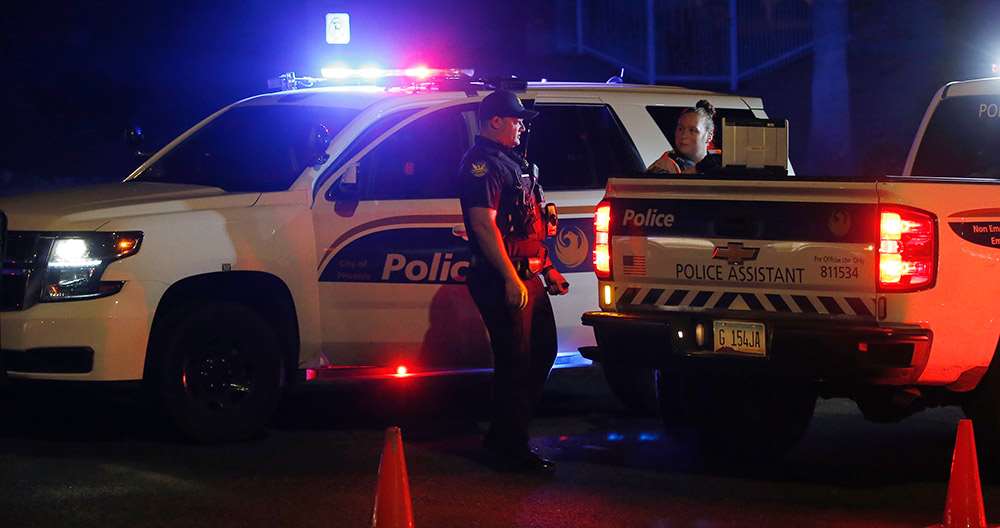
Does this mean that if you do everything right, everything will go right? Nope. Experience varies a great deal from officer to officer, and, with firearms, the local gun culture is a factor. It’s unlikely I would be treated the same in my gun-friendly state of West Virginia as I might be in a large municipal location in another state, even with a valid permit. And sometimes police officers make mistakes. If you’re the victim of a mistake, don’t attempt to argue it out on the side of the road. Instead, calmly comply—even if arrested—and take the officer and his department to court.
When I was a police officer, I was once stopped in my home state by a game warden lieutenant who insisted my badge did not allow me to carry my handgun outside my jurisdiction. He even said my carry permit was only valid in my home county. He was wrong on both accounts. I was nearly arrested, until a wise game warden sergeant sorted the lieutenant out. Just as you might make a mistake and commit a traffic violation, a police officer can also make a mistake and not interpret the law correctly. But if you are forthright about being armed, as well as polite and calm, you should expect the same from the police officer.
Encounters on Foot
Actions here are very much the same. For an officer to detain you, they need reasonable suspicion, probable cause or direct evidence of a crime you’ve committed, or—with special and somewhat complex circumstances—they need to know you witnessed a crime.
In some instances, you’re required to provide identification, and in some jurisdictions, you might be required to notify the officer you’re armed. Regardless, if detained, it’s wise to inform an officer if you’re carrying. Why? Because it’s possible that during the interaction the officer might realize you’re armed by seeing your gun inside your open coat, or by seeing it printing under your shirt. Given the nature of the contact—maybe the officer is investigating a recent shooting—this could be very alarming.
When I used to teach concealed-carry classes, I was frequently asked when you should notify a police officer that you’re armed. The answer is rooted in common sense. It’s not a good idea to go around telling cops you have a gun. If a cop says, “Hi. How are you today?” don’t tell him you have a pistol in your waistband and ask him if he wants to see it—he doesn’t—just respond like you would to any other person. If the interaction morphs into one of an official/investigative nature, that’s different.
When Asked to Surrender Your Gun
Depending on the nature of police interaction, you may be asked to surrender your gun. This might seem overly intrusive or as a violation of your Second and Fourth Amendment rights, but if you’re being legitimately detained, and if the police officer reasonably believes—perceives—you could pose a threat, it’s warranted. A valid concealed-carry permit or legally exercising constitutional carry is not wholesale protection from being disarmed. In certain situations, a police officer can temporarily disarm you for officer-safety reasons.
The officer will likely advise you that, for everyone’s safety, he would like to secure your handgun until the traffic stop or investigative detention is complete. Your response should be—just as it was after informing the officer you were armed—“How would you like to proceed?” But how should this temporary transfer of possession be conducted? There are too many ways this might occur to get specific. The key is to stay calm and follow the officer’s instructions; the cop has done this more often than you and should have also been trained in the proper protocol.
At the conclusion of the detention, the officer will return your handgun, and you can expect it to be unloaded when he hands it to you or possibly places it on the passenger seat. My friend told me: “When I return a weapon at the completion of a traffic stop, the chamber will be empty.” His advice to those carrying concealed is to never attempt to load your gun while the officer is on scene. Wait until the conclusion of the stop, after the officer has left. Then return your firearm to the status and location you prefer for carry.
Dealing with Civilians
In West Virginia where I live, open carry and constitutional carry are legal. It’s not uncommon to see someone going about armed, or to see someone carrying concealed but not doing a very good job with the “concealed” part. Although legal, this does not mean suspicions are never aroused. Sadly, this “suspicion” is often sounded by citizens with preconceived notions about how someone looks. In law enforcement, that’s called profiling; with civilians, it’s just a part of life.
For example, if you walk into a fast-food restaurant wearing a suit and tie and inadvertently expose your concealed handgun, it’s likely anyone who sees it will assume you’re affiliated with law enforcement; however, if you’re dressed like you belong in a biker gang, the chance of a different assumption is high.
When you accept the responsibility that comes with carrying concealed, part of that responsibility is to not create a disturbance or to brandish your handgun. Some folks are terribly afraid of firearms and have no idea about firearms law. This can motivate a call to 911, which will most always lead to a face-to-face interaction with the police. Try not to look or act suspicious and try to keep your concealed handgun completely concealed.
A citizen might notice you’re carrying and question you about it. What then? I think the best response is very similar to the one you should give a police officer on a traffic stop. Be friendly, but firm, and say something like, “Yes, I have a gun and a valid permit to carry it. I would be happy to show you my permit if you like.” If you’re constitutionally carrying, do the same. If you know someone has called 911 because they know you’re carrying, you can call 911, too. Explain the situation to the dispatcher, tell them you’re legally armed, what you look like and ask if they would like you to wait on the responding officer. One thing is almost a certainty: If you’re questioned by a civilian and your response is to tell them to mind their damn business, an eventual interaction with a police officer is very likely.
Cultivating a Polite Armed Society
It’s never a bad idea to be proactive. Talk with your local sheriff, deputy, police officer or state trooper, and ask them about interacting with officers when legally armed. You can even have a similar conversation with an attorney. Don’t let ignorance of the law be what puts you in hot water. Just remember, like with most social interactions, civility guides the outcome.
The great western lawman Wyatt Earp is often heralded as a hero, but gun owners often forget that Earp’s idea of a polite society was one where only the cops had guns. Politeness under threat is not politeness at all; it’s tyranny. In his book, Beyond This Horizon (1942) Robert A. Heinlein wrote, “An armed society is a polite society.” America proves this to be true. When you’re armed and in public, the watchword is politeness—for you and the police. It lets them do their job, allows you to exercise your rights and puts neither at risk. And you never know; like me, you might get lucky and make a lifelong friend.