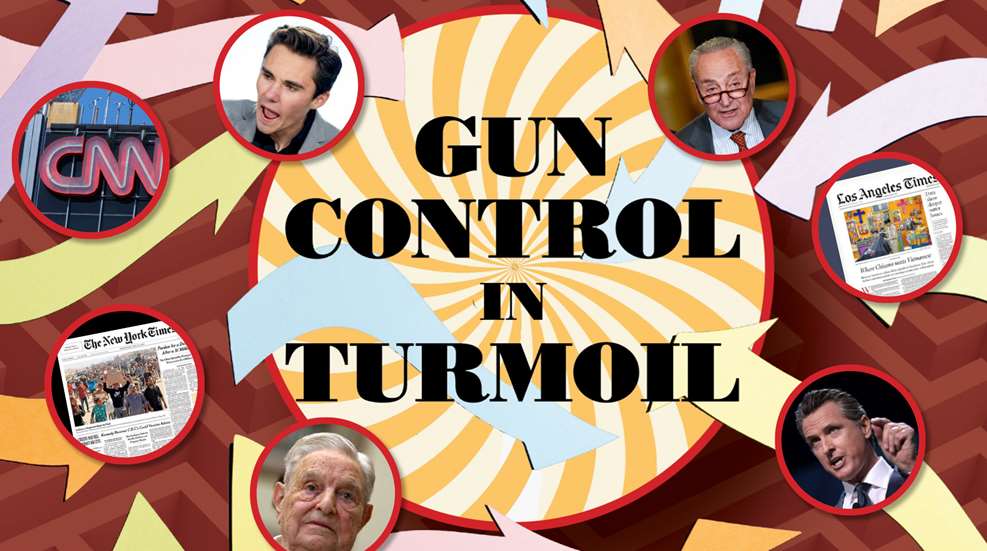
“Never,” once advised Napoleon Bonaparte, “interrupt your opponent while he is in the middle of making a mistake.” Such wisdom is forever honest—so much so that if the gun-control Left ever read this magazine, I would not offer advice that might interrupt their blunder of treating the American working class as if they are a criminal class. But, as they only listen to their mega donors, media allies and activists, we can openly consider what is going on with those who will say and do almost anything to disempower American citizens.
First, the open secret is that anti-freedom activists marched the elites of the Democratic Party directly (and with all the hoopla and fanfare of a mainstream-
media marching band) away from working-class voters—the very constituency that was long considered the base of their political power. Polls show that this shift has been ongoing for several presidential cycles now and that the 2024 presidential election saw it accelerate, as working-class voters turned to President Donald Trump (R).
Part of the reason the working class went for Trump was that the anti-gun Left spent years obnoxiously blaming law-abiding gun owners for the actions of violent criminals; further, as if to purposely add extreme danger to this insanity, many politicians who are opposed to the Second Amendment began effectively giving violent criminals get-out-of-jail-free cards.
As anyone with common sense knows, lower and middle-class Americans cannot afford to live in gated communities or to hire private security. They are their own first responders. Working-class Americans saw what happened in 2020—mayhem with gun stores being closed as “nonessential business” in areas controlled by elected officials who do not like guns—and they realized they were being treated as “deplorables,” as Hillary Clinton once called them.
The Left’s activist gun-ban class is a smaller—but a much louder and more connected—faction of the Party. Many of them come from the upper-middle and upper classes. They go to elite colleges and take white-collar jobs in law firms, Big Tech, the media, academia and government. This group includes the billionaires and the members of the media who fund and drive these assaults on the Second Amendment.
Now, a lot of political wizardry has always been necessary for Democratic Party leadership to placate both the anti-gun extremists and the average, working-class voter in the run-up to a national election, but the philosophical fault lines in this divide have become too obvious of late to pave over with thin campaign rhetoric, such as when Kamala Harris claimed she owned a Glock.
David Hogg, the gun-control activist who used his anti-gun outrage to get into Harvard University and, more recently, to become the vice chair of the Democratic National Committee (DNC), is the poster boy of the Left’s young activist class. And his loss of power in the DNC—he read the political winds within the Party and opted not to run for election—is emblematic of the struggle within the Democratic Party to bring these very different groups back together.
In May, a DNC subcommittee voted to move toward voiding its election of Hogg as vice chair of the DNC. The vote came after internal and public criticism of Hogg for causing divisions within the party. Instead of acknowledging the rift, party officials rationalized the vote to consider ousting Hogg as a procedural challenge, claiming that Hogg and another official were improperly elected according to the DNC’s vague rules for representation based on gender-identity politics.
“Today, the DNC took its first steps to remove me from my position as Vice Chair At-Large. While this vote was based on how the DNC conducted its officers’ elections, which I had nothing to do with, it is also impossible to ignore the broader context of my work to reform the party which loomed large over this vote,” said Hogg said in a statement at the time. “I ran to be DNC Vice Chair to help make the Democratic Party better, not to defend an indefensible status quo that has caused voters in almost every demographic group to move away from us.”
With social-media posts like, “People do not trust the democrats, they do not think we understand their problems, they feel like we are far too judgmental, out of touch, and haven’t offered a vision for the future that people want for themselves and their families … ,” Hogg acknowledges that the Democratic Party has become a party of out-of-touch elites, yet he fails to see how his quest to take away Second Amendment-protected freedom from ordinary Americans is a part of this problem.
Still, Hogg’s rise and fall shows that some in the DNC recognize they have a messaging problem—too bad they don’t seem to understand they have a civil-rights problem.
Still, even as some in the DNC at least try to superficially bring these two factions back into some kind of a political alliance, the activist class that drives so much of the Democratic Party’s politics today are still in lockstep with the gun-control lobby; for example, the supposedly “moderate” Gov. Jared Polis (D-Colo.) did not show any independence from anti-gun activists when he signed into law an egregiously overreaching gun-control bill last spring.
A group of anti-Second Amendment U.S. senators also showed this to be true when, around the same time, they reintroduced the Gas-Operated Semi-Automatic Firearms Exclusion (GOSAFE) Act, yet another attempt to ban America’s favorite rifle and so much more. As they must know, they aren’t likely to get this gun-control bill through this Congress, but this legislation is a statement, an offering to gun-control donors, such as Michael Bloomberg, to flaunt that party leaders still hold anti-gun views.
Meanwhile, this fissure between the elites and the working class—which President Trump’s pro-freedom policies are in many ways exposing—is rumbling like an earthquake into the mainstream media.
The Media Shake Up
This rift between the working class and the activist class in the Democratic Party has thrown the mainstream media’s messaging on this constitutional issue into disarray.
In a telling example, the opinion pages of three big urban papers—The New York Times, The Washington Post and the Los Angeles Times—have all been forced to take a trepidatious step … sideways. All three recently parted ways with far-Left, anti-Second Amendment editors. They did not then hire pro-freedom editors, but the pages of these newspapers have recently let a few almost-moderate views on guns get published.
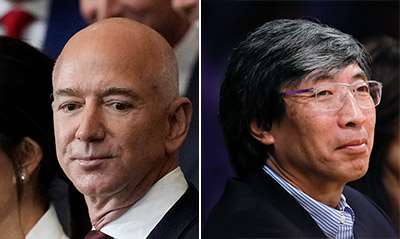
The typically anti-Second Amendment Los Angeles Times editorial board, for example, underwent significant changes, including the departure of most of its members. The paper’s new owner, Patrick Soon-Shiong, expressed a desire to balance the paper’s opinion section with more conservative and centrist voices, which led to the resignation of some editors who disagreed with this more moderate approach. “We cannot be an echo chamber,” said Soon-Shiong in a podcast with Tucker Carlson. Soon-Shiong said he wants “all voices” to be published in the Times and said this has lost them a lot of subscribers, but that he is moving forward regardless. (Indeed, on a deep dive into its opinion and news sections last May, I was surprised by recent attempts at fairness on the issue, such as with an April 23 story titled “Why Trump’s DOJ targeted L.A. County over gun permits—and who might be next.”)
The Washington Post has also seen significant changes to its editorial board. Under owner Jeff Bezos, the paper announced it is prioritizing “personal liberties and free markets.” This led to the resignation of the paper’s editorial page editor, David Shipley, last winter. The editorial coverage since in the Post has not been pro-freedom, but there have been some signs of moderation; for example, they ran an opinion piece criticizing the gun-control movement for ignoring the Protection of Lawful Commerce in Arms Act (PLCAA). This was a major shift for the Post, which, in 2005, when this legislation was pending in Congress, called the PLCAA an “unfair and irrational special-interest shield.”
Last March, The New York Times also ran an opinion article saying it was “skeptical” of Mexico’s lawsuit blaming lawful U.S. firearms businesses for criminal violence committed in Mexico by narco-terrorists. The Times also recently ran articles about who is buying guns that were not aggressively anti-gun. And they have reported that many people, even people the mainstream media argue have not traditionally practiced this right, are now attending firearms-training courses. The Times even published an article titled “To Make Guns Less Dangerous, One Group Teaches Young People How to Use Them” that detailed an effort to use gun-safety training to make gang members in Chicago safer.
In another article, a Times’ reporter took a trip to the rural Northeast to investigate lawful gun ownership. “Many rural New Englanders, even in western Massachusetts and northern Vermont, treasure their long traditions of hunting and recreational shooting, and resent what they see as the encroachment from the left on their right to bear arms,” wrote Jenna Russell for the Times.
“Until recently, I had imagined people’s views on gun ownership to be largely fixed, a kind of permanent feature, like their height or eye color. I had not seen my friends or family dramatically change their opinions on guns; if anything, their attitudes seemed to become more entrenched over time … . I came to see something I might not have considered previously: A whole universe of people had once believed, firmly, that they would never buy a gun. Until they did,” said Russell.
So, could this be a sign of a thaw in the mainstream-media’s frozen thinking on this issue? Might the far-Left glance over the U.S. Bill of Rights and admit that the Second Amendment protects an individual right of the people? That seems unlikely, but could we see some good-faith arguments on this issue from the mainstream media? We can hope.
Where This is Going
Many on the far-Left today complain about “attacks on democracy,” and then they argue that we need to take away the constitutional guardrails the Founders used to keep the power of the federal government in check; such as the electoral college, the fact that each state gets two U.S. senators regardless of its population and, of course, the Second Amendment itself.
And then, especially after they lose an election, these same people fret about the rise of “populism.” They agonize over this problem only when someone who does not share their politics, such as President Trump, gets elected.
The thing is, all the polling that shows they lost much of the middle class, and actually many more young voters, in the last presidential election should be convincing them to rethink their positions on our core freedoms; after all, massive growth and demographic changes in the gun-owning cross-section of the American polity offers the opportunity to at least try to push gun-control politics off the DNC’s official platform.
Al Gore lost in 2000 because he was running on an anti-freedom platform. John Kerry next tried to modify the anti-gun playbook by claiming he was a hunter in his 2004 bid for the White House. Kerry even said he owned an “assault rifle.” After saying this, the Left’s anti-gun activist class attacked him in the throes of the presidential election. (Also, as being a hunter is hard to fake, sportsmen saw through his weird quotes on the topic and mocked him.)
This is likely what prompted former President Barack Obama (D) to not talk much about the gun issue—except, of course, for when he accused many in the working class of “clinging to their guns and religion.” But then, that was in a meeting with Democratic donors that he did not expect to go public.
So, here we are in an administration that is loudly defending our freedom; in a Trump administration that is treating bad guys like bad guys and good guys like good guys. It’s a time of NRA resurgence and continued growth in gun ownership. It’s a time when gun stores are busy and gun-training classes book up fast. This is a moment when this freedom, which has always been popular, is on the rise. Could these forces soon moderate the DNC platform and thereby make issues related to guns less partisan?
I once asked the Pulitzer Prize winner, novelist and sage, Stephen Hunter, who is a writer who worked for years for The Washington Post, about this.
In 1997, the Post hired him to review films. He told me most of the editors and reporters at the Post thought of him as “crazy uncle Steve.” He says, “I was irreverent, sarcastic and gregarious—I was a voice they understood. They thought I was all right even if I did own and shoot guns. I told them when they’re writing about gun control or crime to come and talk to me. I told them I’d save them from technical mistakes and help them with sources. Some took me up on this.”
When I asked him how we might reach young reporters before they are indoctrinated with political correctness, he said:
Liberal reporters believe in consensus. They believe in accord and compromise. Individualism, to them, is akin to becoming an outlier, a person fallen from the inner circles of society. If they step away from the accepted ethos, they’ll be shunned; they won’t be promoted. This is often unsaid, but the pressure to conform is profound. Though as a group they’re mostly well educated, they’re also mostly looking inward. Reporters speak to each other more than anyone else. By asking them to accept gun rights, to really accept the idea that an individual can stand apart from the state on their own two feet and defend their own life with a gun, that’s asking them to violently assault their foundation. Only a few of them have the courage to do that.
True, but many popular podcasters today, such Joe Rogan, Theo Von and Tucker Carlson, are either very pro-Second Amendment freedom or they treat guns like the normal part of American culture they are. Even Bill Maher, who is for many restrictions on this right, talks about the guns he has for self-defense.
In the last few decades, the mainstream media has lost a lot of control of the narrative to a diverse universe of podcasters, Substacks, social-media channels and conservative cable news channels.
While noting this, Hunter said, “Freedom is being unleashed. That’s how the NRA and others have been able to evolve the argument, to get their point of view across despite the media’s reluctance to fairly report this issue.”
So, as the Left’s gun-control elite wag their fingers at the working class while blaming America’s auto workers, plumbers, mechanics and tradesman in all the vocations Mike Rowe lionizes, as well as so many other hardworking citizens, for the actions of violent criminals who prey on them, they should continue to lose elected power. Perhaps talking openly about this will indeed interrupt their mistake. And that is not ultimately a bad thing, as it then could depoliticize this constitutional right and thereby make it much easier to preserve and, in the areas where this is now necessary, to win back this freedom.