Understanding your gun, as well as how to use it, is critical to your success and safety. One barrier to such understanding is the lingo commonly tossed around among gun owners. Beyond the sheer number of such terms to learn as a new gun owner, confusion can be caused by the simple fact that the industry is not always in full agreement on definitions or how to use certain phrases. To make matters worse, some terms are so similar or so commonly misused that they have adopted an improper interchangeability. Thus, after training more than 60,000 new firearms owners, I’ve found that a little primer in “gun speak” can go a long way. Here are a few of the first terms I like to clear up in my classes.
Clip vs. Magazine
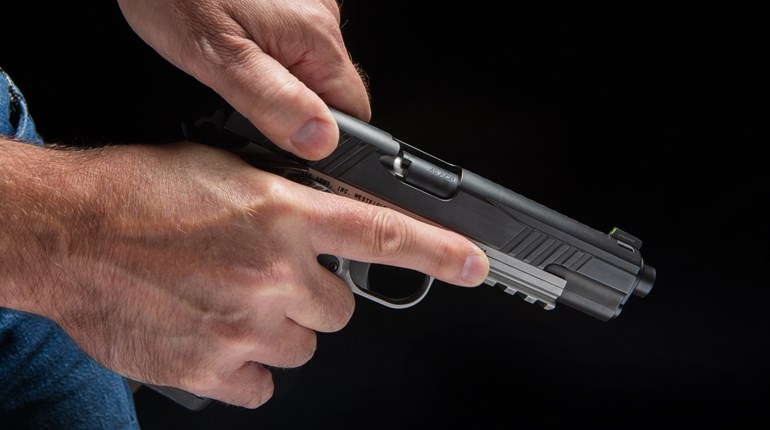
Many people will call anything that contains ammunition a “clip,” largely thanks to popular-culture usage in movies and books, but in most cases, “magazine” is in fact what is meant. A clip is a simple piece of metal that can be used to quickly fill a magazine—the magazine is the feeding component of a firearm. Magazines can be internal, like the ones in shotguns, or detachable, like the ones found in common pistols and rifles. Clips are, in fact, rarely seen by the average gun owner, but revolver owners may consider their speed loaders to fit that category. Thus, without students understanding the difference in terminology, a command on the range that is meant to instruct students to ready their speed loaders could result in a loaded firearm when all ought to be empty. Your typical semi-automatic pistol comes with a magazine, not a clip.
Load vs. Prep
The term “load” should be reserved for situations in which a firearm that is ready to fire is the intended outcome. Far too many people use this word when they want to convey the message to fill a magazine, which could lead to loaded firearms where they don’t belong. If a student holding a shotgun is sharing the firing line with others holding pistols, hearing that “it’s okay to load your magazines” when people are downrange would have him or her stuffing shells into their firearm. A good alternative to this is to adopt the terms “prepare,” “prep” or “fill” when you want shooters to ready their detachable magazines.
Unload vs. Download
In a similar manner, there is some confusion that circulates around “unloading” a firearm. First, of course, is the truly unsafe misunderstanding that we can again trace to pop culture: Some people use the phrase “unloading” to mean “firing.” But the misunderstanding can be subtler, such as when an instructor tells others to “unload,” but means for them to remove ammunition from their extra detachable magazines. But a gun owner hearing “unload magazines” might handle their firearm and remove the ammunition-feeding device or each round individually from an internal magazine. If this occurs when people are downrange, we’ve just created a potentially dangerous situation. Using the term “download” may be better, so long as the line between the two requests has been well-defined.
Bullet vs. Cartridge
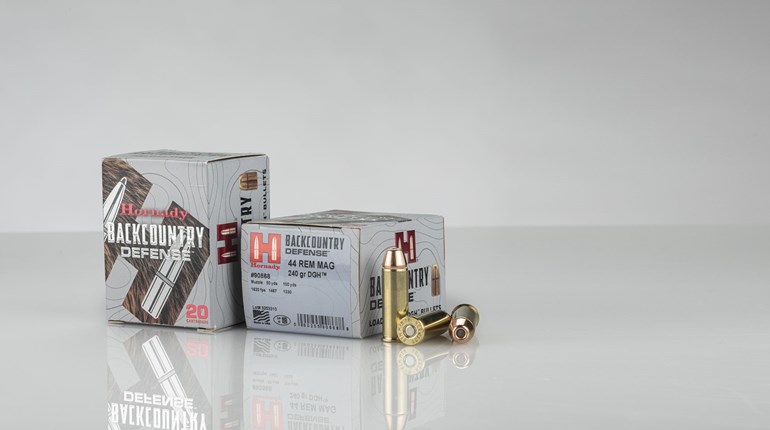
I’ve saved the most extreme for last. Just like mags and clips, bullets and cartridges are related but are exceptionally different. A bullet is the projectile component of the ammunition that actually leaves the barrel. It is part of a complete cartridge that contains the main powder charge and primer encapsulated in a brass case. In most instances, you won’t experience an issue if you interchange these two, save when ordering reloading supplies; however, in the case of an obstructed firearm, it could have grave consequences. If a gun experiences a squib and has a bullet obstructed in the barrel, that becomes a hazard if the next person to handle it says something like, “Don’t shoot that; it’s got a bullet stuck in it.” If this subsequent handler picks up the gun and opens the action expecting to see a cartridge, they may dismiss the advisor’s advice because a bullet in the barrel doesn’t present the same appearance as a cartridge in the chamber. In this instance, they might load a live round of ammunition and attempt to fire it. The gun is not rated for such forces, so this can cause injuries or even fatalities. Is this scenario atypical? Absolutely; however, it’s so dangerous that it’s worthy of a few words.
A Last Thought
Finally, I’d like to address the practice of using so-called “big-boy rules,” a commonly invoked ideal which laughs in the face of most of what I’ve written. This operating model involves nothing more than following safety rule #1, and that is keeping your muzzle poined in a safe direction. While this might work with a team of skilled operators who are intimately familiar with each other (as in, they eat, sleep and train together every day), it’s important to realistically assess the people with whom you are sharing the range. You’ll quickly find that assuming everyone follows the safety rules—even just this one—isn’t always a safe bet. If you have authority over a group, one best practice is to start where these teams began: with a concise, ego-free briefing of key terminology, followed by plenty of routines designed to give everyone the opportunity to drill it all into habit. Understanding and differentiating terms can help keep everybody on the firing line safe.