Whatever arguments may exist for limiting the role of the police in American life, they cannot be applied seriously to issues involving violent crime. It may well be the case that some of the functions that are currently allocated to police officers could be divvied out elsewhere. It may also be the case that smartly targeted interventions can help prevent some people from becoming criminals in the first place. But, if we are to remain a civilized society, it is imperative that criminal force be met with justified force—and, whatever else we might do, that means maintaining a combination of police officers and armed citizens who remain steadfastly unwilling to tolerate those who violently come for us.
Alas, not everyone seems to understand this. In Richmond, Va., the mayor has announced that he is opposed to a “law-enforcement based approach to gun-violence prevention”—which, in practice, is pretty much the same thing as saying he is opposed to violence prevention. Cut it how you will, the data remains uniformly clear in this area: More police officers lead to less violence and fewer murders. When, instead, officials, such as the mayor of Richmond, insist upon a “human services and public-health approach” to stop violent criminals, they are placing ideology over common sense and rendering themselves useless.
Sadly, Richmond is not alone. Since last summer, hundreds of jurisdictions in the United States have been engaged in a dangerous experiment: Namely, to find out what happens to crime when our public figures denounce and defund the police. And, regrettably, the answer has been extremely clear.
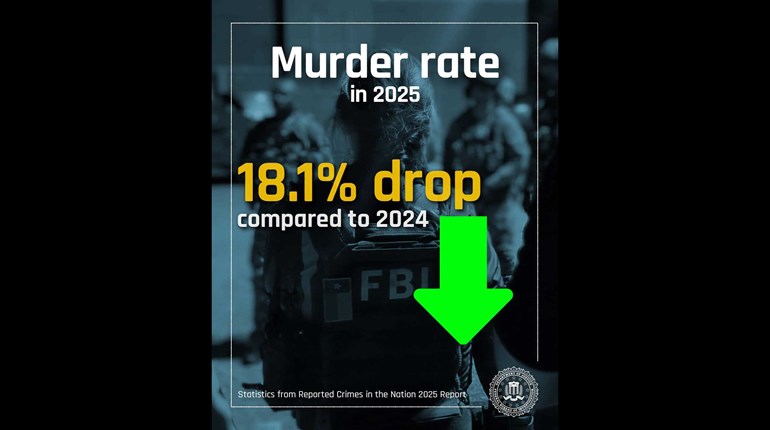
Last year, the national murder rate increased by 30%. Thus far this year, the latest figures show it has gone up another 10%. Already, Philadelphia has played host to 400 homicides—an 18% increase over last year. As this was being written, Chicago was on track to process more murders than in any year since 1996. Los Angeles has played host to more murders than at any point since the Los Angeles Police Department began publishing statistics. Crime is, of course, a complex issue. But it should be no surprise that these numbers have followed a concerted attempt to sow mistrust in the public view of police and to argue that their core roles would be better performed by social workers.
A recent study by Morgan Williams, an economist at New York University’s Wagner Graduate School of Public Service, confirms what we already knew. Among other things, Williams’ data shows that, for every new police officer added to the average American city, between 0.06 and 0.1 homicides are prevented, as well as that, on average, larger police forces save African-American lives at about twice the per-capita rate as they save White lives. In a political vacuum, “Defund the Police” may sound like an edgy and innovative thing to say. In practice, though, it is more complicated, and, at its worst, it is utterly ruinous for the very people it is intended to help.
Rudyard Kipling was ahead of his time when he complained about the public’s tendency toward “making mock of uniforms that guard you while you sleep.” And, since he wrote those words in 1890, we have had to learn all over again the old truths that defenseless people are vulnerable people, that unpoliced communities descend quickly into crime and that nations refusing to prepare to meet aggression will be unable to deal with it when it arrives. There is a place for a human-services and public-health approach to social problems. But it is not on the streets.