The gun-ban lobby could get its foot in the door to winning its most highly sought prize—a national registry of gun owners—if legislation currently pending in Hawaii is passed by Gov. David Ige.
Because under that legislation, the names of Hawaii gun owners—and anyone who ever visits Hawaii with a gun—would be submitted for inclusion in a federal government database called “Rap Back,” which flags the names of certain people for special federal scrutiny and reporting.
“Rap Back” is part of what the FBI calls its “Next Generation Identification (NGI)” program, which it says is the “world’s largest and most efficient electronic repository of biometric and criminal history information.”
Apparently, up until now, the “Rap Back” system has been used mainly to keep an eye on persons who are on probation, under criminal investigation or who possess security clearances.
If anyone named on the list is arrested, has a warrant issued, is convicted of a crime or is the subject of certain civil proceedings, “Rap Back” automatically reports their status back to the requesting agency.
Under Hawaii Senate Bill 2954—currently awaiting Gov. Ige’s signature—Hawaii would become the first state to add gun owners to that federal list of criminals and suspects.
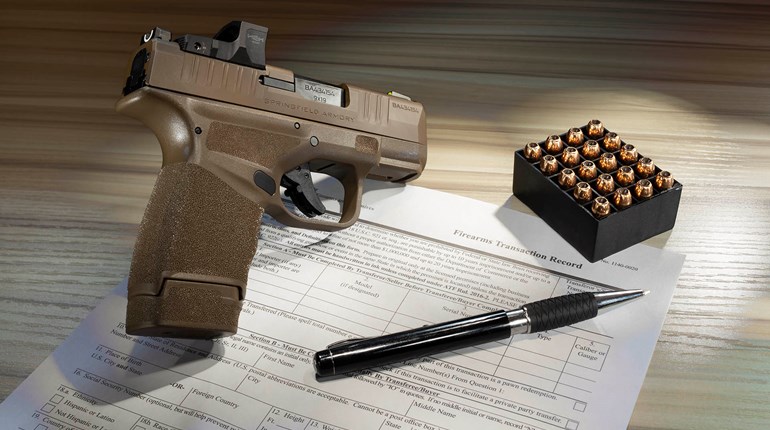
And since anyone who brings a gun into Hawaii must register the gun with the state—even if they’re only visiting for a day—their names would be added to the list, as well.
Once Hawaii gun owners get added to the federal system, as soon as any record on any of them is filed in the federal system, “Rap Back” will report the status of that firearm owner to the requesting agency—in this case, the state of Hawaii.Under Hawaii Senate Bill 2954—currently awaiting Gov. Ige’s signature—Hawaii would become the first state to add gun owners to that federal list of criminals and suspects.
The bill’s backers claim it would help law enforcement. But as award-winning economist John Lott has pointed out, it’s not only an unneeded diversion of resources in a cash-strapped public safety economy: It’s also useless at solving crime.
Gun registration has long been a big, expensive dud at stopping or solving crimes—and Canada’s experience is even more proof. The country’s billion-dollar long gun registry, which was supposedly abolished in 2012, didn’t work. As Lott noted, the Royal Canadian Mounted Police and the Chiefs of Police didn’t provide even one instance where tracing guns was anything more than of peripheral interest in solving any crime. Moreover, there’s no proof that Canada’s handgun registry, which has been maintained since 1934, has helped solve even one murder.
In Washington, D.C., the police department recently revealed, in deposition, that it couldn’t “recall any specific instance where registration records were used to determine who committed a crime.”
In Hawaii, where Lott testified before the Senate in 2000, the Honolulu police chief admitted that he couldn’t point to any crimes solved through registration or licensing. He nonetheless also admitted that those activities cost cops 50,000 man-hours per year. That’s over 20 full-time employees doing nothing but pushing paper all day!
The pending Hawaii legislation would pay for the program by charging firearm owners a new fee. But if the program will actually help solve crimes, and thereby benefit all Hawaiians, then why should lawful gun owners be forced to pay for it exclusively? And if it’s not needed, and wouldn’t work anyway—as all the evidence shows—then why impose those new fees upon gun owners?
The simple, obvious answer is that it’s just another effort to make firearms less available and affordable.
Fact is, Hawaii can already check on firearm owners in the state. They could simply run the state’s registry of firearm owners through the federal NICS system periodically, just as Kentucky does with its Concealed Deadly Weapons License (CDWL) holders every month.
So beyond being ineffective and expensive, Hawaii’s first-in-the nation scheme to list gun owners in a federal registry is also redundant.
But the most important fact of all is that it’s insidious.
Since SB 2954 contains no duration limit for the “Rap Back” status requests, even if you sell all your firearms, or return to the mainland after your Hawaiian vacation, “Rap Back” will still send status updates to Hawaiian authorities.
In other words, once you’re listed in the federal system as a firearm owner, your digital tattoo remains in the system forever.