A few years back, it was all the rage among journalists to describe their niche—what used to be known as their “beat”—as being at an intersection. The first time I heard this was from a writer for Forbes who described his job this way to me: “I reside at the intersection between art and culture.”
I was mystified for a moment, as I was trying to picture an actual intersection, but I soon replied, “I suppose, then, I have an office at the intersection of government and individual freedom.”
“Too many head-on collisions there for me,” he quipped.
Thankfully, the aggrandizing use of “intersections” as metaphor—as if we need journalists to direct cultural traffic for us—is no longer as common among those with bylines. But I think of this now because there are cultural enclaves in this constitutional republic—some of which are rife with people letting themselves be kept in a state of ideological servitude to mainstream media narratives—in which many people don’t have practical experience to draw upon to understand their Second Amendment rights.
Given this, when you meet someone like John Annoni, an elementary school teacher from Allentown, Pa., and the founder of Camp Compass Academy, and see how natural it is for such a person to cross large cultural divides … well, you want to ask them a lot of questions; after all, in this case, John actually does reside at the intersection between America’s vast law-abiding gun culture and the illegal gun culture of inner-city gangs.
For decades, John has used the law-abiding gun culture so many of us know and enjoy to help inner-city youth; in fact, a number of students who graduated from his program literally told me that John’s introduction to America’s gun culture actually saved their lives.
To understand what I mean, first let me tell you about one former student of John’s named Mike K.
When I was introduced to Mike K., I found that he didn’t think his story is all that exceptional. As he says it, he’s just another guy who grew up in an inner city without a father, joined a gang, did all sorts of stupid stuff and should have been incarcerated or shot dead by 21. He’s a black man whose first experiences with guns were with illegal semi-automatic handguns tucked into pants and stuffed into puffy jackets. But the thing is, something saved him from all that bad stuff, and that something had everything to do with guns.
“I’d be dead or locked up if John didn’t teach me to handle a gun,” said Mike.
When he said this, I knew he didn’t mean he had to use a gun to stop someone from killing him. I knew he grew up around illegal guns and that he was saved by the legal gun culture.
“People blame guns for all that bad stuff out there. I tell ‘em it’s not guns. I tell them how John used guns to save my life,” he said. “The only way to save people like me is with good examples and by not lying to them about guns and all that. Those politicians who blame guns are making the streets worse. They’re sentencing kids to death and jail ‘cause they just don’t understand.
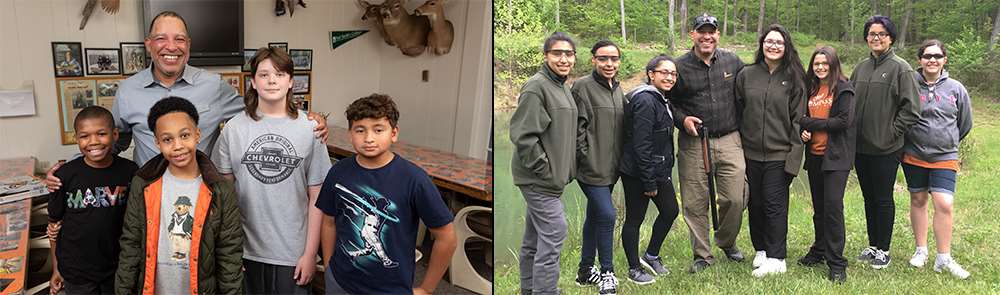
“It was weird, I guess,” he said. “Guns in my neighborhood were bad things. The guys who had them got them because a gun made them powerful. Guns made them cool. Most of my friends got handguns. No one taught them about guns. Most of their dads weren’t around. All they knew was a gun tucked in their pants made them feared, made them dangerous.
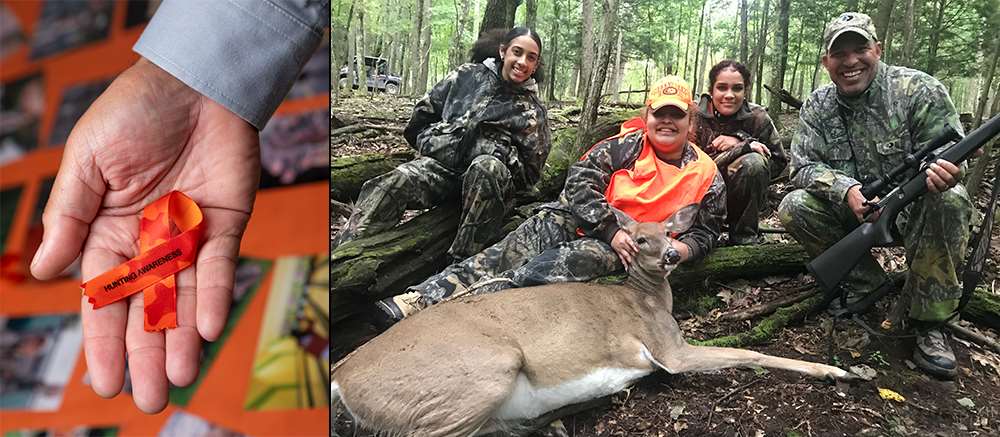
“But you know,” Mike said, “John took me out to a gun range and taught me to shoot a shotgun, then a rifle. He showed me how to unload a gun and to shoot safely by keeping my finger off the trigger until I’m gonna shoot and to keep the barrel in a safe direction and all that. He teaches me responsibility. He shows me how a real man handles a gun. He trusted me. No one ever did that. I didn’t want to let him down. So I stopped getting in trouble and got my grades up. John took me hunting. Soon, I’m back in the neighborhood showing my friends the picture of the deer I got and they think it’s so cool. So all I wanted to do was go hunting. It was so good, so far away from the streets and in my hands was this great responsibility, this gun, and all I had to do was handle it right, like a man does, and I’d be right and good and maybe get a deer or whatever.
“But looking back now, I know something else was going on. When John took me hunting in those days, we’d sit and talk about what was going on in my life and ways to make things better. I connected with John because I looked at him as a big brother, not as some social worker, and because he was showing me something I never saw before—how guns are tools and that when you do things right, they’re good and you’re good. I finally found someone to look up to and a way to prove myself with the very thing my friends feared and respected most—guns. I had to earn everything I did with John. I had to learn discipline by hunting and shooting. A lot of kids need that kind of honesty about this right.”
After speaking to Mike and some of John Annoni’s other former students, it was clear that the Left’s social experiments to create a utopia where no one has a gun except the authorities have failed horribly, yet so few of them are willing to see it, to really understand what their policies have done. Even academically, they should realize Sir Thomas More coined the word “utopia” by combining the Greek words ού (“not”) with τόπος (“place”) to literally mean “no place.” Historically, they can’t point to a time before the invention of guns where murder and violence didn’t take place. As vocal advocates of women’s rights, they should acknowledge that a 100-pound woman with a gun becomes the physical equal of anyone. Instead of opening their eyes to these realities, they want to spread what’s happening in “gun-free zones” all over the nation.
At the end of this academic year, John will retire from teaching at an elementary school. In his new endeavor, he wants to use the principles of Camp Compass Academy to help inner-city youth across America who might not have been exposed to America’s vast law-abiding gun culture. He is primed to do just that.
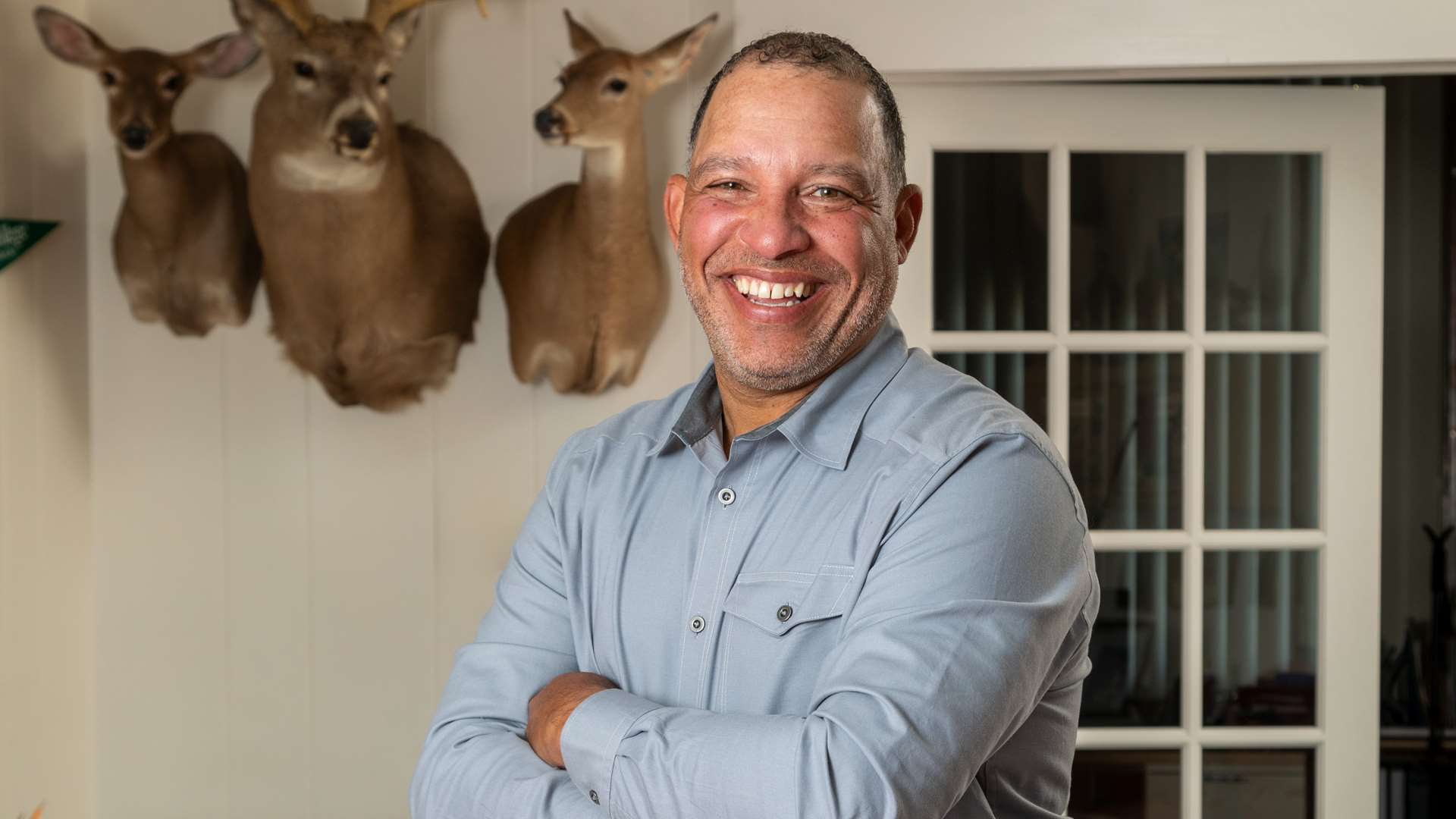
A1F: What first convinced you to use hunting and fishing as an incentive to help inner-city kids?
Annoni: Like a lot of kids from these neighborhoods, I didn’t grow up with a father in my home. My grandmother raised me. On weekends, though, I’d go to my mother’s apartment in the projects. It was a violent and abusive place, so I started going out behind the projects and hiding in this little woodlot. I’d sit there in the woods where nobody could hurt me. Pretty soon I saw a squirrel and I started to stalk it. As time went by, I got better at stalking and tracking game around that little woodlot. I was safe and happy there until I had to go back to the apartment—Mother Nature was saving me. Later, an uncle took me hunting and I found a real connection to the outdoors. Guns, in this very different culture from what I knew on the streets, helped save my life.
So I decided to use what I found in hunting and shooting to help others. And I can talk to them because I look like them. A lot of my elementary school students wonder where I grew up and what color I am. New students sometimes ask me, “What are you?” I think they’re looking for a role model they can relate to by skin color, so I reply by asking them, “What do you think I am?” After they guess, I tell them, “I’m half black and half white but I look Spanish and I eat Chinese food.” They laugh. This is how I let them all know I’m just like them.
A1F: Right, I recall that you began your program in the elementary school where you teach, but that you were told by school officials that you couldn’t teach people to shoot and hunt in the school.
Annoni: Yeah, that happened. I had to decide whether I could do this program without gun-safety training and hunting. As I thought about it, I knew that, without guns, Camp Compass would be like learning to drive but never being allowed behind a wheel. You can’t dance around reality and expect these kids to grow up right. You have to be honest with them. You have to help them take steps toward responsibility.
So a friend all those years ago introduced me to a local business owner named Joe Mascari. At first Joe said, “Are you nuts? This is a carpet store.” But I kept talking and Joe kept listening and pretty soon Joe gave us rooms to use for free. Joe wasn’t, on paper, a likely person to help. His wife was killed by a home intruder. Joe was away when this bad guy came in a window with a knife and stabbed his wife to death. Most people would say he shouldn’t be helping us because of that, but he got it. He knows that if she had had a gun, she might still be alive. He knows that something is rotten in this inner-city culture and he appreciates that we’re doing something about it. He even says if that thug had come to Camp Compass, he never would have done such an evil thing. So he helped us use guns to teach responsibility, to grow upstanding adults.
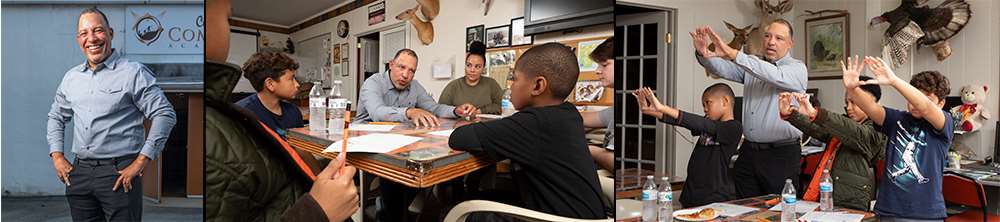
A1F: As I saw when I visited Camp Compass, the shooting skills you teach are begun on a simulator, but then you transition them to a real range. Finally, if they learn enough and are doing well enough in school, you’ll take them hunting. Why is this incentive such a big deal to them?
Annoni: The growth of our children is dependent upon what we instill in them. To do that effectively, we have to use what is real. We have to help them to take responsibility of real, not imaginary, things. Hunting and shooting are very real and kids, believe it or not, are very attracted to real things.
That said, it has been a journey. And when I say journey, I started Camp Compass in 1994. And we’ve climbed many a mountain. When we first started, it was just my idea to kind of give a field day throughout a week in the summer to a bunch of kids. But we eventually built a complete system of development that rewards students over time with outdoor excursions. I don’t know if you believe in divine intervention, but the story of what we managed to do is just too good to be just the result of my doing.
“You can’t dance around reality and expect these kids to grow up right.”
A1F: I’ve told you that some of your kids told me you saved their life. And the background of that is: Allentown is a nice community, but it does have gang issues. It does have some bad neighborhoods and these kids are being exposed to that. And their parents are certainly being exposed to that. And a lot of the parents you’re dealing with didn’t grow up as gun owners. So I’ve always wondered how you convince so many parents that you can help their kids by showing them how to shoot?
Annoni: Well, you know, first of all, I’m a role model, right, and I’m proud to say that, actually. Being a teacher is being a role model. And today we’re teaching kids so many things—even about sex and drugs—but for some reason, guns are taboo; we’re not allowed to talk about them. There is a lot about that dynamic that bothers me. The NRA has had the Eddie Eagle program for decades for good reason. Kids need to be taught what to do if they come across a gun. We need to deal with the reality that guns are out there. We need to deal with the real responsibility that freedom brings.
So, out on those city streets and in the media, society is giving them the bad side of guns—the illegal gun culture. So we need to show them the good. That’s honest. And this introduction to freedom must come in controlled stages. There may be an opportunity for a kid to shoot and I might say, “You’re not ready.” We have to properly prepare them. We have to bring them along with love and honesty. We have to teach these skills to our youth.
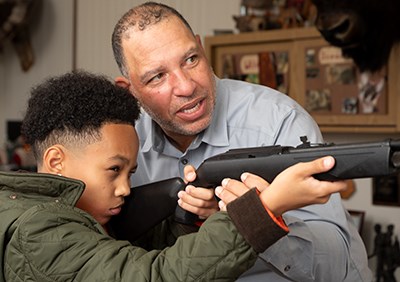 A1F: The Biden administration used language in the Bipartisan Safer Communities Act, a gun-control bill passed in 2022 that the NRA opposed, to try to financially stop schools from having archery and other shooting programs in schools. This is obviously an effort to keep the next generation from taking part in the shooting sports. What do you make of this attack on introducing boys and girls to this hands-on right?
Annoni: I was teaching archery in the schools 30 years ago. I had so many kids who wanted to shoot archery that I didn’t know what to do with them all. But this tool, this hands-on education, was helping these kids. They were coming to school on time. And I realized we could make this even more fun with 3D targets. I wanted to teach them how to score. I wanted to do that to develop their math skills. But then another teacher came in and said, “Annoni has kids shooting pigs in the gym. We can’t have that.”
Well, it was a pig target, you know, and there were deer targets. Why she focused on the pigs, I don’t know. So then the principal comes in and says, “Hey John, shut it down.” So, because of the ignorance of one teacher, all these kids lost out. That never really sat well with me. So I decided to find a way to win. The will to win is so important. That’s part of what I teach, so we found another way to teach these fundamental skills.
A1F: You plan to retire from the elementary school where you have taught for 35 years this spring, which makes me wonder what you will do to continue to touch so many lives.
Annoni: You’re absolutely right. This is my last year of teaching. I’m 35 years in and I’m at a crossroads. I’ve had a lot of people talk to me. I’ve had some wonderful people in conjunction with Cornell University who kind of put me on the spot and said, “Hey John, look, you can do this for the rest of your life. You can do your 60 kids. But at some point you need to do 600.”
They’re right, but how does that happen? Well, it happens. They’re not going to be my kids anymore—they’re going to be our kids. It happens by me training and me helping others in their communities.
I know a lot of times people say, “Well, it’s not just kids.” That’s true. My focus is kids. Somebody else might want to focus on teens or adults, that’s fine. I happen to work with families with children and the return there isn’t immediate. It takes years to bring up a kid right. But the Camp Compass Academy I developed might not be right for every community. It needs flexibility. So I want to help other urban communities use what we learned to create what they need. What we want is the philosophy of Camp Compass, so they can find what will work in their community.
We want to make our communities stronger by being in them. And it looks like now that I’m going to be retired, I’m not supposed to stop working. It looks like we’re headed to helping other communities to implement elongation programs, lengthy programs, so that we can continue to grow our kids into our culture.
We received a National Science Foundation grant and I ended up asking why are museums dying? And then I asked why is hunting dying? There are some parallels. Our youth, and so many of us, are losing touch with what’s real. People live in these fake online worlds now. This has real consequences. As it turns out, to be healthy, we need to be in touch with the natural world. This is why we wear and, for donations, we give out, orange or camouflage ribbons; we want to be able to not only talk about what we’re doing, but we also want to show people that we’re in the community for good reasons.
So, yeah, I thought I was finished, but I think God has put some more on my plate.
A1F: I remember—you can fill in the blanks here—but I remember you had a kid who unfortunately was dying of cancer. He’d gotten to a certain level and you wanted to give him an experience you couldn’t give him because he was too weak to get out of bed. So I think you set up a turkey decoy outside of his bedroom window on a line and gave him a nerf gun. You gobbled and he got to hunt a turkey.
Annoni: Yeah, we were hellbent on giving that kid a turkey hunt before he moved on. And he was hellbent about going on a turkey hunt before he moved on. And, you know, unfortunately, cancer put him in the bed. So we decided that, in the middle of the city, we took a turkey decoy and played some turkey sounds and hoisted that turkey up to his window and opened that window up and he went on a turkey hunt.
Kids are individuals. We have to talk to them. We have to show them by example. And we have to do all we can to give them the chance to grow up to their dreams.
A1F: Where can people find and connect with you?
Annoni: You can find out a lot more about us on HuntingAwareness.com and CampCompass.com. We’re on Facebook and Instagram. What I want people to walk away with is that when my kids say I saved their lives—I guess when I finally have time to stop and sit and think and reflect, I’ll feel pretty good about that—but there’s a lot more lives to save. And so many NRA members have helped us along the way. So many. I want to say thank you to them and to so many others.