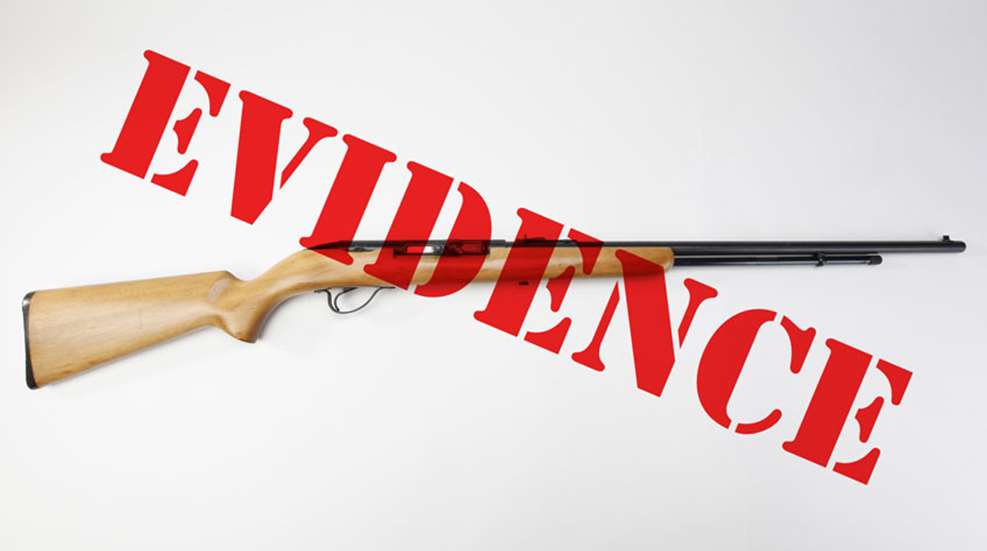
Twenty years after a Stevens .22 caliber rifle was stolen from an area resident, police in Kelso, Wash., discovered the owner had been deceased for three years. They returned the rifle to the next of kin, the owner’s eldest son who “had no idea” the gun even existed.
It took 10 years for the prosecuting attorney to give permission to release the rifle and another 10 years for the police to do so.
“Around 2009, KPD received a property release from the [prosecuting attorney’s] office for this case, meaning the property could go back to its original owner,” the Kelso Police Department said in a Facebook post Oct. 2. “For some reason unbeknownst to our current Property and Evidence Clerk … the rifle was still here at KPD [in 2019].”
That the stolen rifle was recovered at all seems to be unusual. A Kelso police captain told a news reporter: “It’s not very common for stolen property to be found and returned to its rightful owner.”
The 20-year wait for the rifle’s return seems to be less unusual. A long delay for personal property kept in evidence to be returned seems common, particularly for firearms.
“Federal laws should be put in place to require prosecutors and police to return private property faster,” Paul Paradis said in a phone interview with America’s 1st Freedom. Paradis is a 28-year retired ballistic forensics expert and criminologist with the Colorado State Public Defenders’ Office, which has 21 regional offices. He also owns a gun shop that was once burglarized, so he feels he has experienced the issues surrounding evidence retention from both sides.
Paradis noted that a judge can order officials to conduct their evidence testing and return evidence to its owner immediately, but few people can afford the attorneys’ fees that method would require and often don’t know it’s an option.
Are firearms returned less often than other evidence? “Oh, yes,” Paradis responded. “And in some places, like California, if [police] get their hands on a gun, they look for any reason to destroy it.”
According to one source, police departments can hold onto personal property in evidence “anywhere from the closing of the case until the end of time.” That source also notes:
- Few state guidelines exist in the U.S. to determine when evidence should be returned, retained, or disposed of, so it’s left up to prosecutors and police. Many prosecutors and police also have few guidelines in place.
- Many police departments prefer to hold onto evidence for later legal challenges, particularly now that DNA testing can influence closed cases.
- Even if the evidence can be returned for other reasons, low staffing may prevent police from following through.
In a detailed investigation of police’s retention of personal property, several district attorneys told reporters the system to return property is “chaotic [and] ‘ridiculous.’” They also said “none of the parties involved in property seizures communicate effectively, leaving property owners without a way to recover their things even when prosecutors make it clear they no longer need the items.”
The Kelso, Wash., police declined an interview request for this story; they also did not respond to a request for a copy of their evidence procedures in time for publication.