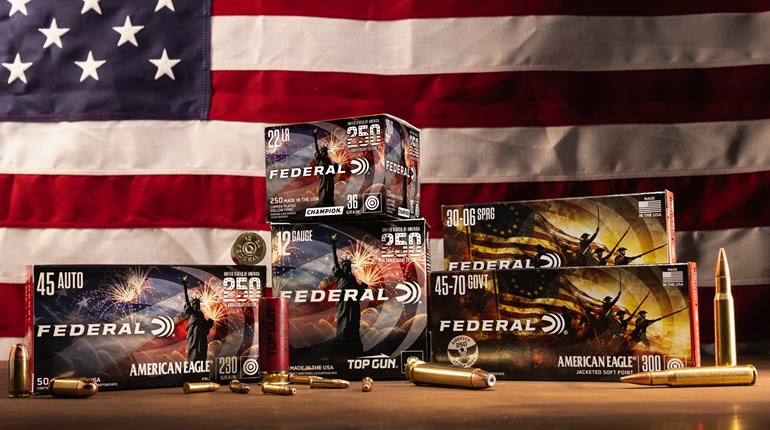
Overlooked by many in President Donald Trump’s (R) latest defense package is a significant win for gun owners; a historic investment in small-arms ammunition.
While much of the public attention on the “One Big Beautiful Bill” (OBBB), also known as H.R.1, focused on its geopolitical, healthcare and tax implications, a look at the bill’s Title III section on defense spending reveals four specific funding lines that could radically reshape the civilian ammo landscape.
- $100 Million for Small & Medium Ammo Production
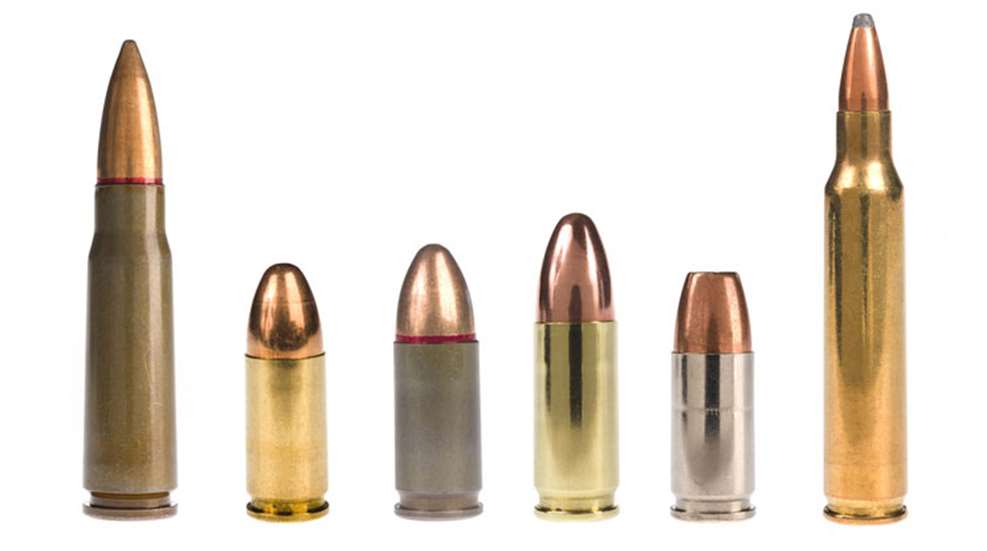
OBBB allocates $100 million to increase production of “small and medium ammunition,” a phrase widely understood to include standard calibers like .223 Remington, 5.56x45mm NATO and 7.62x51mm.
Much of this funding would likely support facilities like the Lake City Army Ammunition Plant in Missouri—America’s largest producer of small arms ammo. Lake City already churns out over 1.4 billion rounds per year, with half sold to civilians through brands like Federal and Winchester. This funding could ramp that number up by as much as 200 to 300 million rounds annually.
- $1 Billion for Next-Generation Ammo Factories
The bill includes $1 billion for advanced, automated munitions factories, designed to bring American ammo manufacturing into the 21st century. While “munitions” can mean anything from tank shells to rifle rounds, the emphasis on automation and rapid output strongly suggests small arms will benefit.
If these plants mirror Lake City’s model—where up to 50% of production goes to civilians—shooters could see millions of additional rounds on the market each month.
- $2 Billion for Bullet Materials
What’s the point of faster production if you don’t have the raw materials? OBBB devotes $2 billion to critical mineral stockpiles, including copper (bullet jackets), lead (cores) and antimony (hardening). Many of these elements are currently imported from adversarial nations—especially antimony from China.
This investment should help to secure the supply chain and avoid price spikes driven by material shortages.
- $10 Million for Ammunition Workforce Expansion
A smaller but still essential line item sets aside $10 million to grow the Department of Defense armaments workforce—the planners, engineers and inspectors who keep the entire operation running smoothly.
What It Means for You
So far, in mid-2025, civilian ammo prices have remained stable: WikiArms data shows bulk .223/5.56 FMJ going for around $0.36 to $0.40 per round.
But here’s what could change:
- Short Term (2025–2026): The $100 million production bump could increase civilian availability by up to 100 million rounds annually. Bulk prices could fall per round.
- Long Term (2027 and beyond): Once next-gen factories and secure mineral pipelines come online, we could see bulk 5.56 pricing dip.
So, while the Hearing Protection Act was removed from the bill, Trump’s H.R.1 quietly delivered a massive win for Second Amendment supporters. Not only does the bill drop the $200 NFA tax on suppressors and short-barreled rifles and shotguns, but it creates the supply-side conditions to make exercising your rights more affordable. This is foundational, as a right without the means to practice that right is no right at all. And ammo is the fuel behind the freedom.
While the outlook is promising, several factors could still derail this potential golden age of affordable ammunition. First, rising military demand could redirect much of the increased production away from the civilian market. If global conflicts escalate or unforeseen national security needs arise, facilities like Lake City may be required to prioritize government contracts, leaving fewer rounds available for civilian purchase.
Secondly, political pressure could reemerge. In recent years, anti-gun lawmakers and advocacy groups have called for restrictions on civilian sales from government-linked facilities like Lake City.
Finally, timing remains a hurdle. While the $100 million ammo production boost could begin making an impact by late 2025 or early 2026, the larger infrastructure projects—such as building automated factories and securing mineral supply chains—will take years to implement. That means the most considerable benefits may not be felt until 2027 or later.
Still, the president’s Big Beautiful Bill quietly lays the groundwork for an American ammo renaissance. With billions flowing into production, innovation and supply chains, it could usher in a future where shelves are full, range days are less costly and no gun owner has to ration freedom one round at a time.