This feature appears in the May ‘17 issue of NRA America’s 1st Freedom, one of the official journals of the National Rifle Association.
In a remarkable re-appraisal of long-standing firearm regulatory rules and practices, the ATF’s chief operating officer has penned an internal “white paper,” recommending what would amount to a fundamental change in direction if translated into actual policy.
Titled “Options to Reduce or Modify Firearms Regulations,” the document, labeled “not for public distribution,” was penned by Bureau of Alcohol, Tobacco, Firearms and Explosives (ATF) Associate Deputy Director Ronald Turk. The fact that it exists at all might well represent a radical reversal of a longstanding institutional gun-ban political bias.
Among the sweeping changes Turk has proposed:
- Removing the “sporting purposes” test that bans the importation of whole classes of semi-automatic rifles.
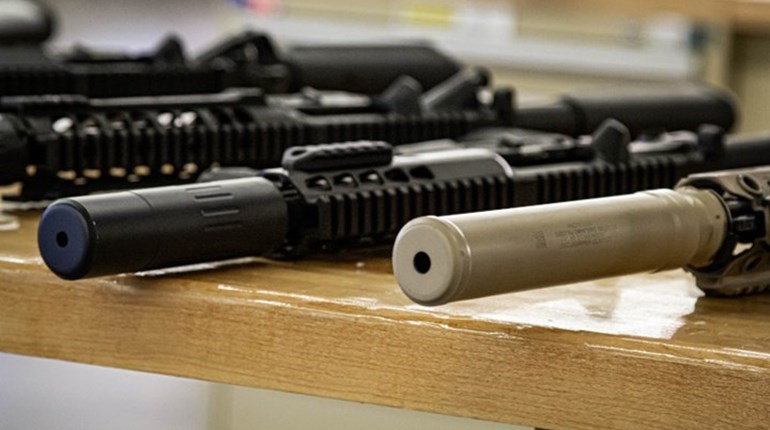
- Removing suppressors (silencers) from the stringent permanent registration requirements of the National Firearms Act, which call for fingerprints, photographs and a full FBI background check—a process that can take up to eight months to complete.
- Reviewing definitions of “armor piercing” ammunition.
Turk’s refreshingly honest take on the agency’s direction might represent a welcome attitude adjustment that fits with President Donald J. Trump’s and Attorney General Jeff Sessions’ pledge to concentrate federal law enforcement resources on aggressively prosecuting dangerous violent criminals. There is no better example of what might be a seismic shift away from ATF’s political bias than to compare Turk’s proposal on the “sporting purpose” language.
There is no better example of what might be a seismic shift away from ATF’s political bias than to compare Turk’s proposal on the “sporting purpose” language.
A bit of history is in order. In 1989, in a pointless knee-jerk “war on drugs” action, President George H.W. Bush’s administration moved to ban importation of whole categories of firearms wrongly labeled as “assault weapons,” using the “sporting purposes” criteria spelled out in the onerous 1968 Gun Control Act.
That ban was followed by massive expansion of prohibited firearms by the Clinton administration—an action characterized by a Clinton White House staffer as “taking the law and bending it as far as we can to capture a whole new class of guns.”
In rationalizing Clinton’s import ban, the U.S. Treasury Department (then the ATF’s host department) published a 1998 “study” on the “Sporting Suitability of Semi-automatic Assault Rifles,” which were characterized as “large-capacity military magazine rifles,” or “LCMM rifles.”
Given the fact that rifles like the AR-15 were beginning to dominate NRA rifle competitions and were central to a host of new shooting games, the study was based on a big lie and was peppered with grossly biased conclusions:
“[T]he information we collected on the use and suitability of LCMM rifles for hunting and organized competitive target shooting demonstrated that the rifles are not especially suitable for sporting purposes. ...
“Similarly, although the LCMM rifles usually ... sometimes are used for organized competitive target shooting, their suitability for this activity is limited.”
But the worst untruth pertained to the false notion of rampant criminal use of semi-automatic rifles.
“Furthermore, the information we gathered demonstrated that the LCMM rifles are attractive to certain criminals. We identified specific examples of the LCMM rifles’ being used in violent crime and gun trafficking. … Their ability to accept large-capacity military magazines likely plays a role in their appeal to these criminals.”
The thoroughly phony “study” concluded: “After weighing all the information collected, we found that the LCMM rifles are not generally recognized as particularly suitable for or readily adaptable to sporting purposes and are therefore not importable.” “Since the sunset of the Assault Weapons ban in 2004, the use of AR-15s, AK-style, and similar rifles now commonly referred to as ‘modern sporting rifles’ has increased exponentially in sport shooting.” — ATF Associate Deputy Director Ronald Turk
Juxtapose that with Turk’s refreshingly honest words in calling for a new study on “sporting purpose.”
In Turk’s lexicon, semi-automatic rifles are no longer “assault weapons” or “large-capacity military magazine rifles.” They are simply what the tens of millions of peaceable owners call them—modern sporting rifles.
Turk begins, “Since the sunset of the Assault Weapons ban in 2004, the use of AR-15s, AK-style, and similar rifles now commonly referred to as ‘modern sporting rifles’ has increased exponentially in sport shooting. These firearm types are now standard for hunting activities. ATF could re-examine its almost 20-year-old study to bring it up to date with the sport shooting landscape of today, which is vastly different than what it was years ago.”
With this, Turk calls for the lifting of the import ban, saying, “Restriction on imports serves questionable public safety interests, as these rifles are already generally legally available for manufacture and ownership in the United States.”
Let us hope this is the new face of ATF.