Photo courtesy of Brian McCombie
My good friend Randy Schiferl wanted to buy his very first handgun, and he had questions for me. Lots of them—best models, worst, prices, calibers and on it went.
“Let’s go to the range,” I said. “I’ll bring a half dozen handguns and ammo and we’ll see what works best for you. Okay?”
“Just give me the day and a time,” said Randy.
A couple days later found me deciding which handguns I should bring to the range, when it hit me: Randy is disabled. I don’t usually think of Randy as disabled. A very good friend is how I think of him, as well as a committed family man and a very successful dairy farmer. You can count on Randy—a good many people know this firsthand.
But, yes, Randy has disabilities. I wondered how it might affect his ability to use the various pistols I brought along that afternoon to our local sportsmen’s club shooting range.
This happened to him just a few years ago. In October 2017, Randy was walking to his car when his legs suddenly gave out. The rest of his body went limp, too. He had to be helped into the car and carried into our local emergency room. Numerous tests and consultations later, the medical staff arrived at a diagnosis: Guillain-Barre syndrome.
According to the Mayo Clinic: “Guillain-Barre (gee-YAH-buh-RAY) syndrome is a rare disorder in which your body’s immune system attacks your nerves. Weakness and tingling in your extremities are usually the first symptoms. These sensations can quickly spread, eventually paralyzing your whole body.”
Days later, an almost completely paralyzed Randy listened to his doctor’s prognosis. Randy found out he would never walk again; never feed or bathe himself; never leave a skilled nursing home; and that he should expect a lifetime of near-complete paralysis.
Randy, now 55, heard it all and accepted it. Accepted that his doctor was wrong, that is. Today, after a tremendous amount of work, faith and (he will deny this, but I believe it is true nonetheless) a large reserve of inner courage, Randy walks, works his dairy farm, drives and does much of what he once did.
“Will I ever be 100% back to where I was before all this?” he said to me recently. “Probably not. But I’m not spending the rest of my life in a bed, either!”
He rates himself as physically at about 75% pre-Guillain-Barre. He does physical therapy and works out regularly, has monthly infusions and gets a little stronger and more flexible every week.
But he does wear leg braces and he walks with the noticeable, rolling gait of someone with a physical disability. Plus, he frequently travels on business. He goes to strange places and it occurred to him that criminal types might see him as an easy target. So, to maintain his safety and independence, Randy knew it was time to get a concealed-carry permit.
“I’ve always been a strong supporter of the Second Amendment,” Randy told me during our day at the range. “With my current physical condition, I am thinking about my right to own and use a firearm in a different way now, I will admit. I guess I never felt vulnerable before, but,” and here he shrugged, “Guillain-Barre has changed my life and I have to adapt.”
Randy is not alone in his need to adapt to changing physical conditions. According to the NRA’s Adaptive Shooting Program, some 74 million Americans qualify as “disabled.”
“This population is growing,” the Adaptive Shooting Program website notes, “as the Baby Boomer generation ages and as injured soldiers return from overseas. As a group, they are generally under-represented in the shooting sports, personal protection and hunting communities. The NRA’s goal is to increase access and participation in shooting activities for people with disabilities through specialized techniques and technologies that are safe and unique to each individual.”
“The NRA is one of the nation's oldest civil-rights organizations with a mission to protect and defend the Second Amendment for everyone regardless of age or ability,” said Dr. Joseph Logar, PT, DPT, National Manager for Adaptive Shooting Programs. “The Bill of Rights doesn’t have an age limit; there’s no eye chart on the back; there’s no height requirement or strength testing needed to exercise your rights.”
The Adaptive Shooting Program website provides an Americans with disabilities information page, a range-accessibility checklist, an accessibility subsidy program and an adaptive product database. But the program’s work goes beyond providing information.
“We recently donated around $7,000 worth of gear to Lonestar Para-Athletic Development Academy, a non-profit out of Texas, to establish a training center/program for veterans with disabilities,” said Logar. “We are involved in many other similar projects to help people to actually participate in the shooting sports, whether it’s hunting or recreational shooting or self-defense.”
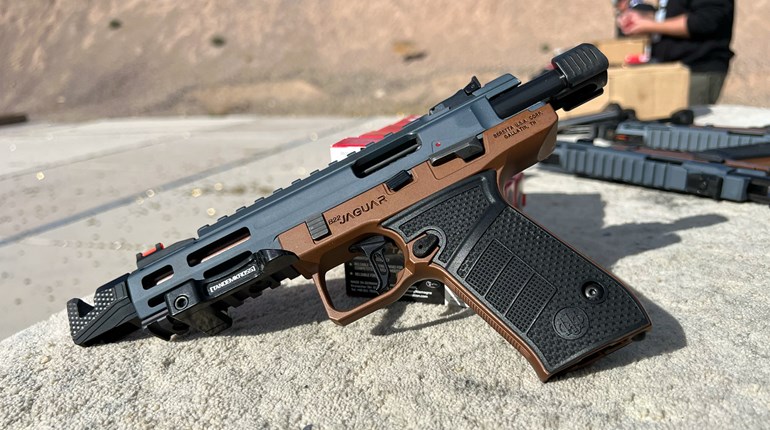
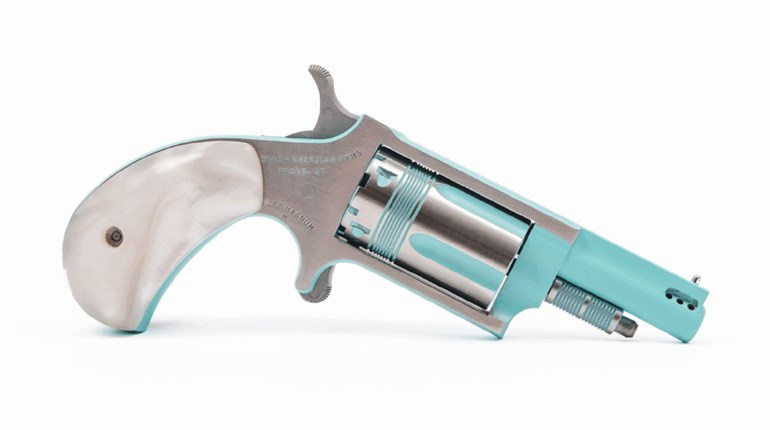
At the range that day, Randy and I did a safety briefing first, and then I had him handle the unloaded pistols. We immediately discovered that a small “pocket” pistol wasn’t going to work for Randy, given the flexibility issues with his hands.
But he did great shooting and manipulating larger handguns, including a Smith & Wesson M&P 45 Shield and a Remington R1 Enhanced 1911. Once he got used to handling these two pistols, the bullseyes hits started coming—and kept coming.
“This is a lot of fun!” Randy said with a big smile, after he was done putting a magazine of .45 ACP rounds into the center of a target. “I think my next stop is the gun shop!”