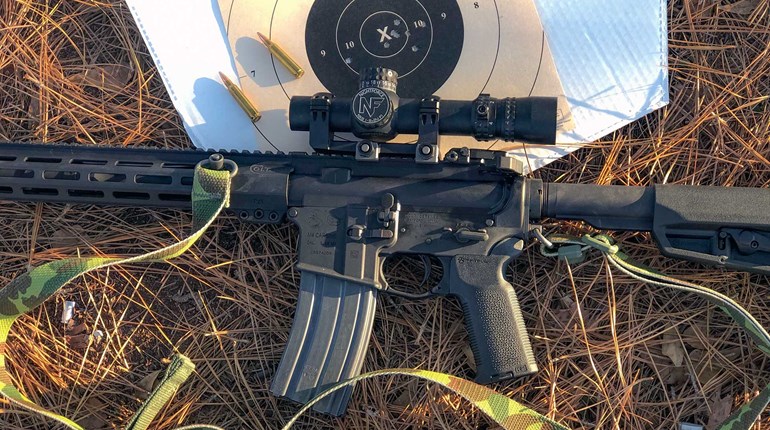
The media has recently made much ado about prosecutions being dismissed involving AR-15 lower receivers. The Gun Control Act (GCA) regulates “firearms,” which are defined to include a “frame or receiver,” not half a frame or receiver.
An Associated Press report quoted me on January 13 saying that “now the cat is out of the bag” because courts are awakening to the fact that a lower receiver doesn’t meet the legal definition of a “receiver.” The cat should have never been in the bag in the first place. The Bureau of Alcohol, Tobacco, Firearms and Explosives (ATF) defined the “frame or receiver” in 1968, when the GCA passed. Trouble is, the ATF didn’t follow its own definition and neither did federal prosecutors. Here’s how this happened.
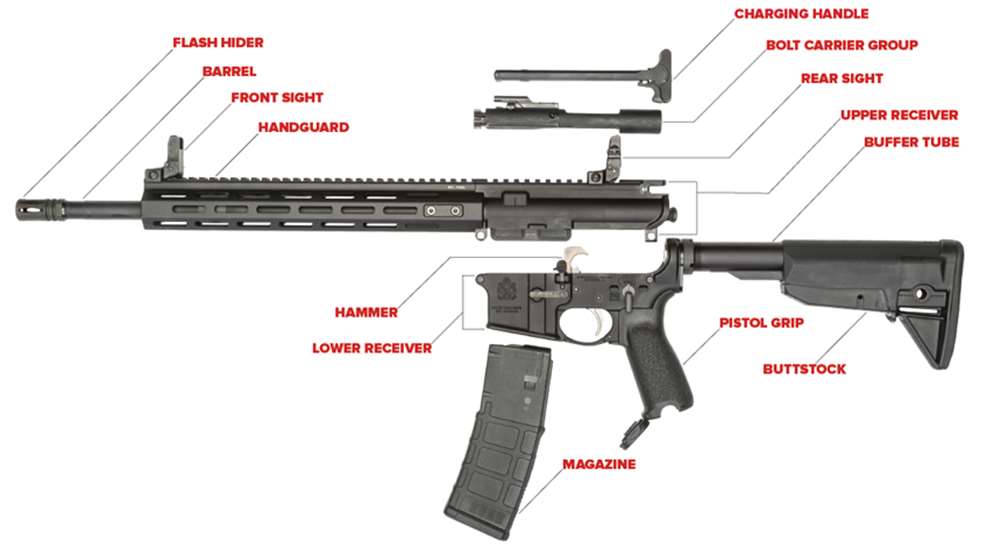
The GCA defines “firearm” in part as something that “will or is designed to or may readily be converted to expel a projectile by the action of an explosive” and as “the frame or receiver of any such weapon.” The ATF’s definition states: “Firearm frame or receiver. That part of a firearm which provides housing for the hammer, bolt or breechblock, and firing mechanism, and which is usually threaded at its forward portion to receive the barrel.” That definition couldn’t be clearer.
Five years earlier, Colt presented a sample of its newly designed “AR-15 Sports Version rifle” to the ATF for classification. In a letter dated Dec. 10, 1963, the ATF found the design, which included an upper and lower receiver, to be a semi-automatic, distinguishing it from the M-16 automatic. Colt began marketing the new rifle in 1964.
The ATF was thus well aware of the above (and other) split-receiver designs when it defined “frame or receiver” in 1968. However, in an internal memo dated March 1, 1971, about the M-16, the ATF “determined that the lower portion should be considered the receiver ... although both parts were necessary to function as a ‘frame or receiver.’” It saw “difficulty in trying to make [criminal] cases against persons possessing only the lower part of a receiver,” but for licensing and serial numbering saw this as “the only practical solution.”
Fair enough. It would offend due process to prosecute someone for something that is not a crime.
I first published the above 1971 memo in 1995 in my book Firearms Law Deskbook, which is republished annually with updates for use by practicing lawyers; meanwhile, decades passed with the ATF and prosecutors “mak[ing] cases against persons possessing only the lower part of a receiver,” in the memo’s wording. Apparently members of the criminal defense bar didn’t get it.
Finally, in a 2016 case called U.S. v. Jimenez, the federal public defender in Oakland, Calif., filed a motion to dismiss an indictment involving only a lower receiver, citing my Deskbook and quoting the ATF’s 1971 memo. U.S. District Judge James Donato agreed on the basis that a lower receiver by itself does not fit the definition of “frame or receiver.” Indeed, the application of that definition to a lower receiver would be unconstitutionally vague. “The parties agree that the AR-15 lower receiver houses the hammer and firing mechanism, and the upper receiver houses the bolt or breechblock and is threaded at its forward position to attach to the barrel.”
Ignoring the plain language of the law, the court continued, the government sought to rely on “obscure bureaucratic communications” (including the above 1971 memo) that were never published to show that the ATF had always regarded the lower receiver to be the “receiver.” The court rejected the argument that a defendant “should go to jail because the ATF has consistently enforced that interpretation of the law,” adding that “consistency alone does not make a practice constitutional, reasonable or fair.”
The government did not appeal the decision, and the attorney general at the time, Loretta Lynch, reported to Congress the reason why: “To the extent that the Bureau of Alcohol, Tobacco, Firearms and Explosives believes that the definition [of ‘receiver’] should encompass the lower receiver of an AR-15 or should otherwise be modified or clarified, the appropriate course is regulatory or administrative action, not an appeal of the district court’s decision in this case.”
However, it is unclear that the ATF would have the authority to redefine a receiver as something less than a receiver for purposes of criminal prosecution, as the GCA refers to a “frame or receiver,” which has a specific meaning. The current ATF regulatory definition recognizes that meaning.
The issue recurred in 2019 in a case from the Central District of California, U.S. v. Roh, which involved an indictment for manufacturing AR-15 lower receivers without a license. Judge James V. Selna issued a tentative order granting a motion for acquittal because the AR-15 lower receiver “does not contain a bolt or breechblock and is not threaded to receive the barrel” as required by the regulation, and is thus not a “firearm.” The ATF has no authority to classify it contrary to the definition, and anyway the public has no way to know about its unpublished classifications. Roh was found guilty of a separate charge of manufacturing without a license because he manufactured and sold some complete rifles.
The above was followed by the dismissal of an indictment in U.S. v. Rowold for failure to state an offense by Judge James G. Carr of the Northern District of Ohio on the basis that “the receiver of a firearm must be a single unit that holds three, not two, components: 1) the hammer, 2) the bolt or breechblock, and 3) the firing mechanism.” He continued: “The unambiguous regulation says what it means, means what it says, and needs no inconsistent gloss to be meaningful.” (If only more judges would read the Second Amendment that way.)
This is not a partisan issue. The above judges were appointed by Presidents Barack Obama, George W. Bush and Bill Clinton, respectively. Putting people in prison for conduct that is not a crime is unworthy of a free society.
The focus of the ATF should, of course, be on criminal violence and not the mechanics of a piece of metal called a “frame or receiver.”
Stephen P. Halbrook has won gun cases in the U.S. Supreme Court and is the author of The Founders’ Second Amendment: Origins of the Right to Bear Arms.