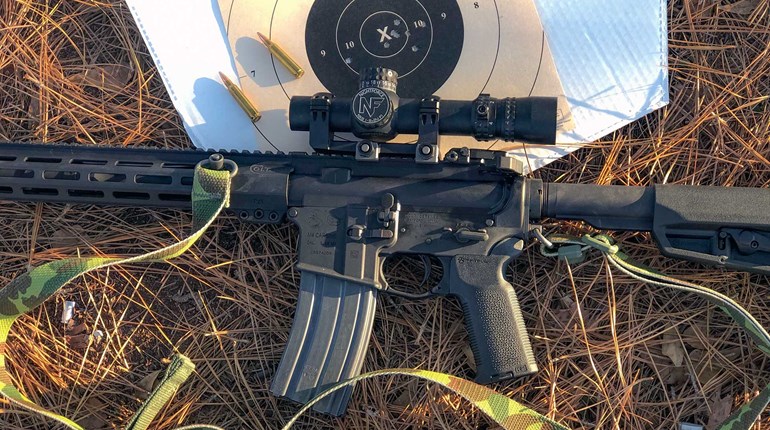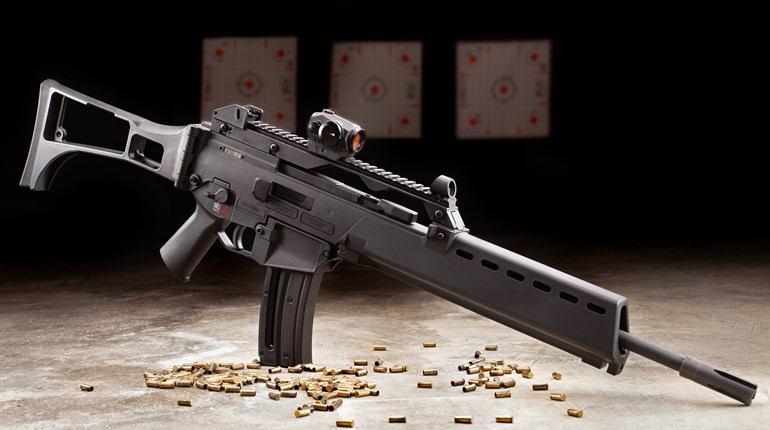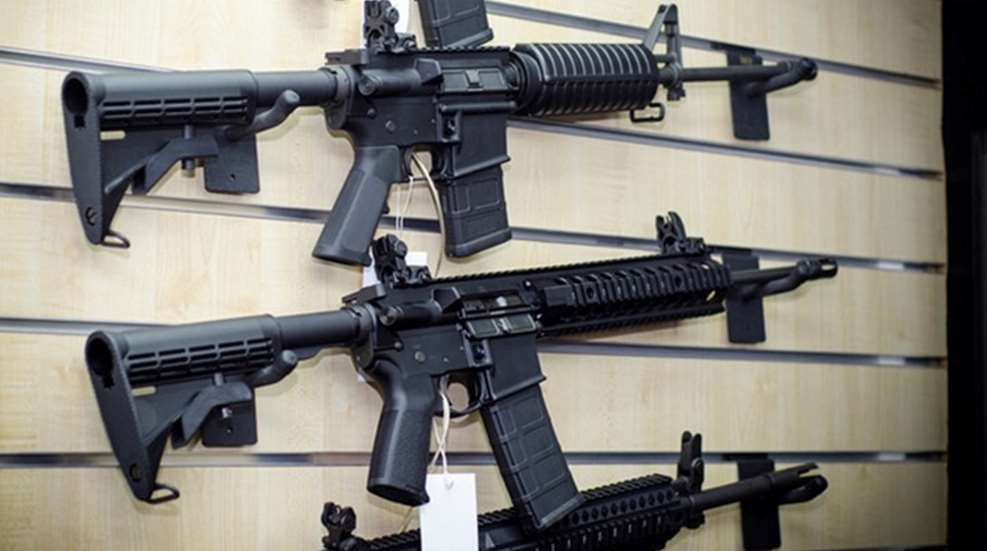
Citing concerns about a “changing climate for firearms manufacturers,” Steve Troy recently announced that his company, Troy Industries, would be relocating its operations from Massachusetts, where the company was launched nearly two decades ago, to Tennessee, taking 75 jobs with it. Working with economic development officials in Tennessee, Troy has formulated a five-year, $7-million investment plan for the new facility and its operations.
Troy Industries is one of America’s largest suppliers of small-arms accessories and upgrades, supplying the U.S military and law enforcement, as well as civilian shooters. A good number of other firearms manufacturers, including Smith & Wesson and Sturm, Ruger & Co., incorporate Troy’s components into their products.
Given his company’s focus on tactical products, Troy’s reference to that “changing climate” in Massachusetts no doubt referred to, at least in part, a bill recently filed by some Massachusetts lawmakers, House Docket No. 4192, “An Act to Stop Mass Shootings.”
If passed, that bill would ban the manufacture of so-called “assault weapons” within Massachusetts, unless those firearms were being made only for law enforcement or the military.
Given that they are located in Massachusetts, both Savage Arms and Smith & Wesson would be prohibited from producing the popular semi-automatic rifles both companies currently manufacture, except for those made to be sold to approved government entities. Plus, the bill would also ban the manufacture of any “large capacity feeding device” for the afore-mentioned “assault weapons,” otherwise known as high-capacity magazines. This would include the 30-round magazines made and sold by Troy Industries.
Massachusetts wasn’t exactly a Second Amendment-friendly state before House Docket No. 4192 was introduced. According to local media sources, “Massachusetts first implemented a state ban on assault weapons in 1998, when a similar federal law was already in place. In 2004, Republican Gov. Mitt Romney signed a permanent ban into law shortly before the federal policy expired.”
Not surprisingly, anti-Second Amendment groups hailed the recently introduced bill.
“This is not a partisan issue, not an effort to put anyone out of business,” said Stop Handgun Violence co-founder John Rosenthal. “This is simply an effort to be consistent. If it’s illegal to own and sell assault weapons in Massachusetts, why is it OK for Massachusetts companies to make them, ship them elsewhere to cause mayhem across the country?”
Mayhem? About 20 million of these popular rifles are owned by American citizens. They are used for sport and home defense. This is why the AR-15 is often called “America’s rifle.”
Smith & Wesson “employs thousands and contributes to over $4.5 million in state and federal taxes for a $2.4 billion economic impact,” according to the National Shooting Sports Foundation (NSSF). And a good percentage of the Smith & Wesson’s manufacturing base is devoted to making popular semi-automatic rifles.
If they were no longer able to make these rifles in Massachusetts for civilians, at the very least Smith & Wesson may have to move that product line’s manufacture to another state—along with the applicable jobs—if they did not want to lose access to a considerable market segment of lawful firearms purchasers. Savage Arms would find itself in the same situation.
And if these companies had to move a substantial chunk of their manufacturing out of state, might it not be more economically feasible to move all production? Wouldn’t it make particular sense to do so in the face of a state government that is increasingly hostile to the Second Amendment and the industries that support it?
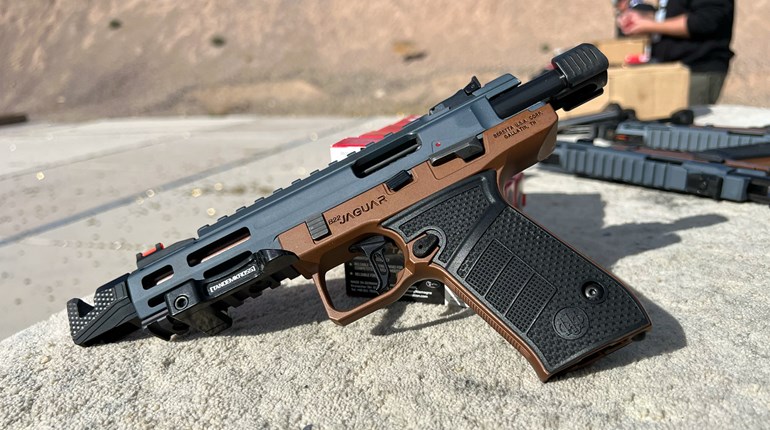
It has certainly happened in the recent past. Beretta, for example, moved firearm production and engineering and design to Gallatin, Tenn., from Maryland in 2015 over concerns of increasingly strict gun-control legislation.
Facing an increasing number of gun-control laws, Lewis Machine & Tool Company left Illinois after 40 years to relocate to Iowa in 2019, while custom gun maker Les Baer moved from Illinois to LeClaire, Iowa, over a decade earlier.
Magpul Industries departed Boulder, Colo., after the state passed magazine restrictions and moved its production to Laramie, Wyo., following the lead of accessories maker HiViz that moved from Fort Collins, Colo., to Laramie in 2013 over restrictive gun-control laws.
Anti-gun groups may be applauding this proposed legislation in Massachusetts, but this anti-Second Amendment bill and the message it sends may cost the state thousands of jobs and billions of dollars in economic impact, all over a rifle that can’t even be purchased within state borders by its own citizens.